

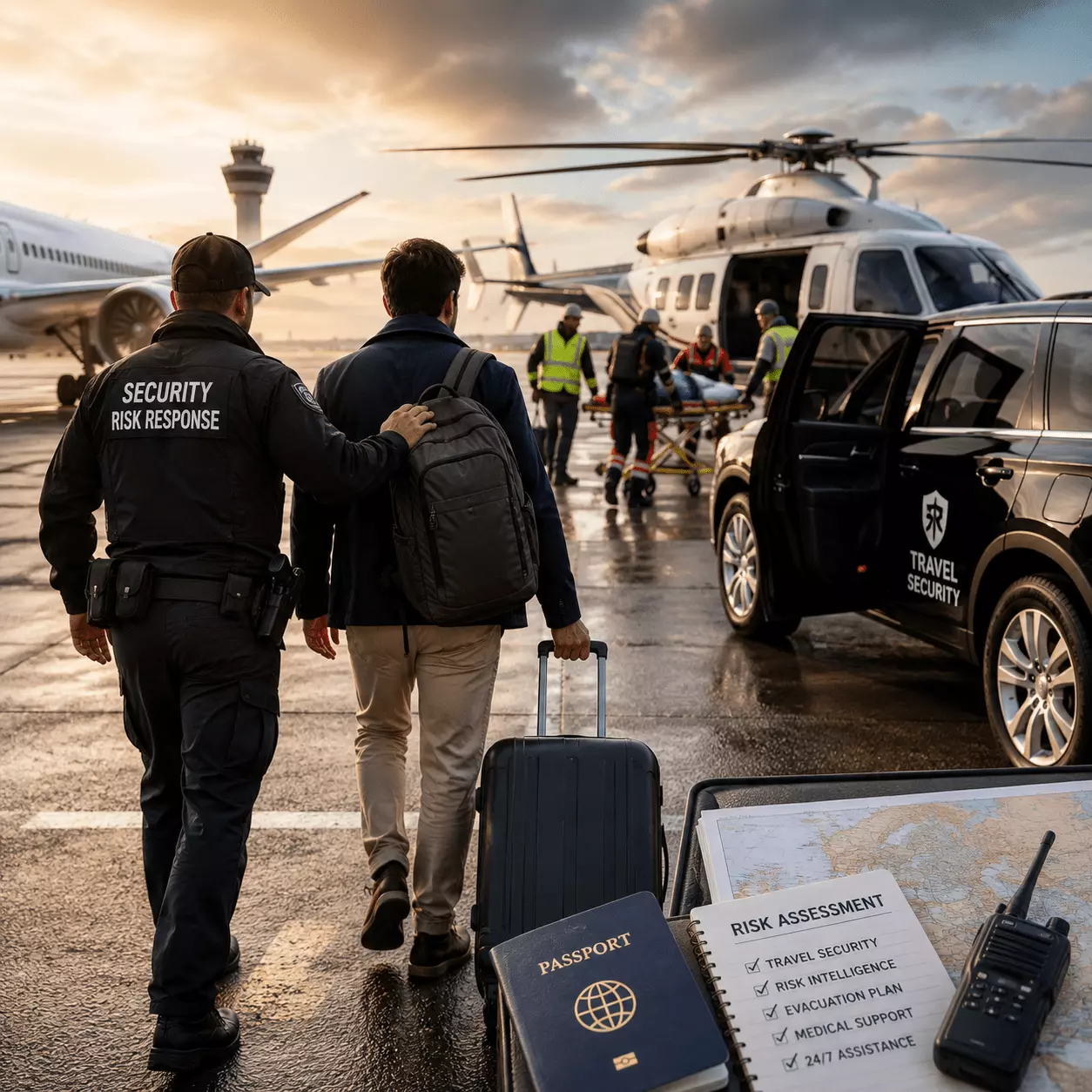
I have pulled this together from current 2026 market and provider sources. That taught me how fast this field has grown. Below I cover what these services include and how evacuation works. By the end, you will know how to choose the right provider.
What Do These Services Cover?
These services bundle protection and rescue into one plan. The core is a detailed risk assessment for each destination. Intelligence teams track threats before and during a trip. That turns guesswork into a clear, informed plan.
The support goes far beyond a bodyguard. It includes secure transport, close protection, and 24/7 assistance. Most plans add medical evacuation and repatriation. A round-the-clock operations center ties it all together.
Rescue is the safety net underneath everything. Teams stand ready if a situation turns dangerous. They arrange fast transport out of a crisis zone. That readiness is the real value here.
Quick Facts
| Topic | Key Takeaway |
|---|---|
| What They Are | Travel evacuation and rescue services provide protection, emergency assistance, and rescue support for travelers abroad. |
| Core Services | Services typically include intelligence, personal protection, 24/7 assistance, crisis response, and emergency evacuation. |
| Medical Evacuation | Medical evacuation can include air ambulance services and repatriation when a traveler becomes seriously ill or suffers an injury abroad. |
| Security Evacuation | Security evacuation helps travelers leave areas affected by terrorism, natural disasters, political unrest, or other serious threats. |
| Cost of Evacuation | International medical evacuation and repatriation can be extremely expensive, with some cases costing more than $250,000. |
| Who Needs It | Services may be particularly relevant for corporate travelers, executives, journalists, and adventure travelers visiting higher-risk or remote destinations. |
| Market Size | The travel evacuation and rescue services market was valued at approximately $28.6 billion in 2024 and is projected to reach $55.4 billion by 2032. |
| Providers | Options include full-service security firms, emergency assistance memberships, and specialist medical repatriation providers. |
| Top Benchmark | International SOS is a major benchmark for organizations seeking integrated medical and security assistance worldwide. |
| Getting Started | Travelers and organizations can begin by purchasing an appropriate assistance membership or arranging an initial consultation to assess their needs. |
Medical vs Security Evacuation
There are two main kinds of evacuation. Medical evacuation moves a sick or injured traveler to proper care. It often uses an air ambulance over long distances. Repatriation returns you home once you are stable.
US Non-Citizen Travel Security Rules: What to Know in 2026
Solo Travel Safety Advice: Your Guide to Safer Trips
International Travel Safety Coverage: What You Need to Know
What Are Safety Measures During Travel? A Practical Guide
Mexico Travel Advisory Tourist Safety: The 2026 Guide
What Are the Safety Protocols for Travel? A 2026 Guide
Corporate Travel Security Solutions: A Guide for Businesses
Travel Safety Tips: How to Stay Safe on Any Trip
Mexico Travel Advisory Tourist Safety: The 2026 Guide
Security evacuation covers non-medical emergencies. It moves you out of danger from terrorism, disaster, or civil unrest. This is about getting clear of a threat fast. Both types can be lifesavers in the right moment.
One more benefit deserves a mention. Repatriation of remains returns a loved one home in the worst case. Companion transport and return of a minor may be included, too. These grim details matter when tragedy strikes.
Why Evacuation Coverage Matters
The cost is the first reason to care. A medical evacuation with repatriation can top $250,000. An air ambulance abroad can cost more than a house. Coverage protects you from a crushing bill.
US Non-Citizen Travel Security Rules: What to Know in 2026
Solo Travel Safety Advice: Your Guide to Safer Trips
International Travel Safety Coverage: What You Need to Know
What Are Safety Measures During Travel? A Practical Guide
Mexico Travel Advisory Tourist Safety: The 2026 Guide
What Are the Safety Protocols for Travel? A 2026 Guide
Corporate Travel Security Solutions: A Guide for Businesses
Travel Safety Tips: How to Stay Safe on Any Trip
Mexico Travel Advisory Tourist Safety: The 2026 Guide
Remote and unstable regions raise the stakes. Local care may be poor or far away. A fast evacuation can mean the difference in survival. That is why travelers to risky areas need it most.
Concern is now widespread among travelers. A 2026 survey found that most worry about serious safety risks. Geopolitical instability can turn a safe trip risky overnight. Evacuation coverage answers that fear with real support.
Who Needs These Services?
Not every traveler needs a full plan. But several groups gain real protection. Corporate travel security services protect employees on business trips. Companies use them to meet their duty of care.
Others face heightened risk too. Executives and journalists often work in volatile places. NGO staff and expats operate in remote regions. Adventure travelers face injury far from good hospitals.
High-profile individuals have their own needs. They are targets for both financial and data crime. A tailored plan covers protection and fast rescue. The right fit depends on the person and the trip.
The Market Today
This field has grown into a major industry. The travel security market was valued at around $28.6 billion in 2024. It is projected to reach $55.4 billion by 2032. That is a steady climb of about 8.59 percent a year.
The mix of services tells a clear story. Travel assistance holds the largest share of the market. Emergency evacuation is a smaller but fast-growing segment. Rising global emergencies drive that growth.
Demand for tailored plans keeps rising. Providers now offer localised, risk-based solutions. Broad global travel security services adapt to each region’s threats. That flexibility is what modern travelers expect.
Types of Providers
Providers come in a few main forms. Full-service firms handle everything under one roof. International SOS is the benchmark, blending intelligence with medical and security help. Its teams include doctors, analysts, and logistics experts.
US Non-Citizen Travel Security Rules: What to Know in 2026
Solo Travel Safety Advice: Your Guide to Safer Trips
International Travel Safety Coverage: What You Need to Know
What Are Safety Measures During Travel? A Practical Guide
Mexico Travel Advisory Tourist Safety: The 2026 Guide
What Are the Safety Protocols for Travel? A 2026 Guide
Corporate Travel Security Solutions: A Guide for Businesses
Travel Safety Tips: How to Stay Safe on Any Trip
Mexico Travel Advisory Tourist Safety: The 2026 Guide
Membership and insurance models offer another path. Groups like the Divers Alert Network bundle evacuation into an annual plan. Travel insurers add evacuation benefits to their policies. These suits are suitable for individuals and smaller budgets.
Specialist firms fill the remaining gaps. Medical repatriation companies focus on air ambulance transport. Private travel security services add close protection and escorts. Match the provider type to your risk and needs.
How Evacuation Works Step by Step
The process follows clear, fast steps. It starts with one call to a 24/7 operations center. A trained professional answers and assesses the situation. They confirm your location and condition first.
Next comes the coordination phase. The team arranges transport, whether an air ambulance or a ground vehicle. They coordinate with local hospitals and authorities. They also plan the safest route out.
The final stage brings you to safety. Medical cases move to a proper hospital or back home. Security cases exit the danger zone quickly. Skilled travel security services management keeps every step on track.
Segments and Regional Markets
The market splits into clear segments. Corporate plans protect whole teams and programs. Personal plans cover an individual and their family. Each segment scales to different needs and budgets.
The top tier serves high-profile clients. Luxury travel security services offer discreet, bespoke protection. Uhnwi travel security services add tailored rescue and privacy for the ultra-wealthy. These blend comfort with serious security.
Regional demand varies around the world. The Canadian travel security services market grows with cross-border business travel. The UK travel security services market reflects strong corporate and duty-of-care demand. Local providers add on-the-ground knowledge in each hub.
How to Choose a Provider
The right choice depends on your risk and goals. Start by mapping where you actually travel. Confirm the provider has strong coverage there. Global reach matters for consistent quality.
US Non-Citizen Travel Security Rules: What to Know in 2026
Solo Travel Safety Advice: Your Guide to Safer Trips
International Travel Safety Coverage: What You Need to Know
What Are Safety Measures During Travel? A Practical Guide
Mexico Travel Advisory Tourist Safety: The 2026 Guide
What Are the Safety Protocols for Travel? A 2026 Guide
Corporate Travel Security Solutions: A Guide for Businesses
Travel Safety Tips: How to Stay Safe on Any Trip
Mexico Travel Advisory Tourist Safety: The 2026 Guide
Check the core capabilities closely. Look for a 24/7 operations center and high evacuation limits. Confirm they offer both medical and security evacuation. In-house intelligence beats scattered local hires.
Practical access matters too. Some travelers search for travel security services near me to find local support. Others need a global partner that integrates with their team. Weigh both reach and responsiveness before you decide.
Costs and Getting Started
Cost varies with your risk and coverage level. A simple membership costs far less than a managed program. Travel insurance with evacuation is the most affordable entry point. Match the spend to your real exposure.
Getting started is simpler than it looks. Individuals can buy an evacuation membership or insurance plan. Businesses start with a policy and a provider consultation. Add protection and intelligence as needs grow.
A phased approach keeps it manageable. Begin with the coverage you need most today. Layer in extra services as your travel expands. Steady preparation beats a rushed, last-minute scramble.
Benefits Beyond Emergencies
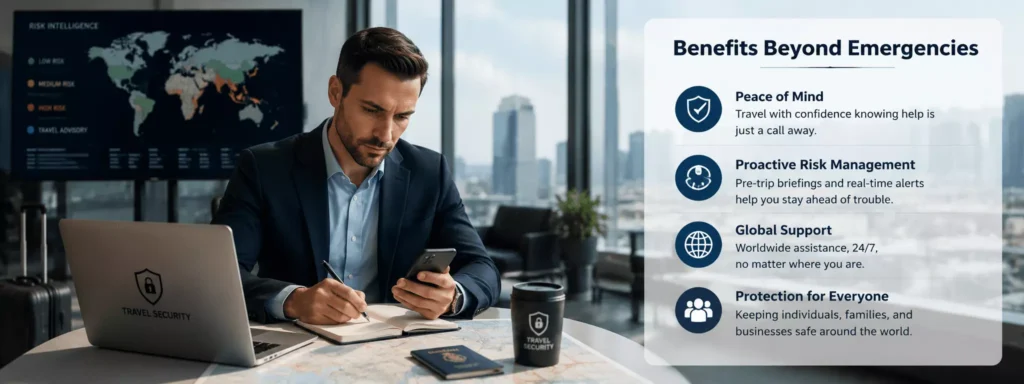
The value shows up long before any crisis. Good travel security services give you daily peace of mind. You travel knowing help is one call away. That confidence changes how you work and explore.
There are practical perks, too. Pre-trip briefings warn you of local risks. Real-time alerts keep you a step ahead of trouble. A single point of contact simplifies a stressful moment.
The support protects more than one person. For companies, it shields staff and the business alike. For families, it covers everyone on the trip. That broad coverage is worth the investment.
Common Mistakes to Avoid
A few slips leave travelers exposed. Assuming your home insurance covers evacuation is the biggest risk. Many plans stop at the border or cap the payout. Always confirm your real evacuation limits.
US Non-Citizen Travel Security Rules: What to Know in 2026
Solo Travel Safety Advice: Your Guide to Safer Trips
International Travel Safety Coverage: What You Need to Know
What Are Safety Measures During Travel? A Practical Guide
Mexico Travel Advisory Tourist Safety: The 2026 Guide
What Are the Safety Protocols for Travel? A 2026 Guide
Corporate Travel Security Solutions: A Guide for Businesses
Travel Safety Tips: How to Stay Safe on Any Trip
Mexico Travel Advisory Tourist Safety: The 2026 Guide
Timing and gaps cause the rest. Buying coverage at the last minute limits your options. Ignoring high-risk destinations invites a crisis. Early, clear planning solves both problems.
Frequently Asked Questions
What is the difference between medical and security evacuation?
Medical evacuation moves a sick or injured traveler to proper care. Security evacuation gets you out of danger from unrest or disaster. Many plans include both types of rescue.
How much does a medical evacuation cost?
It can be very expensive, often topping $250,000 with repatriation. An air ambulance abroad costs more than most people expect. Coverage protects you from that huge bill.
Who needs travel security and evacuation coverage?
Corporate travelers, executives, journalists, and NGO staff benefit most. Adventure travelers and expats in remote areas need it too. Companies use it to meet their duty of care.
Does travel insurance cover evacuation?
Many plans include medical and non-medical evacuation benefits. Non-medical cover can apply to terrorism, disaster, or civil unrest. Always check the limits and exclusions first.
What is repatriation?
Repatriation returns a traveler home for care after a serious event. It can also mean returning remains in the worst case. Companion transport is often included, too.
Which provider is best for evacuation services?
International SOS is the benchmark for many organisations. The Divers Alert Network and travel insurers are strong options too. The best choice depends on your risk and budget.
How do I start an evacuation plan?
Individuals can buy a membership or an insurance plan with evacuation. Businesses start with a policy and a provider consultation. Match the coverage to your travel and risk.
Explore All 14 Travel Essentials Categories
- Luggage & Bags
- Packing Organisation & Cubes
- Travel Tech & Electronics
- Toiletries & Travel-Size
- Travel Comfort
- Travel Safety & Security
- Packing Lists by Trip Type
- Packing Lists by Destination
- Travel Documents & Money
- Travel Clothing & Footwear
- Health, Hygiene & First-Aid
- Airport, Airline & Rules
- Essentials Guide
- Essentials for Women, Men & Family