
In this article
- TL;DR
- Why Niche Itineraries Need Their Own Framework
- Which Standards Can Help?
- The Main Legal and Regulatory Risks
- EU Package Travel Rules
- UK Package Travel Rules
- US Seller of Travel Laws
- Sanctions and Restricted Destinations
- Pricing Rules
- How to Build a Legal Regulatory Risk Management Framework for Niche Travel Itineraries
- Step 1: Map the Itinerary
- Step 2: List Your Legal Duties
- Step 3: Score Each Risk
- Step 4: Choose Your Controls
- Step 5: Record and Communicate
- Step 6: Monitor and Respond
- Legal Risks by Itinerary Type
- Give Customers the Right Information
- Contracts, Waivers and Insurance
- Booking Terms
- Liability Waivers
- Supplier Checks
- Insurance and Money
- Keeping the Framework Current
- Dates to Watch
- Common Mistakes to Avoid
- Frequently Asked Questions
- What Is a Legal Risk Framework for Travel?
- Does a Small Tour Business Need One?
- Is ISO 21101 Required by Law?
- Does ISO 31030 Apply to Leisure Tours?
- Does a Signed Waiver Protect Me Completely?
- When Do the New EU Package Rules Apply?
- When Should I Hire a Travel Lawyer?
Build it around one itinerary at a time, because each route and activity changes the rules.
TL;DR
| Quick fact | Answer |
| Who needs it | Tour operators, agents and trip organizers |
| Core model | ISO 31000 risk process |
| Adventure standard | ISO 21101 |
| EU change | Directive (EU) 2026/1024, applying from March 2029 |
| UK change | New package rules from 6 April 2027 |
| Main tool | One live register for each itinerary |
This guide offers general information, not legal advice. Have a qualified travel lawyer review your own framework.
Why Niche Itineraries Need Their Own Framework
A niche trip rarely fits a standard template. It may cross borders, use small local suppliers and include activities that insurers treat differently. One weak link can create a legal problem for the whole trip.
Three things raise the stakes. Adventure work carries a heightened duty of care, as one industry review notes. Regulation also varies widely, from light oversight to strict permits. Cross-border trips can add several legal systems at once.
A framework turns that mess into a process. You stop relying on memory and start recording what you checked, when and why. That record can also help show reasonable care if something goes wrong.
Which Standards Can Help?
| Standard | What it covers | Good to know |
| ISO 31000 | General risk management | The base model for ISO 31030 |
| ISO 21101 | Adventure safety management | Voluntary, but required in some places |
| ISO 21102 | Adventure leader competence | Companion to ISO 21101 |
| ISO 21103 | Information for participants | Companion to ISO 21101 |
| ISO 31030 | Organizational travel risk | Excludes leisure trips, except travel on an organization’s behalf |
Standards don’t replace the law. Switzerland requires ISO 21101 to 21103 for certain high-risk activities, and Kerala in India has built ISO 21101 into its rules. So check local law before you treat a standard as optional.

The Main Legal and Regulatory Risks
Start by knowing which rules can reach your business. The location of your office is only part of the answer. Where your customers live and where the trip runs often matter too.
| Risk area | Key question | Example rule |
| Licensing | Can we legally sell this trip here? | US seller of travel laws |
| Package law | Are we legally the organizer? | EU and UK package rules |
| Financial protection | Are customer payments protected? | ATOL, bonds or trust accounts |
| Safety | Have we taken reasonable care? | Local activity rules, ISO 21101 |
| Sanctions | Is this trip or supplier allowed? | OFAC Cuba rules |
| Pricing | Is the total price clear? | FTC fee rule, where it applies |
EU Package Travel Rules
Directive (EU) 2026/1024 took effect on 28 May 2026, but its rules apply from 29 March 2029. Linked travel arrangements disappear, and more online combinations can become packages. Check your national law once it passes.
Vouchers stay voluntary, and travelers can insist on a refund. Suppliers must repay organizers within seven days when they cancel or fail to deliver. Travelers also gain a 60-day complaint response, and insolvency refunds within six months in most cases.



UK Package Travel Rules
The UK’s 2026 amendment regulations start on 6 April 2027 and apply to new contracts only. They widen the package definition and remove linked travel arrangements. Many businesses that were outside the rules may need insolvency protection for the first time.
Flight packages can also involve the ATOL scheme. Keep booking records around the changeover date, as UK guidance advises.
US Seller of Travel Laws
Seller of travel laws focus on who you sell to, not just where you’re based. California, Florida, Hawaii and Washington are the main states named, while some sources also list Iowa or Nevada. Check each state regulator directly.
Disclosure details matter as well. California and Florida have specific wording rules for registration numbers and contracts. Confirm yours with a travel lawyer.
Sanctions and Restricted Destinations
Cuba shows how fast rules can move. Tourism remains banned for people under US jurisdiction, and travel must fit an authorized category. On 30 September 2026, OFAC removed group people-to-people travel and the professional meetings authorization.
OFAC also extended the ban on dealing with listed Cuban entities to indirect transactions. A trip that was legal last year may not be legal now. Screen suppliers and hotels before every departure, not just at launch.
Pricing Rules
The FTC fee rule took effect on 12 May 2025. It covers live-event tickets and short-term lodging, so it may not reach every tour. Clear all-in pricing is still the safest approach for any itinerary.

How to Build a Legal Regulatory Risk Management Framework for Niche Travel Itineraries
These six steps adapt the general ISO 31000 idea of assessing and treating risk. They are our suggested structure, not a legal standard. Scale them to the size of your business and the risk of the trip.
Step 1: Map the Itinerary
Write down every country, region, supplier, activity and transfer. Note where customers live and where you take payment. Use our flight time calculator and trip calculator to check that timings and costs are realistic.
Step 2: List Your Legal Duties
Match each part of the trip to its rules. Include licenses, permits, package status, data protection, tax and insurance. Name the source and date of each check.
Step 3: Score Each Risk
Add each issue to a risk register, then score its likelihood and impact from 1 to 5. Multiply them to rank what needs attention first. This sample scale is simple, so adapt it to your business.
| Score | Level | Suggested action |
| 1 to 6 | Low | Monitor it |
| 7 to 14 | Medium | Add controls and assign an owner |
| 15 to 25 | High | Fix it, change the trip or drop it |
Step 4: Choose Your Controls
You have four basic choices. You can avoid the risk, reduce it, transfer it or accept it. A dangerous activity might be removed, while a weather risk might be covered by a backup route.
Step 5: Record and Communicate
Put the key risks in plain language before customers book. Train guides on what to do and who to call. Store your decisions, supplier papers and signed forms in one place.
Step 6: Monitor and Respond
Review the file before each departure and after any incident. Check sanctions lists, travel advisories, supplier permits and insurance dates. Write down what changed, even when the answer is “nothing.”
Prepare a simple incident plan too. It should say who leads, who calls the insurer and who speaks to families. Keep it short enough to use during a real emergency.

Legal Risks by Itinerary Type
Each niche brings its own pressure points. Use this table as a starting checklist, not a complete list. Local law can add more.
| Itinerary type | Main risks | Key checks |
| Adventure | Injury, guide skill, weak waivers | Guide training, activity permits, rescue plan |
| Wildlife and conservation | Protected areas, illegal permits | Park permits, approved operators |
| Medical or wellness | Unsafe claims, provider liability | Provider licenses, no health promises |
| Cultural or religious | Access rules, crowd safety | Site permissions, local guidance |
| Family and accessible | Misleading access claims, child safety | Verified access details, age limits |
| Restricted destinations | Sanctions, advisories, insurance gaps | Legal review and specialist cover |
| Road and cruise | Transport licenses, supplier failure | Carrier licenses and backup plans |
Give Customers the Right Information
Good preparation lowers both safety and legal risk. Link customers to our travel safety guides and first aid guides in your pre-trip pack. Family groups may also find our baby travel essentials useful.
Our airport and airline rules and travel documents and money guides help with entry and payment planning. Long-stay guests can track allowed days with our 90-day calculator. Always point them to official sources for visas.
For cruises and road trips, share our cruise packing list or RV packing list. Our travel essentials guide covers the basics for every other trip.
Contracts, Waivers and Insurance
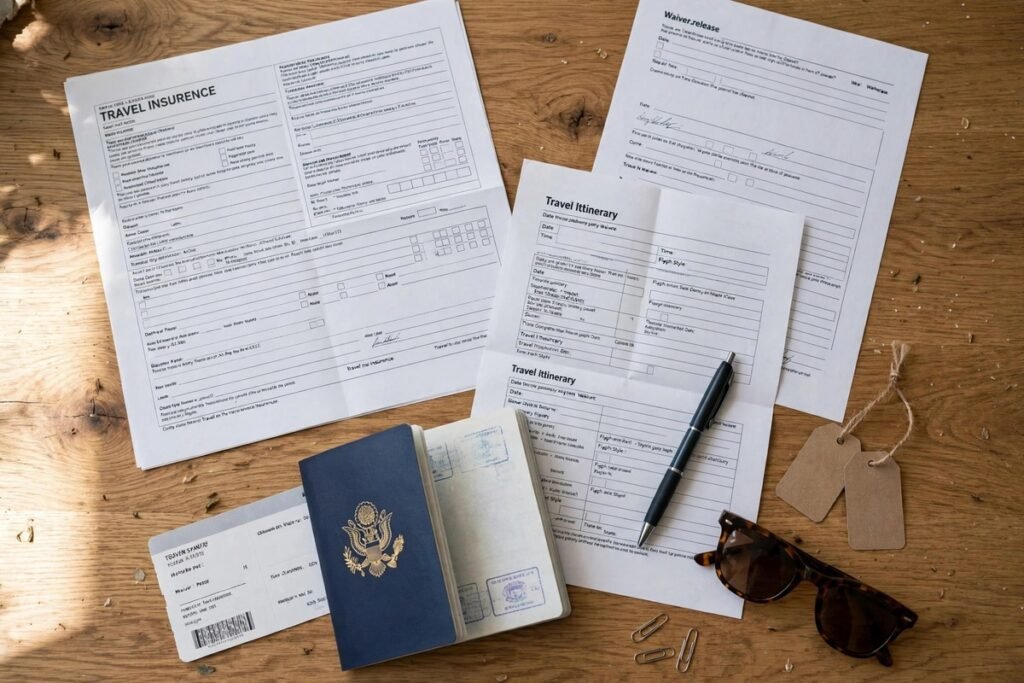
Paperwork won’t make an unsafe trip safe. It does set clear expectations and shows what you did. Tailor every document to the actual itinerary.
Booking Terms
State who the organizer is, what’s included and who supplies each service. Cover changes, cancellations, refunds and complaints. Make sure the marketing page and the contract say the same thing.
Liability Waivers
A liability waiver can help, but it has limits. Enforceability varies by jurisdiction, and some places limit or reject advance personal injury releases. Courts generally won’t uphold waivers that try to excuse gross negligence or willful misconduct.
Name the real risks of the activity, and avoid overly broad wording. Send the form before travel, because pre-arrival delivery can reduce claims of pressure. Use a separate form for each trip type, then have a lawyer in the relevant jurisdiction review it.
Supplier Checks
In EU and UK packages, the organizer takes on wider responsibility for performance. In other settings, US cases have tested claims of negligent supplier selection. So a basic supplier audit is worth doing either way.
- License: Get current operating licenses and permits.
- Insurance: Ask for proof of liability cover.
- Safety: Review training records, equipment checks and incident history.
- Contract: Set refund deadlines and insurance duties.
- Sanctions: Screen owners and related companies where relevant.
The new EU seven-day supplier refund rule makes contract review important. Update your terms before 2029 instead of waiting for a crisis.
Insurance and Money
Ask your broker to confirm cover for each country and activity. Read the exclusions for high-altitude work, sanctioned places and advisories. Don’t assume a policy written for ordinary tours covers niche trips.
Insurance and customer money protection are different things. Seller of travel rules may call for bonds, trust accounts or a restitution fund. EU and UK package organizers need approved financial cover, or ATOL where it applies.
Keeping the Framework Current
A framework only works if someone owns it. Name one person to keep it updated, even in a small business. Set a review date for each itinerary.
| When | What to review |
| Before launch | Laws, permits, insurance, contracts and marketing |
| Before departure | Advisories, sanctions, suppliers and guest details |
| After an incident | Cause, response, records and needed changes |
| Every quarter | Legal updates, claims and complaints |
| Every year | Full framework, insurance and training |
Dates to Watch
- 6 April 2027: UK package changes start for new contracts.
- 29 March 2029: The revised EU rules begin to apply.
- Ongoing: OFAC sanctions, state seller rules and travel advisories can change quickly.
Common Mistakes to Avoid
- Copying a template: A generic form won’t fit a specialist route.
- Trusting one waiver: It can’t replace safe operations.
- Assuming you’re just an agent: Your sales setup may make you an organizer.
- Skipping supplier checks: Old permits can create new liability.
- Promising safety: Absolute claims can create extra risk.
- Ignoring customer location: Their home rules can still apply.
- Failing to record decisions: Good work is hard to prove without notes.

Frequently Asked Questions
What Is a Legal Risk Framework for Travel?
It’s a repeatable process for finding, scoring and controlling legal risks. It covers licenses, safety, contracts, insurance and consumer rules. Each itinerary should have its own record.
Does a Small Tour Business Need One?
Yes, though it can be simple. A short risk file and clear contracts may be enough for low-risk trips. Higher-risk trips need more detail and legal advice.
Is ISO 21101 Required by Law?
It’s voluntary in many places. Some places, such as Switzerland for certain activities, have made these standards part of their rules. Check the law where the activity runs.
Does ISO 31030 Apply to Leisure Tours?
Generally, no. It covers organizations managing risk for people traveling on their behalf, and it excludes tourism and leisure travel otherwise. ISO 21101 is closer for adventure providers.
Does a Signed Waiver Protect Me Completely?
No, it has clear limits. Rules vary by location, and courts generally won’t excuse gross negligence or willful misconduct. Use one alongside real safety controls.
When Do the New EU Package Rules Apply?
The revised directive took effect in May 2026, but its rules apply from 29 March 2029. Member states must first add them to national law. Check the version for each country you sell in.
When Should I Hire a Travel Lawyer?
Get advice before launching a new product, market or high-risk activity. Do the same for sanctioned destinations and serious incidents. A lawyer should also review your contracts and waivers.

Tayp Willson writes hands-on travel guides, packing lists and trip planning tips for Travel Essentials.
See all posts by Tayp Willson →- Luggage & Bags
- Packing Organisation & Cubes
- Travel Tech & Electronics
- Toiletries & Travel-Size
- Travel Comfort
- Travel Safety & Security
- Packing Lists by Trip Type
- Packing Lists by Destination
- Travel Documents & Money
- Travel Clothing & Footwear
- Health, Hygiene & First-Aid
- Airport, Airline & Rules
- Essentials Guide
- Essentials for Women, Men & Family