

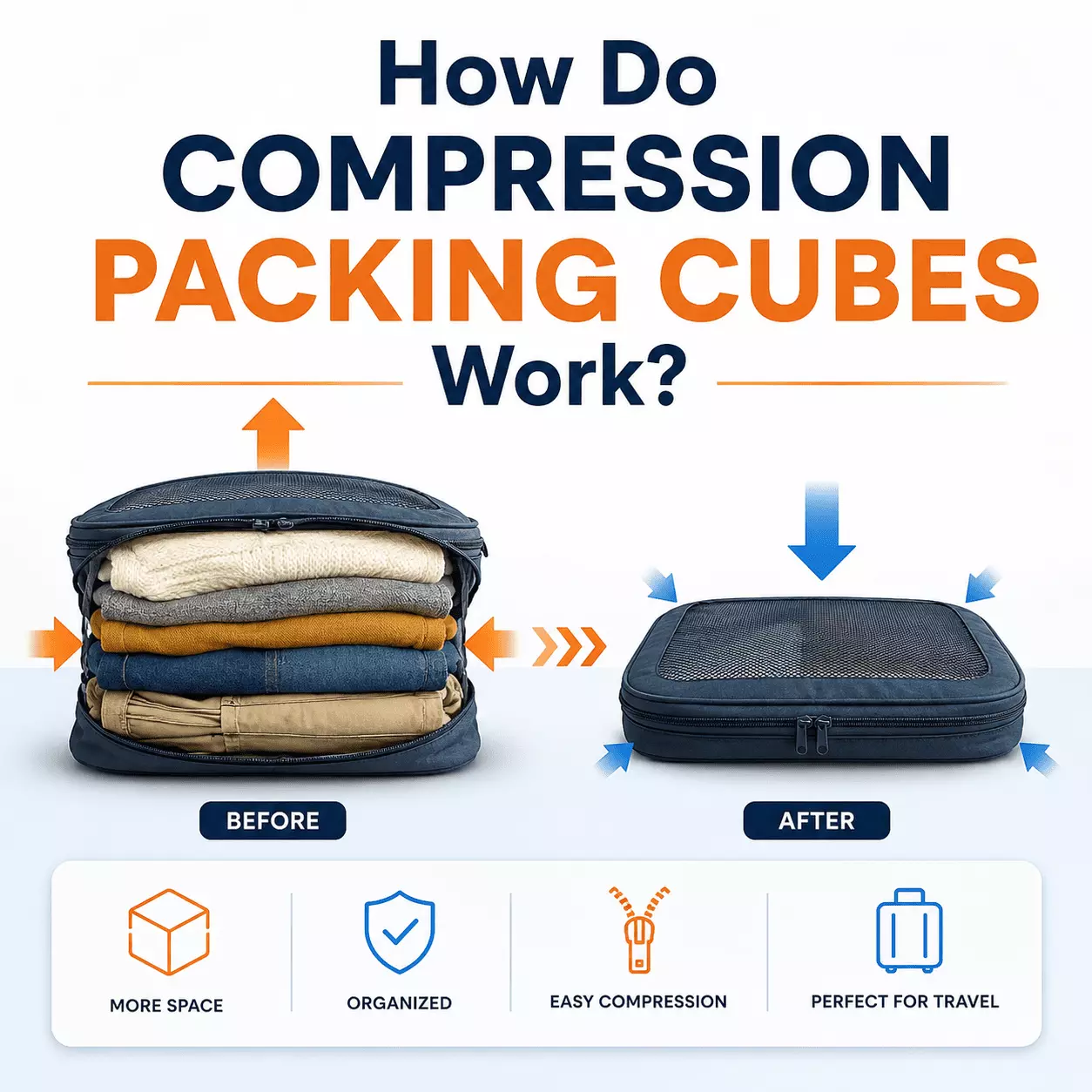
The Two-Zipper Design
Every compression cube starts with a main zipper, just like a regular cube. This closes the compartment and holds your folded or rolled clothes in place. How do compression packing cubes work with a zipper beyond that first closure?
A second track runs along the outer edge of the cube. Pulling this track collapses the walls inward, squeezing the packed contents. That extra step is the entire difference between a compression cube and a basic organizer.
Quick Facts
| Feature | What to Know |
|---|---|
| Mechanism | Compression packing cubes use a second zipper or compression strap to squeeze trapped air from clothing and reduce bulk. |
| Volume Reduction | Most compression cubes reduce clothing volume by 20–50%, while very soft fabrics may compress by up to 60%. |
| Best Fabrics | Compression works best with sweaters, fleece, puffy jackets, knitwear, and other soft garments. |
| Worst Fabrics | Avoid compressing denim, blazers, structured coats, and other stiff clothing that resists compression or wrinkles easily. |
| Alternative System | Some travel bags use external compression straps instead of a second zipper to reduce bulk. |
| Tradeoff | Compression cubes require a little more packing time and repeated use may cause faster wear on the compression zipper. |
| Weight Benefit | While they do not reduce luggage weight, compression cubes help distribute clothing more evenly throughout the suitcase. |
| Ideal Use | Excellent for carry-on luggage, maximizing packing space, and storing bulky seasonal clothing during travel. |
The Science: What Compression Actually Does to Fabric
Loosely packed clothing traps air between individual fibers. How does the compression zipper work on these cubes to remove that trapped air? The zipper physically pushes the fabric walls together, forcing air out through small gaps.
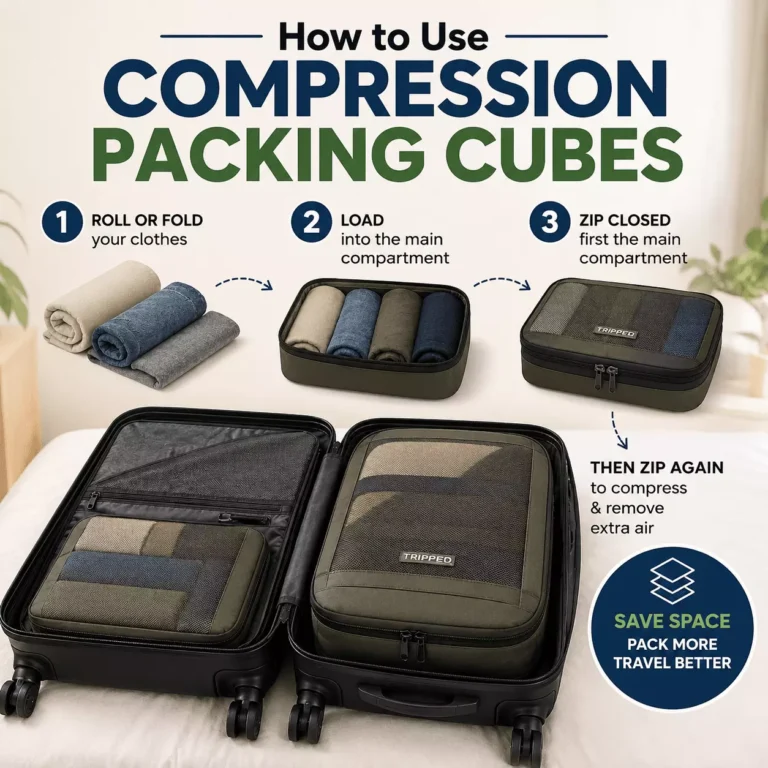
How to Use Compression Packing Cubes
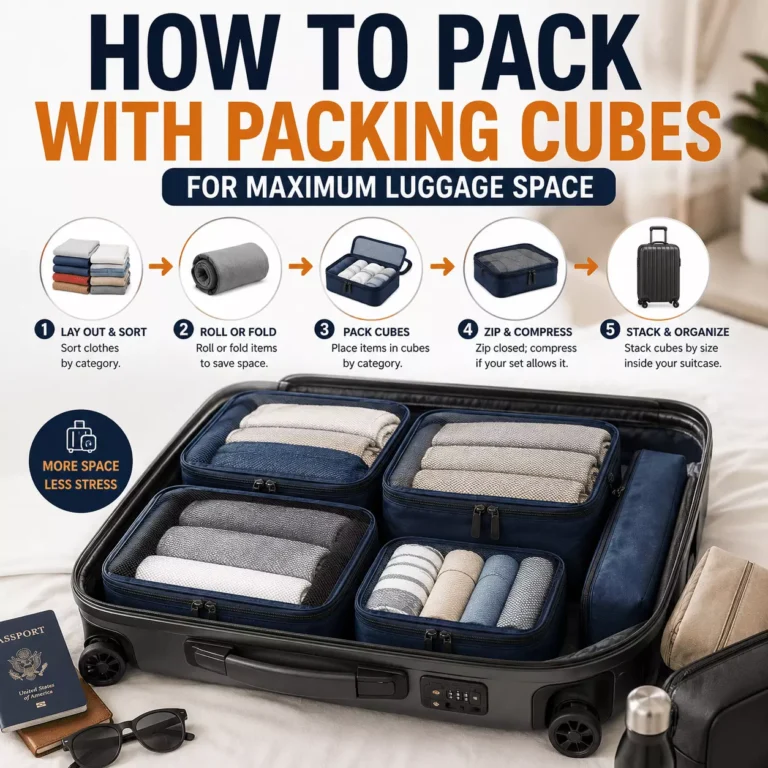
How to Pack with Packing Cubes for Maximum Luggage Space
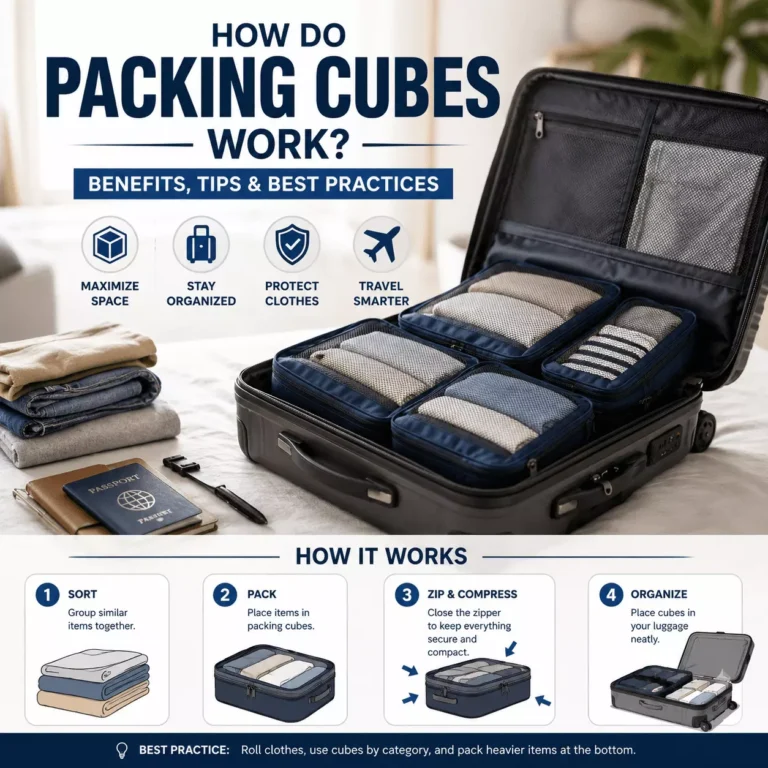
How Do Packing Cubes Work? Benefits, Tips & Best Practices
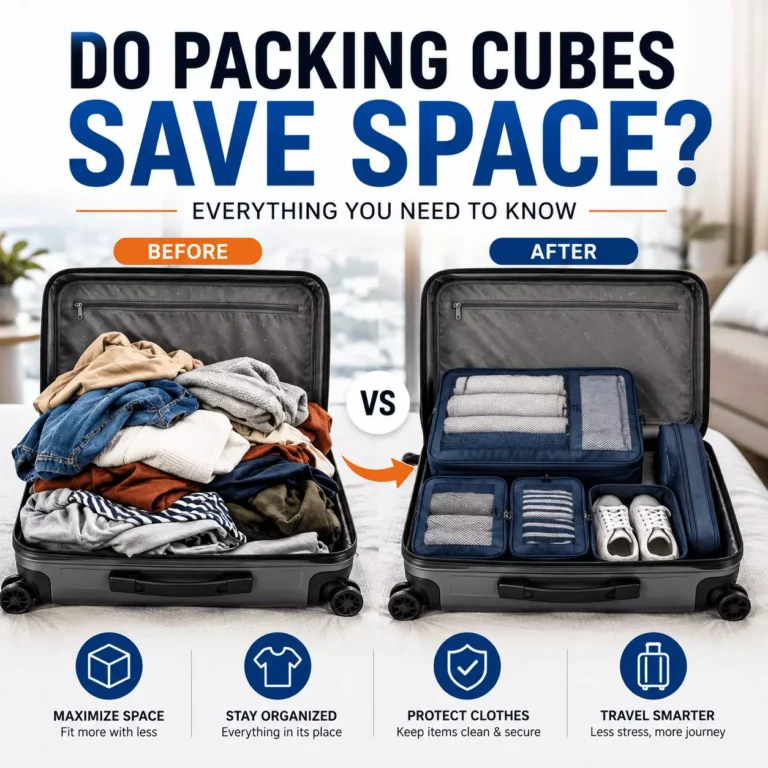
Do Packing Cubes Save Space? Everything You Need to Know

What Are Packing Cubes? Everything You Need to Know
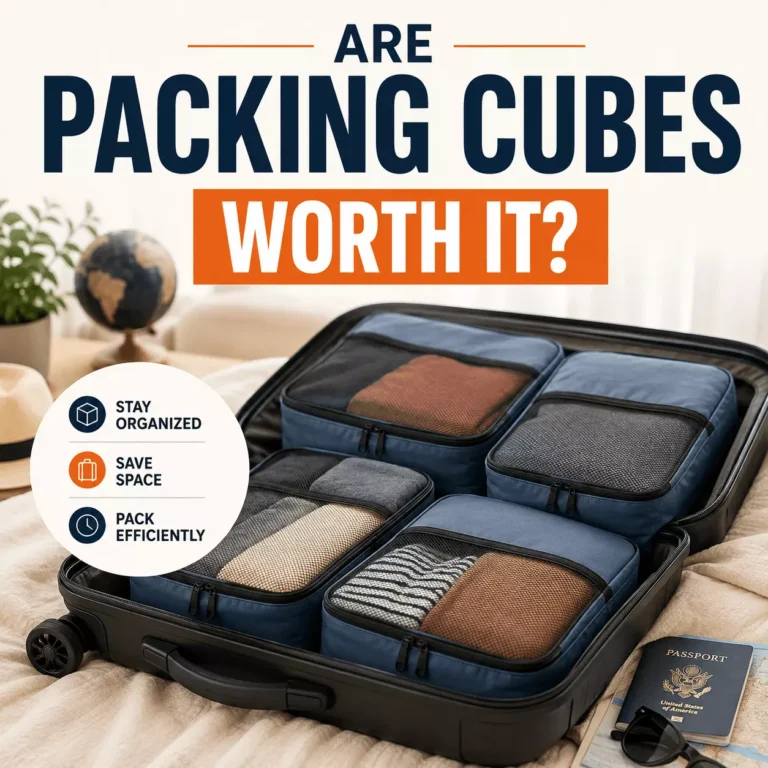
Are Packing Cubes Worth It
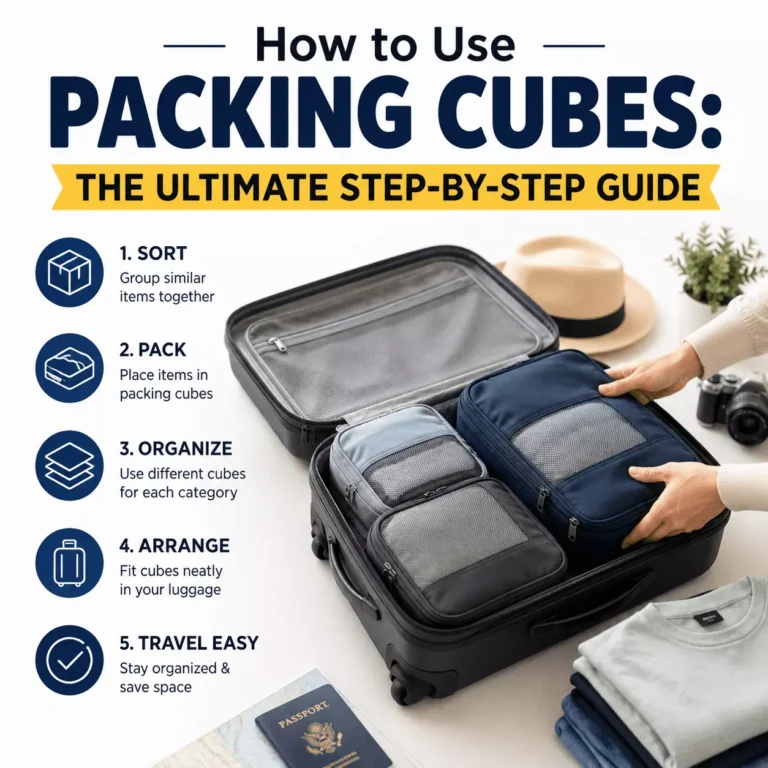
How to Use Packing Cubes: The Ultimate Step-by-Step Guide
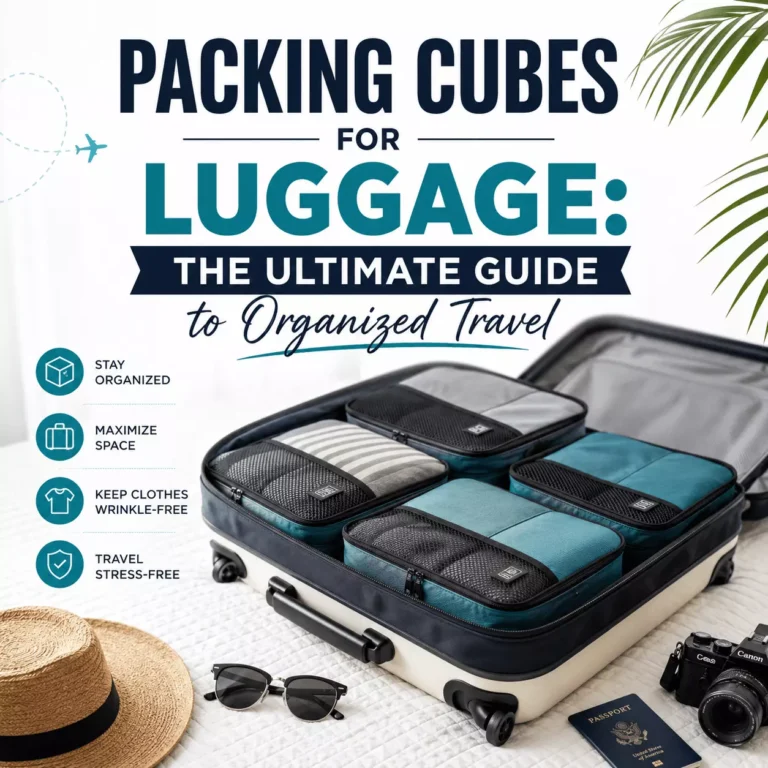
Vacuum Packing Cubes: The Ultimate Guide to Organized Travel
Packing Cubes for Luggage: The Ultimate Guide to Organized Travel
Packing Cubes for Travel: The Ultimate Guide to Smarter Packing
As air escapes, the fibres themselves move closer together. This is what actually shrinks the visible size of a sweater or jacket. The clothing itself does not get smaller; only the air pockets between the fibers disappear.
How Much Volume Reduction to Expect
Real testing backs up the claims made by most brands. How much do compression packing cubes reduce volume on an average pack? Independent studies report a range of 20 to 50 percent, with some brands citing figures as high as 60 percent for very compressible fabrics.
Results vary heavily based on what you pack. Fluffy sweaters and puffy jackets compress the most dramatically. Stiff denim or structured blazers barely shrink, no matter how hard you pull the zipper.
Compression Cubes vs Regular Cubes
Regular cubes use just one zipper and rely purely on organization. How do compression packing cubes work compared to regular ones in daily use? The compression style adds active volume reduction on top of the same sorting benefit.
Standard cubes actually compress a little too, but only passively. Surrounding pressure inside a packed bag pushes air out naturally once the suitcase closes. Compression cubes give you a direct, controlled squeeze instead of relying on that accidental effect.
How to Use Compression Packing Cubes
How to Pack with Packing Cubes for Maximum Luggage Space
How Do Packing Cubes Work? Benefits, Tips & Best Practices
Do Packing Cubes Save Space? Everything You Need to Know
What Are Packing Cubes? Everything You Need to Know
Are Packing Cubes Worth It
How to Use Packing Cubes: The Ultimate Step-by-Step Guide
Vacuum Packing Cubes: The Ultimate Guide to Organized Travel
Packing Cubes for Luggage: The Ultimate Guide to Organized Travel
Packing Cubes for Travel: The Ultimate Guide to Smarter Packing
How This Translates to Suitcase Space
How do compression packing cubes save space once you load them into an actual bag? A flatter, denser cube takes up less physical room than an uncompressed one. That difference can be the deciding factor between fitting everything into a carry-on or checking a bag.
How do compression packing cubes work for a suitcase packed to its absolute limit? The controlled squeeze becomes most valuable exactly at that point. Travelers packing loosely rarely notice much benefit, since there is already room to spare.
Compression Straps: The Alternative Mechanism
Not every compression system relies on a second zipper. How do compression straps work on packing cubes instead? Adjustable straps wrap around the cube, and pulling a buckle tightens them to squeeze the contents.
This method suits bulky or oddly shaped items better than a straight zipper pull. Straps distribute pressure more evenly across an uneven load. Zippers remain more common, but straps offer a useful alternative for certain gear.
Weight Distribution Inside Your Bag
How do compression packing cubes distribute weight once packed into a suitcase? Their flat, uniform shape stacks more predictably than loose, bulky clothing. That even shape helps balance a bag’s overall weight from side to side.
A well-balanced suitcase rolls more smoothly and resists tipping over. This benefit exists independent of the actual space savings. Even travellers sceptical of the volume claims often notice this structural advantage.
The Tradeoff: Zipper Wear and Time Cost
Every mechanism has a downside worth mentioning honestly. How do compression packing cubes affect zipper wear over repeated use? The compression track experiences more tension than a standard zipper, which can accelerate wear over many trips.
Time cost matters too, though it is often small. Compressing five or six cubes in a full set can add five to ten extra minutes to your packing routine. For frequent, multi-stop travelers, that time adds up across a whole trip.
How to Use Compression Packing Cubes
How to Pack with Packing Cubes for Maximum Luggage Space
How Do Packing Cubes Work? Benefits, Tips & Best Practices
Do Packing Cubes Save Space? Everything You Need to Know
What Are Packing Cubes? Everything You Need to Know
Are Packing Cubes Worth It
How to Use Packing Cubes: The Ultimate Step-by-Step Guide
Vacuum Packing Cubes: The Ultimate Guide to Organized Travel
Packing Cubes for Luggage: The Ultimate Guide to Organized Travel
Packing Cubes for Travel: The Ultimate Guide to Smarter Packing
Using Them for Carry-On Travel
How do compression packing cubes work for carry-on bags with strict size limits? The controlled squeeze helps meet exact dimension requirements more reliably than loose packing. Business travelers especially benefit from fitting a full week of clothes into one compact bag.
Airlines continue tightening carry-on and personal item rules each year. A properly compressed load gives you a better shot at avoiding a gate-check surprise. That advantage alone justifies the small time cost for many frequent flyers.
Materials That Handle the Strain
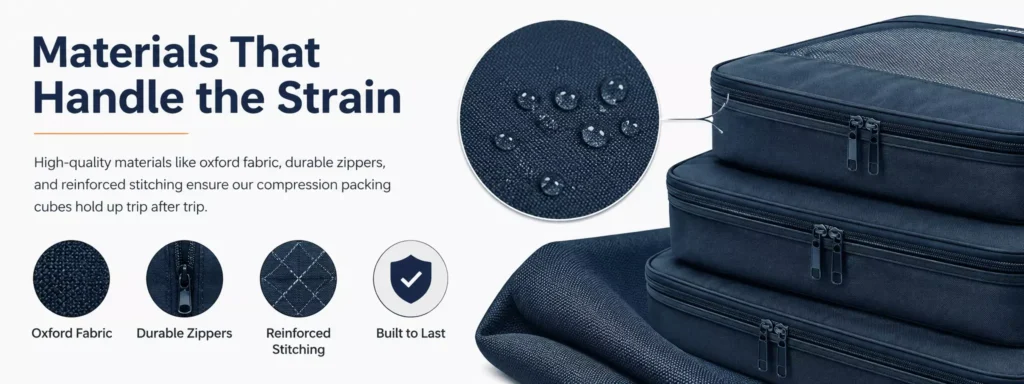
Ripstop nylon remains the standard fabric choice for a reason. It resists the repeated tension that compression zippers place on the seams. Translucent panels let you see contents without unzipping every single cube.
Snag-free zipper design matters more here than on a standard cube. The extra tension from compression makes a weak zipper fail faster. Reading recent reviews helps you avoid a set with known zipper complaints.
Common Mistakes to Avoid
Overfilling the main compartment causes the most frequent problems. If the main zip struggles to close, the compression zip has almost no chance of working evenly. Remove an item or two rather than forcing either zipper shut.
Compressing rigid items wastes the entire feature. Jeans, blazers, and heavy coats simply do not respond to the squeeze. Save compression cubes for soft, flexible fabric that actually benefits from the pressure.
Skipping a test compression before a big trip is a common oversight. Zippers can behave differently once a cube is fully packed for real. Practice at home so you are not troubleshooting at the airport.
Choosing a Reliable Compression Cube Set
Zipper quality matters more here than on any standard cube. A reinforced track with smooth, snag-resistant teeth holds up to repeated compression far better. Cheaper zippers tend to fail within the first few trips.
How to Use Compression Packing Cubes
How to Pack with Packing Cubes for Maximum Luggage Space
How Do Packing Cubes Work? Benefits, Tips & Best Practices
Do Packing Cubes Save Space? Everything You Need to Know
What Are Packing Cubes? Everything You Need to Know
Are Packing Cubes Worth It
How to Use Packing Cubes: The Ultimate Step-by-Step Guide
Vacuum Packing Cubes: The Ultimate Guide to Organized Travel
Packing Cubes for Luggage: The Ultimate Guide to Organized Travel
Packing Cubes for Travel: The Ultimate Guide to Smarter Packing
Fabric weight affects both durability and comfort in your bag. Ripstop nylon offers a strong balance between strength and low weight. Heavier canvas lasts longer but adds noticeable bulk to your overall luggage.
Warranty coverage can be a useful tiebreaker between similar priced sets. A brand willing to replace a broken zipper signals real confidence in its own product. That detail often matters more than a slightly lower price tag.
Why Trust This Guide
This guide draws on published testing data, brand specifications, and hands-on traveler feedback gathered across multiple sources. Every figure reflects what shows up consistently in independent reviews, not marketing copy alone. We cross-check claims before publishing and update details as new tests emerge.
A useful guide should explain the actual mechanism, not just repeat a sales pitch. That balance is why this article separates the zipper mechanics from the real-world tradeoffs. Readers deserve to understand exactly what they are paying for.
Frequently Asked Questions
Do compression cubes really save 50 percent of space?
On very compressible fabrics, yes, according to independent testing. Stiffer items save far less volume. Results depend heavily on what you actually pack.
Why does a compression zipper sometimes snag?
Uneven fabric bunching near the seam causes most snags. Smoothing the fabric with a finger before zipping helps. Pulling slowly instead of forcing it also prevents most issues.
Do compression cubes wear out faster than regular ones?
Yes, the added zipper tension accelerates wear over many trips. Quality ripstop fabric and reinforced zippers slow this process. Cheaper sets tend to fail sooner under repeated compression.
Can compression cubes bulge instead of flattening evenly?
Sometimes, compressed edges push contents toward the centre. This can create an uneven bulge in the middle. Even loading and gentle pressure help reduce this effect.
How to Use Compression Packing Cubes
How to Pack with Packing Cubes for Maximum Luggage Space
How Do Packing Cubes Work? Benefits, Tips & Best Practices
Do Packing Cubes Save Space? Everything You Need to Know
What Are Packing Cubes? Everything You Need to Know
Are Packing Cubes Worth It
How to Use Packing Cubes: The Ultimate Step-by-Step Guide
Vacuum Packing Cubes: The Ultimate Guide to Organized Travel
Packing Cubes for Luggage: The Ultimate Guide to Organized Travel
Packing Cubes for Travel: The Ultimate Guide to Smarter Packing
Are compression straps better than zippers?
Not universally, but straps suit bulky or uneven items better. Zipper systems remain simpler and more common overall. Choose based on the type of gear you usually pack.
Do compression cubes work on stiff fabric?
Not very well, since rigid items barely compress under pressure. Save compression for soft, flexible clothing instead. Standard cubes work fine for jeans or structured pieces.
Is the time cost of compression worth the space saved?
For most travelers, yes, especially on longer or bulkier trips. Occasional short trips may not need the extra step. Match the tool to how often you actually travel.
Final Thoughts
Compression packing cubes work through simple mechanical pressure, not magic or vacuum technology. A second zipper or strap pulls fabric fibers closer together, physically shrinking soft, bulky clothing. Understanding this mechanism helps you set realistic expectations and choose the right cube for every trip you take.
Explore All 14 Travel Essentials Categories
- Luggage & Bags
- Packing Organisation & Cubes
- Travel Tech & Electronics
- Toiletries & Travel-Size
- Travel Comfort
- Travel Safety & Security
- Packing Lists by Trip Type
- Packing Lists by Destination
- Travel Documents & Money
- Travel Clothing & Footwear
- Health, Hygiene & First-Aid
- Airport, Airline & Rules
- Essentials Guide
- Essentials for Women, Men & Family