

What Packing Cubes Are For
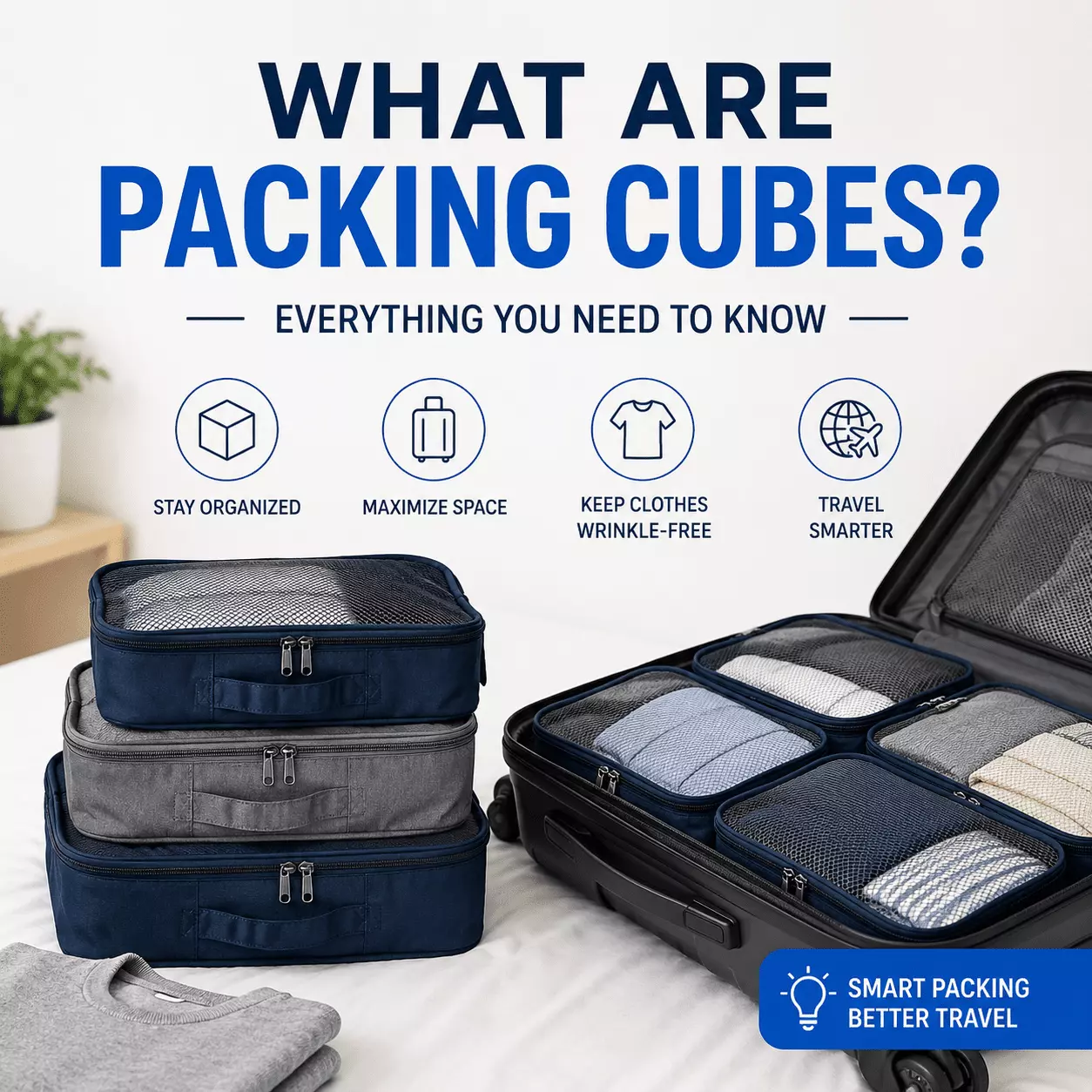
At their core, these pouches solve one simple problem: loose clothing turns into a jumbled mess. What are packing cubes for, in practical terms? They keep tops, bottoms, and accessories separated so nothing gets lost.
You open one pouch and grab exactly what you need. No more digging through an entire suitcase for one missing sock. That small habit saves real time at hotel check-in and airport security alike.
Quick Facts
| Feature | What to Know |
|---|---|
| Purpose | Packing cubes help organize, separate, and easily access clothing and travel essentials inside your luggage. |
| Common Materials | Most packing cubes are made from nylon, ripstop nylon, or recycled PET fabric for lightweight durability. |
| Zipper Types | Single-zip cubes are ideal for organization, while double-zip compression cubes reduce clothing bulk. |
| Common Sizes | Available in small, medium, and large sizes to organize everything from accessories to bulky clothing. |
| Typical Set Count | A 3–5 cube set is generally sufficient for organizing luggage on a week-long trip. |
| Space Saved (Compression) | Compression packing cubes can reduce clothing volume by approximately 20–50%, depending on the fabric and packing method. |
| Price Range | Quality packing cube sets typically cost between $15 and $60, depending on the brand, materials, and number of pieces. |
| Care | Most packing cubes are machine washable. Air drying is recommended to help extend their lifespan. |
What They’re Made Of
Most cubes use lightweight nylon or ripstop fabric for the outer shell. What are packing cubes made of beyond that basic layer? Many now include mesh top panels so you can see contents without unzipping.
How Do Compression Packing Cubes Work
How to Use Compression Packing Cubes
How to Pack with Packing Cubes for Maximum Luggage Space
How Do Packing Cubes Work? Benefits, Tips & Best Practices
Do Packing Cubes Save Space? Everything You Need to Know
Are Packing Cubes Worth It
How to Use Packing Cubes: The Ultimate Step-by-Step Guide
Vacuum Packing Cubes: The Ultimate Guide to Organized Travel
Packing Cubes for Luggage: The Ultimate Guide to Organized Travel
Packing Cubes for Travel: The Ultimate Guide to Smarter Packing
Some brands use recycled PET plastic pulled from old water bottles. Antimicrobial linings help control odor on longer trips. Water-resistant coatings protect against spills or a damp swimsuit packed in a hurry.
How They Work
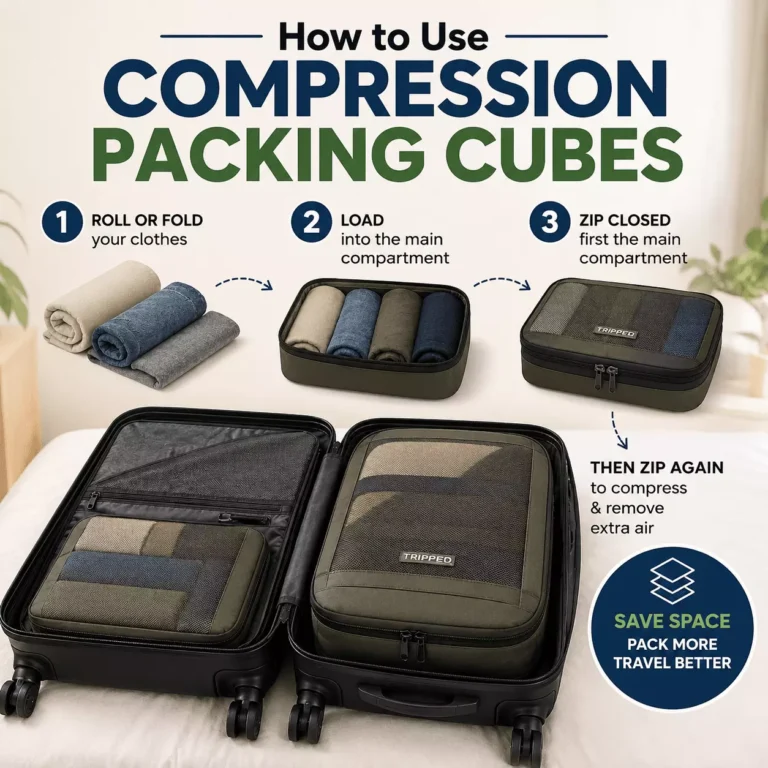
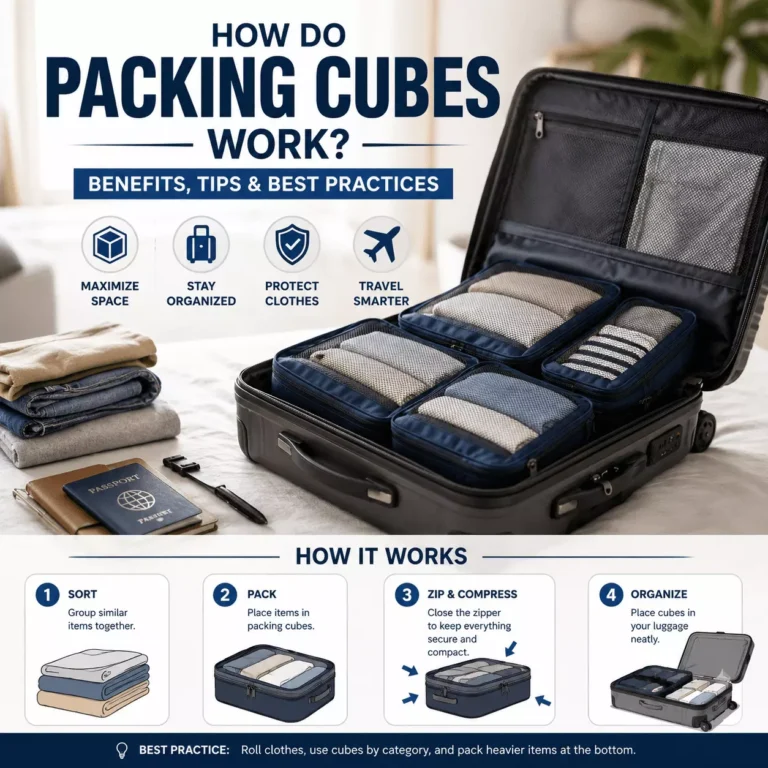
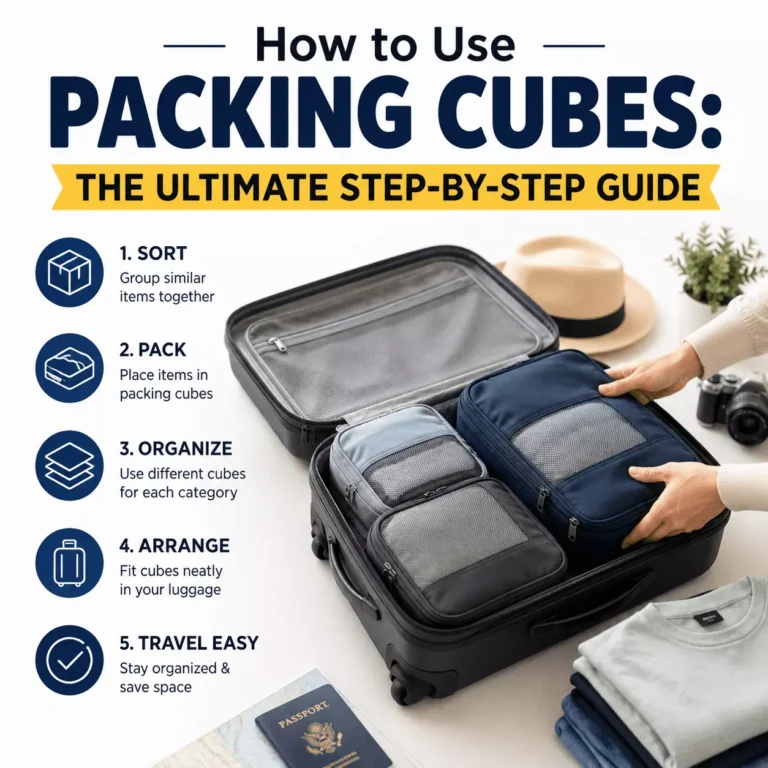
The mechanics stay simple across almost every brand. How do packing cubes work in daily use? You load items inside, zip the main closure, and stack the cube into your bag.
This structure stops clothes from expanding and spreading across your suitcase. Items stay in place even when the bag gets tossed around during transit. The result is a cleaner layout with far fewer wasted gaps.
Regular vs Compression Cubes
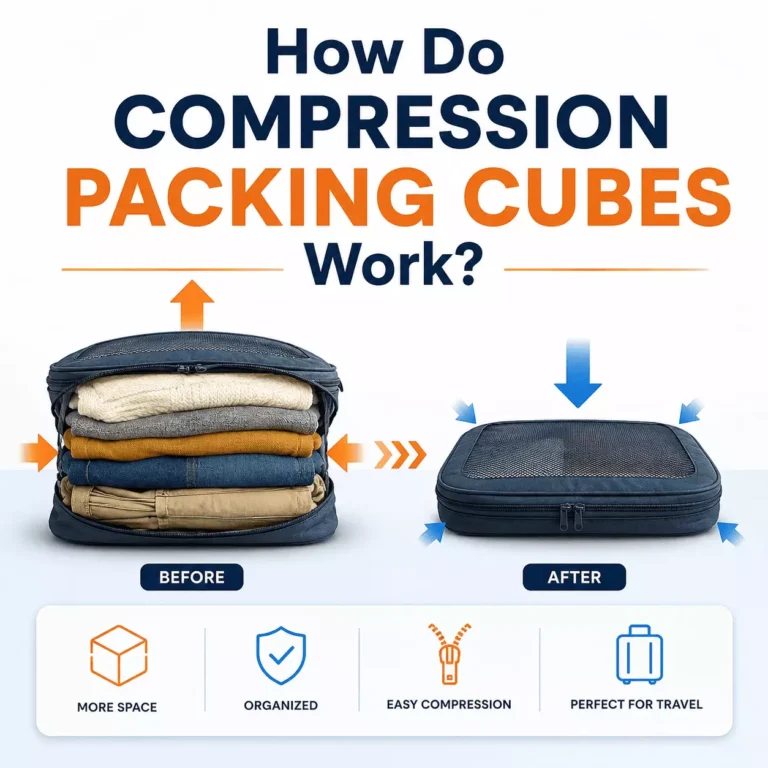
Standard cubes use just one zipper and focus purely on organization. What are compression packing cubes, by comparison? They add a second zipper that squeezes out trapped air after packing.
That extra squeeze shrinks soft items like sweaters and towels noticeably. Shoes and stiff items barely compress no matter how hard you push. Compression works best once a cube sits around eighty percent full.
Common Uses Beyond Travel
These pouches are not limited to suitcases and airports. What are packing cubes used for around the house? Many people place them inside dresser drawers to separate underwear, shirts, and socks.
How Do Compression Packing Cubes Work
How to Use Compression Packing Cubes
How to Pack with Packing Cubes for Maximum Luggage Space
How Do Packing Cubes Work? Benefits, Tips & Best Practices
Do Packing Cubes Save Space? Everything You Need to Know
Are Packing Cubes Worth It
How to Use Packing Cubes: The Ultimate Step-by-Step Guide
Vacuum Packing Cubes: The Ultimate Guide to Organized Travel
Packing Cubes for Luggage: The Ultimate Guide to Organized Travel
Packing Cubes for Travel: The Ultimate Guide to Smarter Packing
Gym bags benefit from the same system too. Pack a spare outfit or toiletries in one small cube for quick grabs. What are packing cubes good for with kids? Assigning one color per child cuts down on mixed-up toys or clothing during a move.
Choosing the Right Size and Count
Size should match what you plan to pack inside. What size packing cubes should I buy for a typical trip? Small cubes suit socks and cables, while large ones handle sweaters and jackets.
Trip length drives the total count you need. How many packing cubes do I need for a week away? Most travelers find that three to five cubes cover a full week comfortably.
Family trips or longer stays may call for more. Larger suitcases handle six or more cubes without feeling cramped. Match your set to your actual bag, not the biggest bundle on the shelf, and add pieces later if you find you need them.
Are They Actually Worth It
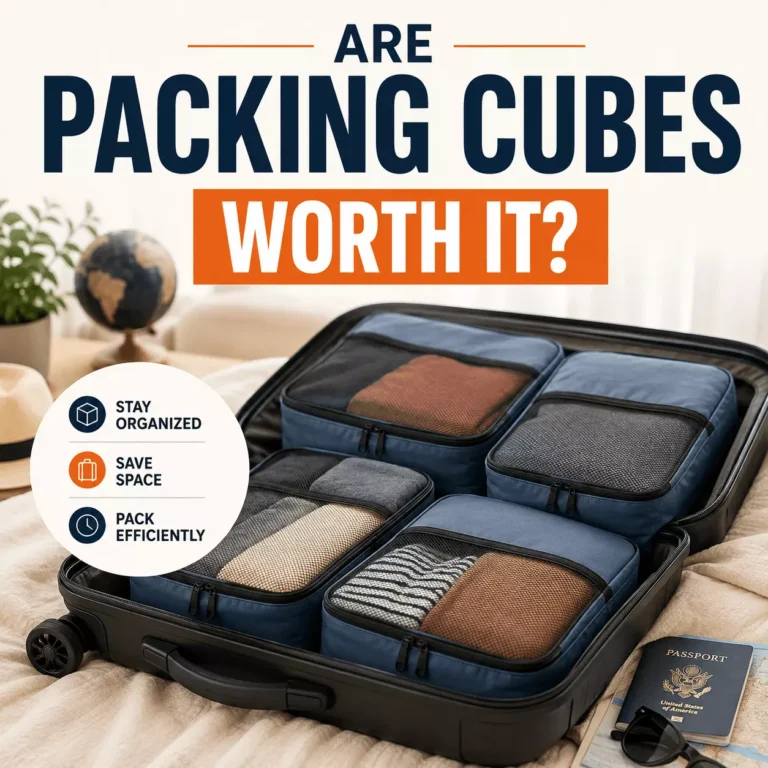
Most frequent travelers say yes without hesitation. Are packing cubes worth it for someone who only travels occasionally? The answer often depends on how much organization matters to your packing style.
The tradeoffs are small: a bit of added weight and an upfront cost. For business travelers and families, the time saved usually outweighs both. Casual weekend trippers may find a lighter, simpler system fits better.
Picking a Reliable Brand
Eagle Creek and Peak Design consistently rank high for build quality. What are the best packing cubes for someone buying their first set? Look for sturdy zippers, ripstop fabric, and a clear mesh panel.
Away and Bagail offer more budget-friendly alternatives without sacrificing much durability. Reading recent reviews helps you avoid a set with weak stitching. Warranty coverage can also be a helpful tiebreaker between similar options. A brand with a strong repair policy often signals better long-term durability too.
How Do Compression Packing Cubes Work
How to Use Compression Packing Cubes
How to Pack with Packing Cubes for Maximum Luggage Space
How Do Packing Cubes Work? Benefits, Tips & Best Practices
Do Packing Cubes Save Space? Everything You Need to Know
Are Packing Cubes Worth It
How to Use Packing Cubes: The Ultimate Step-by-Step Guide
Vacuum Packing Cubes: The Ultimate Guide to Organized Travel
Packing Cubes for Luggage: The Ultimate Guide to Organized Travel
Packing Cubes for Travel: The Ultimate Guide to Smarter Packing
Why Trust This Guide
This guide draws on hands-on packing habits and current retailer listings across multiple brands. Every material and sizing detail reflects what shows up in real product descriptions, not guesswork. We cross check claims against several sources before publishing, updating details as pricing and availability shift over time.
A useful guide should explain both the basics and the tradeoffs honestly. That balance is why this article covers materials, mechanics, and real buying advice together. Readers deserve a full picture before spending money on a new set, especially since prices and quality vary so widely across brands.
Packing Order and Loading Tips
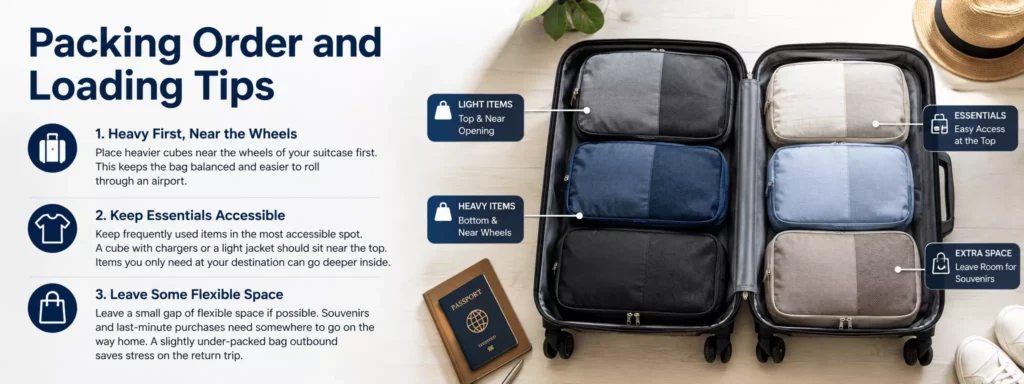
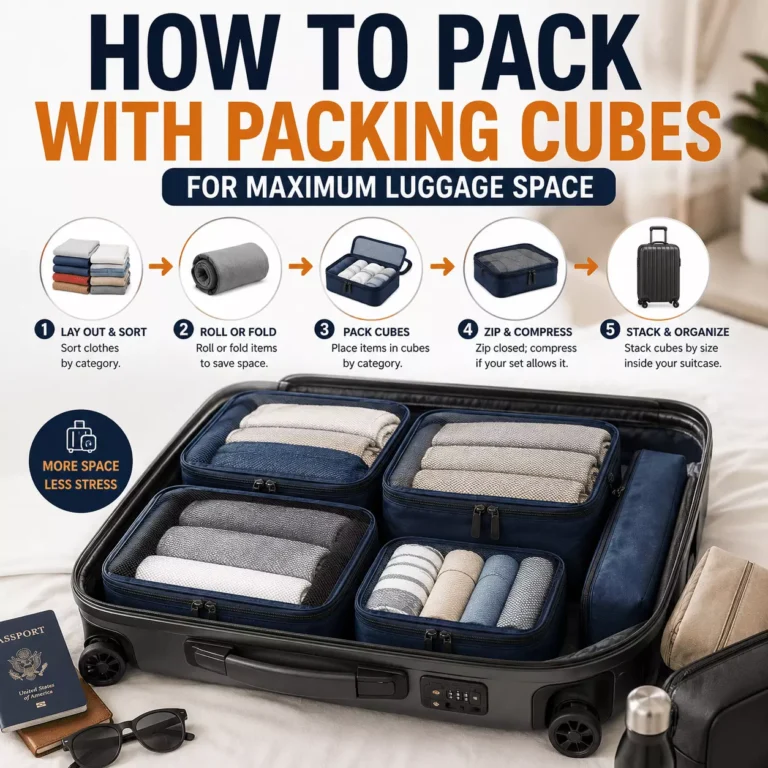
Place heavier cubes near the wheels of your suitcase first. This keeps the bag balanced and easier to roll through an airport. Lighter cubes stack naturally on top near the opening.
Keep frequently used items in the most accessible spot. A cube with chargers or a light jacket should sit near the top. Items you only need at your destination can go deeper inside the bag.
Leave a small gap of flexible space if possible. Souvenirs and last-minute purchases need somewhere to go on the way home. A slightly under-packed bag outbound saves stress on the return trip.
Adapting the System for Different Trips
Business trips benefit from a flat, wrinkle-resistant cube for dress shirts. Keep that cube separate from casual clothing to avoid creasing. A slim profile also fits neatly into a garment-friendly carry-on.
Cold weather trips need larger cubes for bulky sweaters and coats. Compression styles help the most in this scenario. Save your smallest cubes for accessories like gloves and scarves.
Beach trips call for a dedicated cube for swimwear and sandy items. Keep it away from clean, dry clothing at all times. A water-resistant fabric helps if anything is still damp when packed.
How Do Compression Packing Cubes Work
How to Use Compression Packing Cubes
How to Pack with Packing Cubes for Maximum Luggage Space
How Do Packing Cubes Work? Benefits, Tips & Best Practices
Do Packing Cubes Save Space? Everything You Need to Know
Are Packing Cubes Worth It
How to Use Packing Cubes: The Ultimate Step-by-Step Guide
Vacuum Packing Cubes: The Ultimate Guide to Organized Travel
Packing Cubes for Luggage: The Ultimate Guide to Organized Travel
Packing Cubes for Travel: The Ultimate Guide to Smarter Packing
Common Mistakes to Avoid
Buying the largest set available often backfires for new users. Oversized cubes tempt you to overpack and add unwanted weight. Match cube sizes to your actual trip length instead.
Skipping a test pack before a big trip is another common error. Cubes that looked fine online sometimes do not match your bag’s interior shape. Test the full set at home before departure day.
Ignoring zipper quality is a third mistake many first-time buyers make. Cheap zippers snag or fail after just a handful of uses. A slightly higher price often means fewer replacement purchases later.
Frequently Asked Questions
Do these pouches really save suitcase space?
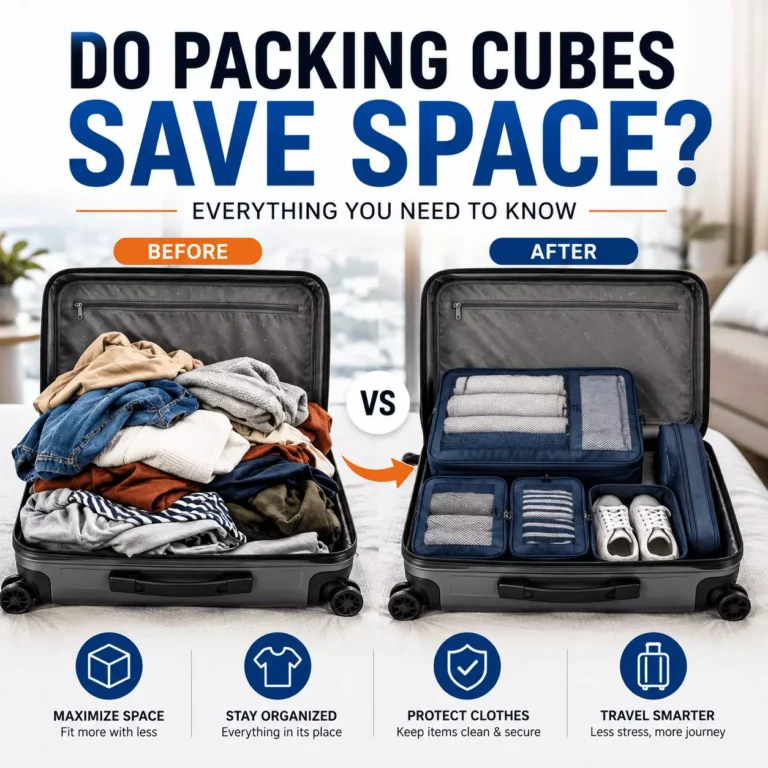
Standard cubes mainly organize rather than shrink your load. Compression styles do save real space on soft items. Shoes and stiff items barely compress at all.
Can they be used outside of travel?
Yes, many people use them in dresser drawers or gym bags. They also help organize kids’ toys during a move. The same sorting system works well at home.
What separates regular cubes from compression ones?
Regular cubes use one zipper and focus on organization only. Compression cubes add a second zipper to squeeze out air. That extra step shrinks bulky, soft items further.
Do they work in a hard-sided suitcase?
Yes, though rectangular shapes fit best against flat interior walls. Rounded cubes can waste corner space in a rigid case. Match the cube shape to your suitcase’s internal layout.
How do you clean them after a trip?
Most sets are machine washable on a gentle cycle. Air dry fully before storing to avoid mildew. Check the care label first, since mesh panels can tear in a dryer.
How Do Compression Packing Cubes Work
How to Use Compression Packing Cubes
How to Pack with Packing Cubes for Maximum Luggage Space
How Do Packing Cubes Work? Benefits, Tips & Best Practices
Do Packing Cubes Save Space? Everything You Need to Know
Are Packing Cubes Worth It
How to Use Packing Cubes: The Ultimate Step-by-Step Guide
Vacuum Packing Cubes: The Ultimate Guide to Organized Travel
Packing Cubes for Luggage: The Ultimate Guide to Organized Travel
Packing Cubes for Travel: The Ultimate Guide to Smarter Packing
Are they good for carry-on-only travel?
Yes, slim and flat cubes maximise tight overhead space. Choose smaller sizes for a personal item bag. Bulky boxy cubes waste room in compact luggage.
Can one set fit different luggage sizes?
Mostly yes, since cubes are independent of any specific bag. A mixed-size set adapts well to both carry-on and checked luggage. Just confirm the largest cube fits your smallest bag first.
Final Thoughts
Packing cubes turn a chaotic suitcase into a simple, sorted system in just a few minutes. Pick a size and count that matches your actual trip length, not the biggest set on the shelf. Once you find a brand and style that fits your habits, packing becomes a quick routine instead of a stressful chore.
Take a few minutes to compare zipper quality and fabric weight before buying your first set. Small differences in construction add up over dozens of trips. The right cubes make every future departure a little smoother, whether you travel once a year or once a month, and the habit of sorting by category tends to stick once you try it.
Explore All 14 Travel Essentials Categories
- Luggage & Bags
- Packing Organisation & Cubes
- Travel Tech & Electronics
- Toiletries & Travel-Size
- Travel Comfort
- Travel Safety & Security
- Packing Lists by Trip Type
- Packing Lists by Destination
- Travel Documents & Money
- Travel Clothing & Footwear
- Health, Hygiene & First-Aid
- Airport, Airline & Rules
- Essentials Guide
- Essentials for Women, Men & Family