

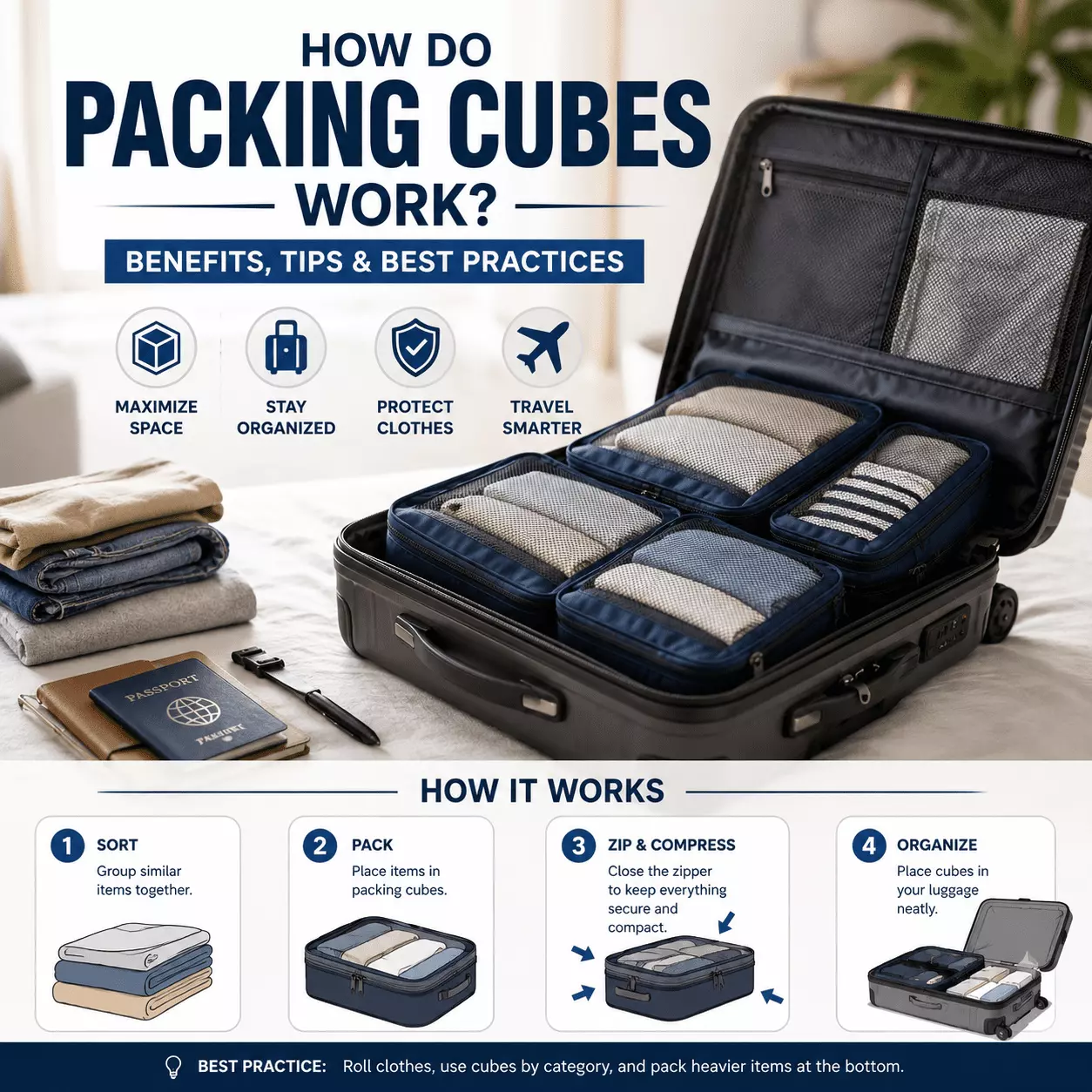
The Basic Mechanism
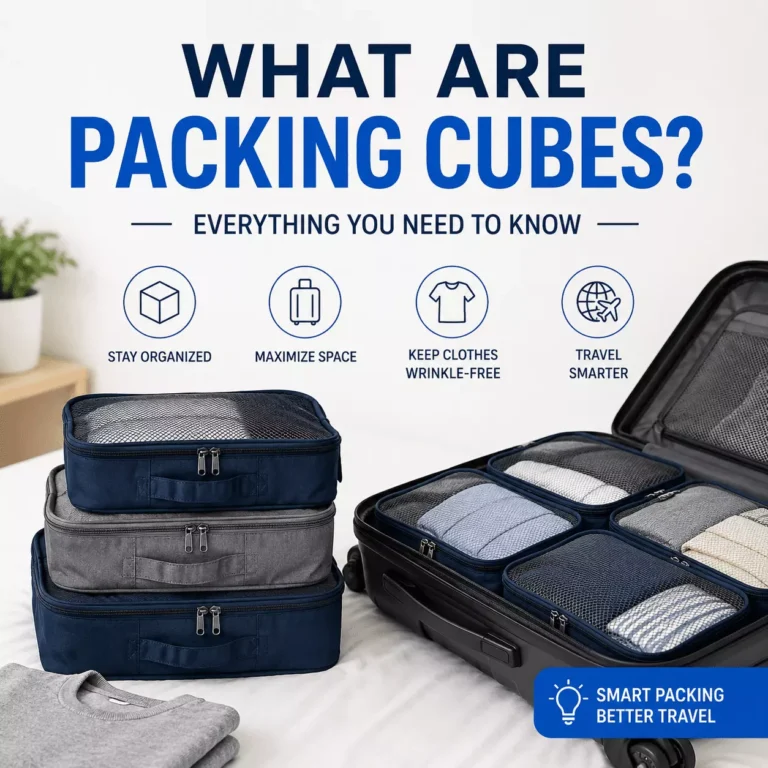
The core idea stays simple across almost every brand. How do packing cubes work in a suitcase, mechanically speaking? You load items inside, zip the main closure, and the fabric holds everything in a fixed rectangular shape.
That shape prevents clothes from expanding into empty gaps. Items stay contained even when the bag gets tossed around during transit. The result is a cleaner layout with far fewer wasted pockets of air.
Quick Facts
| Feature | What to Know |
|---|---|
| Basic Function | Compression packing cubes organize clothing into separate sections while reducing bulk for more efficient packing. |
| Compression Method | Available with a double compression zipper, external compression straps, or a vacuum valve, depending on the design. |
| Common Materials | Premium cubes are commonly made from ripstop nylon, TPU-coated fabric, and breathable mesh panels. |
| Common Sizes | Typically available in small, medium, and large sizes for organizing different types of clothing and accessories. |
| Ideal Fill Level | For the best compression and zipper performance, fill cubes to about 80% of their capacity. |
| Space Saved | Compression cubes can reduce the volume of soft, bulky clothing by approximately 20–50%, depending on the fabric. |
| Zipper Brand to Look For | Choose cubes with YKK or other reinforced premium zippers for smoother operation and longer durability. |
| Price Range | A quality compression packing cube set typically costs between $15 and $60, depending on the brand and number of pieces. |
Regular vs Compression Mechanics
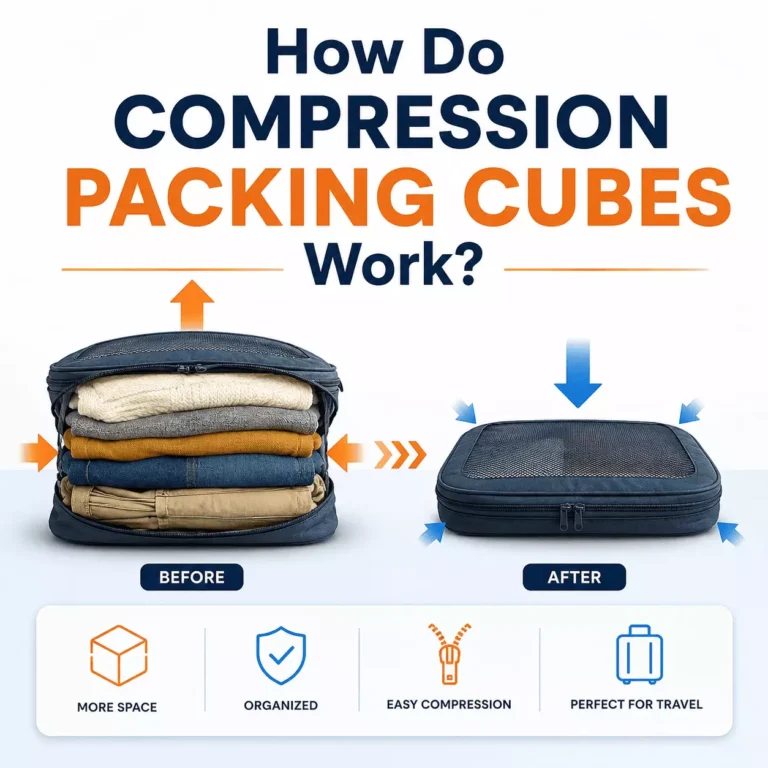
Standard cubes use just one zipper and focus purely on containment. How do compression packing cubes work differently? They add a second zipper along the outer edge that squeezes the contents down further.
How Do Compression Packing Cubes Work
How to Use Compression Packing Cubes
How to Pack with Packing Cubes for Maximum Luggage Space
Do Packing Cubes Save Space? Everything You Need to Know
What Are Packing Cubes? Everything You Need to Know
Are Packing Cubes Worth It
How to Use Packing Cubes: The Ultimate Step-by-Step Guide
Vacuum Packing Cubes: The Ultimate Guide to Organized Travel
Packing Cubes for Luggage: The Ultimate Guide to Organized Travel
Packing Cubes for Travel: The Ultimate Guide to Smarter Packing
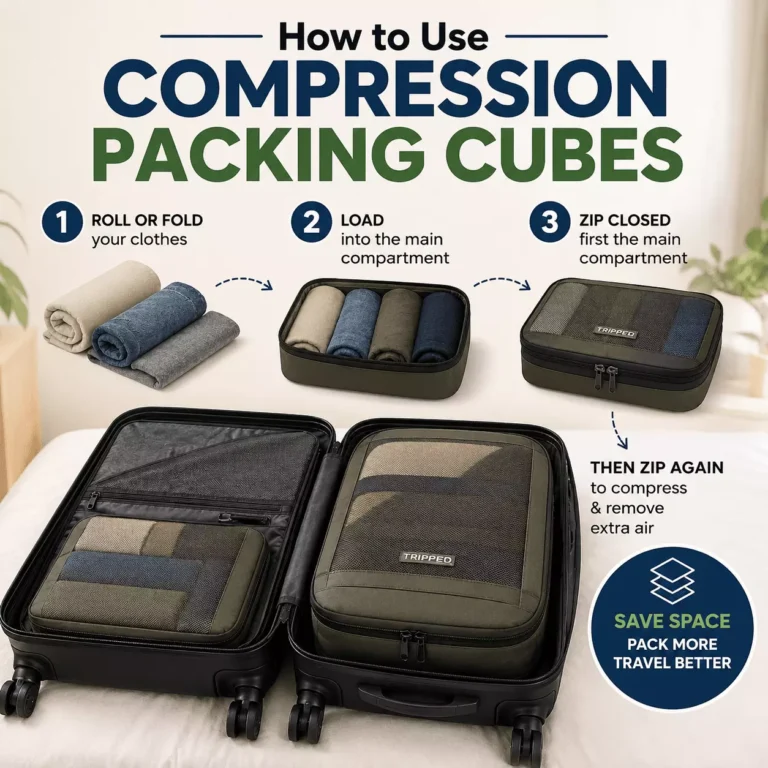
You zip the main closure first to secure your items. How does the compression zipper work on packing cubes after that step? Pulling the second zipper slowly around the perimeter forces trapped air out through small gaps in the fabric.
Brands like Eagle Creek and Peak Design popularized this dual-zipper design years ago. The mechanism has barely changed since, because it works reliably. A slower, careful pull avoids straining the seams under pressure.
Three Compression Methods Explained
Double zippers remain the most common compression method by far. A main closure secures items, then an outer track cinches everything tighter. This design stays simple and needs no extra tools or batteries.
External straps offer another approach for oddly shaped items. Adjustable straps wrap around the cube, letting you tighten contents by pulling a buckle. This method suits bulky, uneven loads better than a straight zipper pull.
How do vacuum packing cubes work compared to these zipper-based systems? A small pump attaches to a sealed valve and actively draws air out. This method compresses the most but relies on battery power or manual pumping to function.
How Cubes Actually Save Suitcase Space
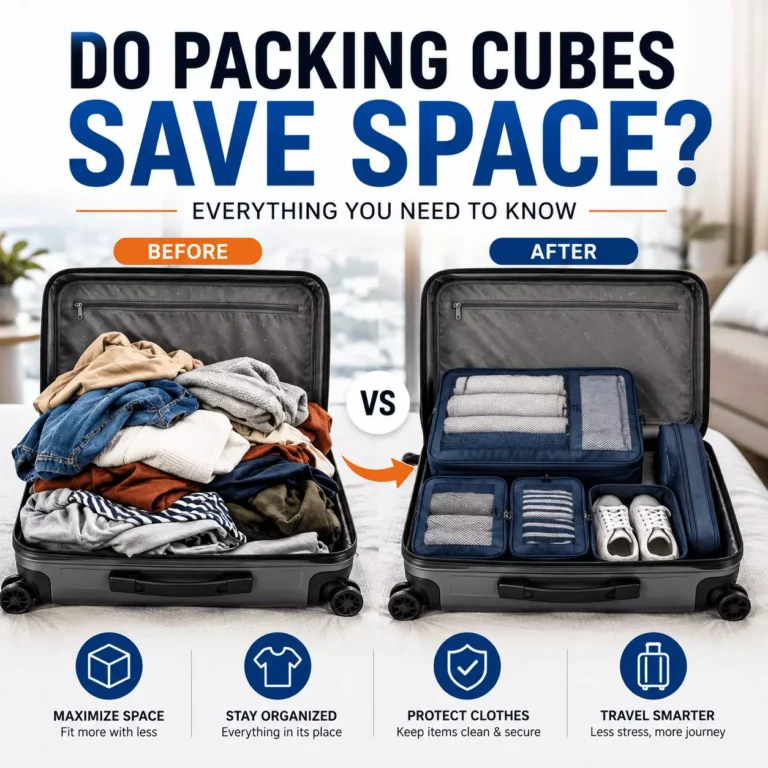
How do packing cubes save space beyond simple containment? Three practical effects combine to create the benefit. Clothes cannot expand and spread once they sit inside a fixed pouch.
How Do Compression Packing Cubes Work
How to Use Compression Packing Cubes
How to Pack with Packing Cubes for Maximum Luggage Space
Do Packing Cubes Save Space? Everything You Need to Know
What Are Packing Cubes? Everything You Need to Know
Are Packing Cubes Worth It
How to Use Packing Cubes: The Ultimate Step-by-Step Guide
Vacuum Packing Cubes: The Ultimate Guide to Organized Travel
Packing Cubes for Luggage: The Ultimate Guide to Organized Travel
Packing Cubes for Travel: The Ultimate Guide to Smarter Packing
Movement gets reduced too, since items stay in place even when a bag tips or gets stacked. Wasted space shrinks because cubes stack together like blocks instead of leaving random gaps. Compression styles add a fourth benefit by physically shrinking soft, bulky fabric.
Materials That Make Them Work
Most cubes use ripstop nylon for the outer shell, prized for resisting tears under pressure. Some premium sets add a TPU coating for extra water resistance and structure. Mesh top panels let you see contents without unzipping every pouch.
Reinforced seams around the zipper track matter more than most buyers realise. Weak stitching fails first under repeated compression. Quality zippers, often from YKK, handle years of daily use without snagging.
Sizing Logic: Small, Medium, Large
Sets typically come in three main sizes to match different item types. How do packing cube sizes work in a full set? Small cubes suit socks and cables, medium cubes fit shirts, and large cubes handle sweaters or jackets.
Matching size to item type maximises the benefit of the whole system. A jacket stuffed into a small cube compresses poorly and strains the zipper. Choosing the right size for each category avoids that problem entirely.
Using the System Properly
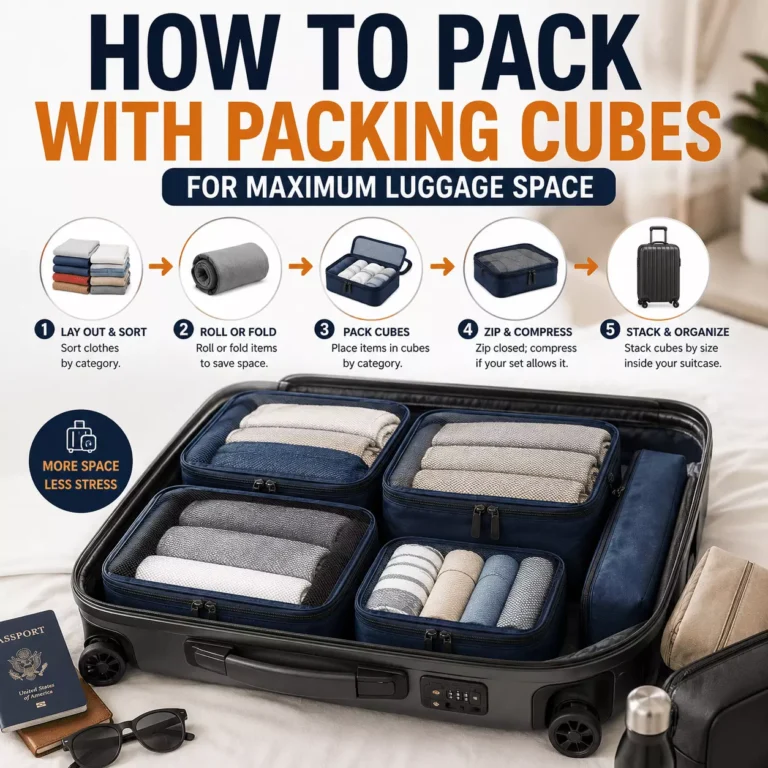
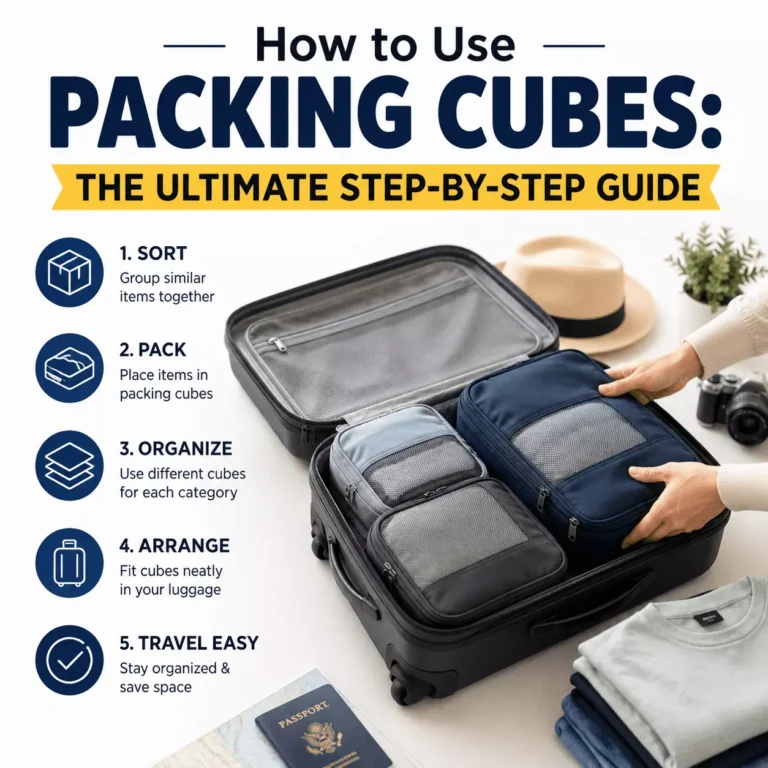
Sorting by category comes before any zipping or compressing. How do you use packing cubes properly from the start? Group tops, bottoms, and undergarments separately before loading anything into a cube.
Rolling clothes instead of folding saves additional space inside each pouch. Compression works best once a cube sits around eighty percent full, not stuffed to the limit. Overpacking a single cube strains the zipper and reduces how flat it can get.
How Do Compression Packing Cubes Work
How to Use Compression Packing Cubes
How to Pack with Packing Cubes for Maximum Luggage Space
Do Packing Cubes Save Space? Everything You Need to Know
What Are Packing Cubes? Everything You Need to Know
Are Packing Cubes Worth It
How to Use Packing Cubes: The Ultimate Step-by-Step Guide
Vacuum Packing Cubes: The Ultimate Guide to Organized Travel
Packing Cubes for Luggage: The Ultimate Guide to Organized Travel
Packing Cubes for Travel: The Ultimate Guide to Smarter Packing
How the System Works for Travel and Carry-On
How do packing cubes work for travel days specifically? They speed up both packing at home and unpacking at a hotel. Pulling one cube out instead of digging through a full suitcase saves real time.
How do packing cubes work for carry-on bags with strict size limits? Slim, flat compression cubes help you maximize tight overhead space. Standard cubes still help keep items organized, even without any compression feature.
Organization Beyond Space Savings
How do packing cubes help with organization on longer, multi-stop trips? Clean and dirty laundry stay separated the entire time. Security checks move faster, too, since agents can open one cube instead of scattering your whole bag.
Color coding takes this a step further for families or shared luggage. Assigning one color per person or category cuts down on mixed-up items. This small system pays off most on trips involving more than one traveler.
Troubleshooting Common Zipper Issues
A stuck zipper is the most common complaint among frequent users. Gently working it back and forth usually frees the track. A small amount of graphite from a pencil can help it glide again.
Ripped seams need a quick fix on the road and a permanent repair at home. A basic travel sewing kit handles most emergency patches. Reinforcing the seam later extends the life of the whole cube.
Common Mistakes to Avoid
Buying only compression cubes for an entire wardrobe wastes their real advantage. Save the second zipper for bulky items that actually benefit from it. Standard cubes work fine for shirts and everyday clothing.
Skipping a test pack before a big trip causes avoidable frustration. Zippers can resist closing on a cube packed too full. Test the full set at home before departure day.
Ignoring fabric weight is a third mistake many first-time buyers make. Heavy canvas cubes add ounces that defeat the purpose of packing light. Compare the empty set weight across a few options before deciding.
How Do Compression Packing Cubes Work
How to Use Compression Packing Cubes
How to Pack with Packing Cubes for Maximum Luggage Space
Do Packing Cubes Save Space? Everything You Need to Know
What Are Packing Cubes? Everything You Need to Know
Are Packing Cubes Worth It
How to Use Packing Cubes: The Ultimate Step-by-Step Guide
Vacuum Packing Cubes: The Ultimate Guide to Organized Travel
Packing Cubes for Luggage: The Ultimate Guide to Organized Travel
Packing Cubes for Travel: The Ultimate Guide to Smarter Packing
Loading Order Inside the Suitcase
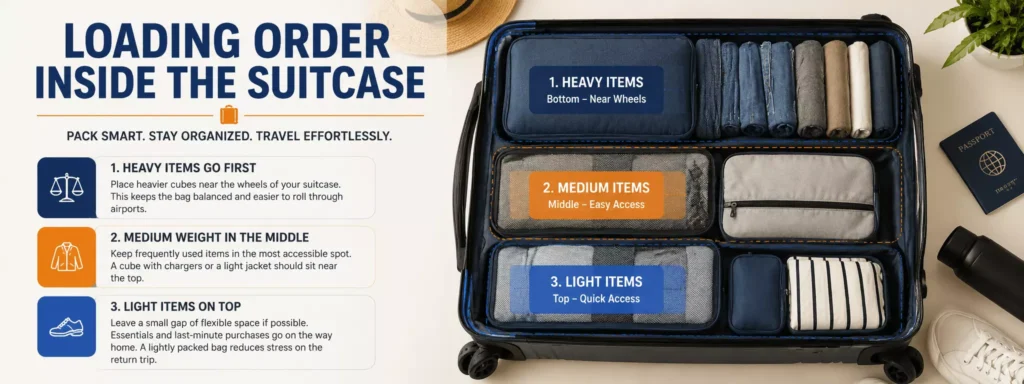
Place heavier cubes near the wheels of your suitcase first. This keeps the bag balanced and easier to roll through an airport. Lighter cubes stack naturally on top near the opening.
Keep frequently used items in the most accessible spot. A cube with chargers or a light jacket should sit near the top. Items you only need at your destination can go deeper inside the bag.
Leave a small gap of flexible space if possible. Souvenirs and last-minute purchases need somewhere to go on the way home. A slightly under-packed bag outbound saves stress on the return trip.
Why Trust This Guide
This guide draws on hands-on packing habits and mechanical details confirmed across multiple manufacturer descriptions. Every claim about zippers, materials, and compression methods reflects what shows up consistently in real product testing. We cross check details before publishing and update them as designs evolve.
A useful guide should explain the actual mechanism, not just repeat marketing claims. That balance is why this article breaks down zippers, straps, and valves separately. Readers deserve to understand what they are buying before spending money on a new set.
Frequently Asked Questions
What is the difference between regular and compression cubes?
Regular cubes use one zipper and only organize items. Compression cubes add a second zipper to squeeze out air. That extra step shrinks soft, bulky clothing further.
Do compression cubes damage clothes over time?
Rarely, though, stiff fabrics compress less cleanly than soft cotton. Rolling clothes first reduces strain on seams. Delicate items may wrinkle slightly under repeated pressure.
Can you fix a stuck packing cube zipper?
Yes, gently working it back and forth usually helps. A little graphite from a pencil can ease the track. Avoid aggressive tugging, which can bend the zipper teeth.
How Do Compression Packing Cubes Work
How to Use Compression Packing Cubes
How to Pack with Packing Cubes for Maximum Luggage Space
Do Packing Cubes Save Space? Everything You Need to Know
What Are Packing Cubes? Everything You Need to Know
Are Packing Cubes Worth It
How to Use Packing Cubes: The Ultimate Step-by-Step Guide
Vacuum Packing Cubes: The Ultimate Guide to Organized Travel
Packing Cubes for Luggage: The Ultimate Guide to Organized Travel
Packing Cubes for Travel: The Ultimate Guide to Smarter Packing
How full should a compression cube be packed?
Around 80 percent full works best for compression. A cube stuffed past that point strains the zipper. Leave a small margin so the seal closes smoothly.
Are external strap cubes better than zipper cubes?
Not universally, but straps suit oddly shaped or bulky items better. Zipper systems remain simpler and more common overall. Choose based on the type of gear you pack the most.
Do packing cubes work in a hard-sided suitcase?
Yes, though rectangular shapes fit best against flat interior walls. Rounded cubes can waste corner space in a rigid case. Match cube shape to your suitcase’s internal layout.
What material lasts longest for packing cubes?
Ripstop nylon with reinforced seams tends to hold up best. TPU-coated fabric adds extra durability against wear. Quality zippers matter just as much as the fabric itself.
Final Thoughts
Packing cubes work through a simple combination of containment and, in compression styles, mechanical air removal. Understanding the mechanism helps you choose the right size, material, and compression method for your own travel style. A well-built set turns a chaotic suitcase into a fast, predictable system on every trip.
Explore All 14 Travel Essentials Categories
- Luggage & Bags
- Packing Organisation & Cubes
- Travel Tech & Electronics
- Toiletries & Travel-Size
- Travel Comfort
- Travel Safety & Security
- Packing Lists by Trip Type
- Packing Lists by Destination
- Travel Documents & Money
- Travel Clothing & Footwear
- Health, Hygiene & First-Aid
- Airport, Airline & Rules
- Essentials Guide
- Essentials for Women, Men & Family