

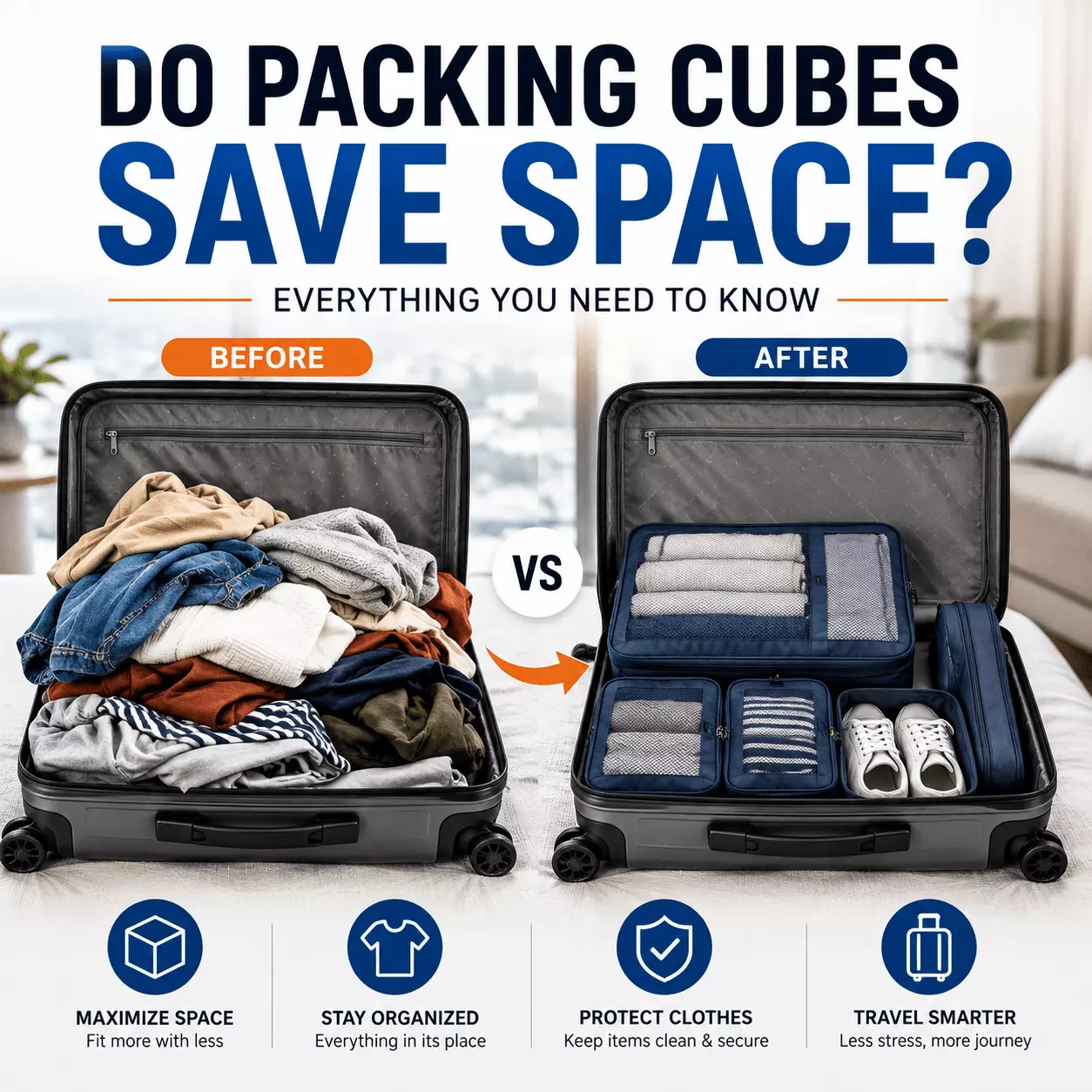
The Short Answer, With Real Numbers
Testing backs up the claim more than marketing alone. One university test found that shirts compressed inside cubes shrank by 45 percent on average. A 2023 survey found that 82 percent of travelers reported gaining 30 percent or more usable space.
Those numbers apply mainly to compression styles, not basic cubes. Regular cubes without a second zipper rarely shrink anything at all. Their main value comes from tighter, more efficient packing, not actual volume reduction.
Quick Facts
| Feature | What to Know |
|---|---|
| Regular Cubes | Mainly organize clothing and improve packing efficiency, typically saving 10–15% of space through better organization. |
| Compression Cubes | Reduce the volume of soft, bulky clothing by approximately 20–50% using an extra compression zipper. |
| Vacuum Cubes | Can save up to 60% of packing space when used with a vacuum or portable air pump. |
| Best for Compression | Ideal for sweaters, fleece, hoodies, puffy jackets, and other bulky soft garments. |
| Worst for Compression | Not recommended for shoes, electronics, or stiff fabrics that don’t compress well. |
| Rolling vs. Cubes | Rolling clothes generally saves the most raw space, while packing cubes provide better organization and easier access. |
| Weight Impact | Packing cubes add a small amount of weight and may encourage overpacking if not used carefully. |
| Price Range | A quality packing cube set typically costs between $15 and $60, depending on the brand and features. |
Regular Cubes vs Compression Cubes
Do regular packing cubes save space the same way compression ones do? Not really. Standard cubes just contain your clothes in a fixed shape, similar to stacking boxes inside a suitcase.
How Do Compression Packing Cubes Work
How to Use Compression Packing Cubes
How to Pack with Packing Cubes for Maximum Luggage Space
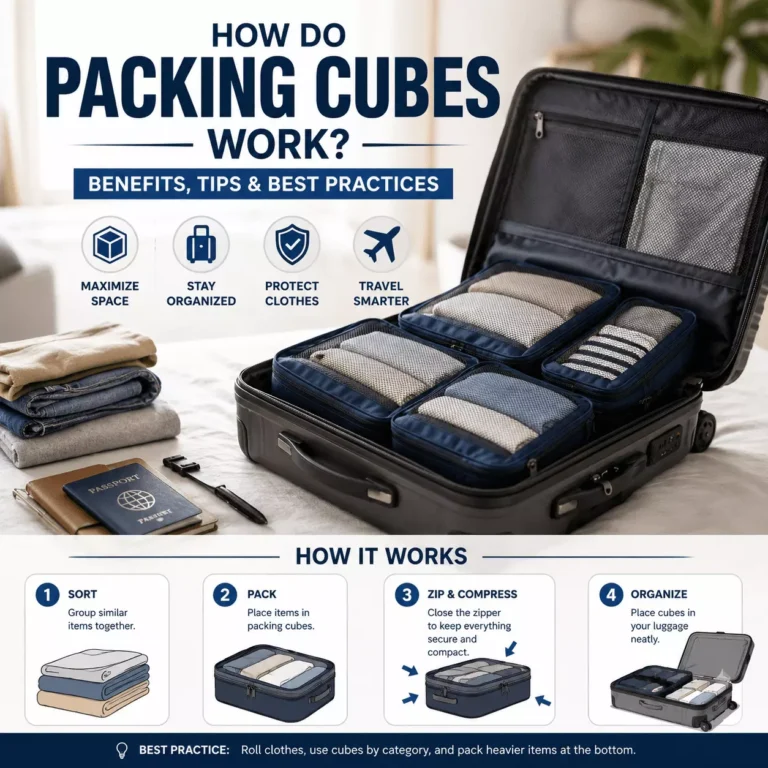
How Do Packing Cubes Work? Benefits, Tips & Best Practices
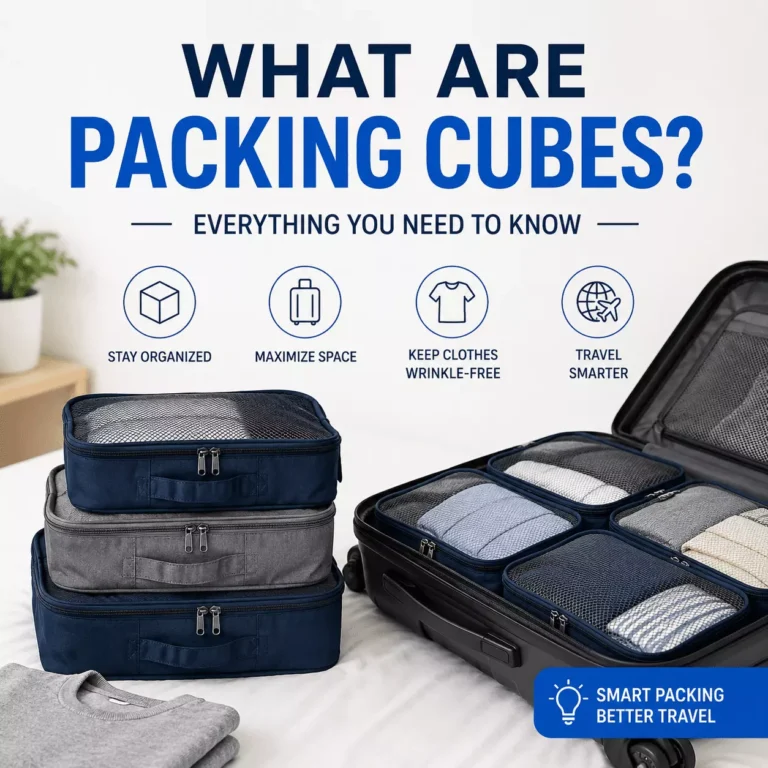
What Are Packing Cubes? Everything You Need to Know
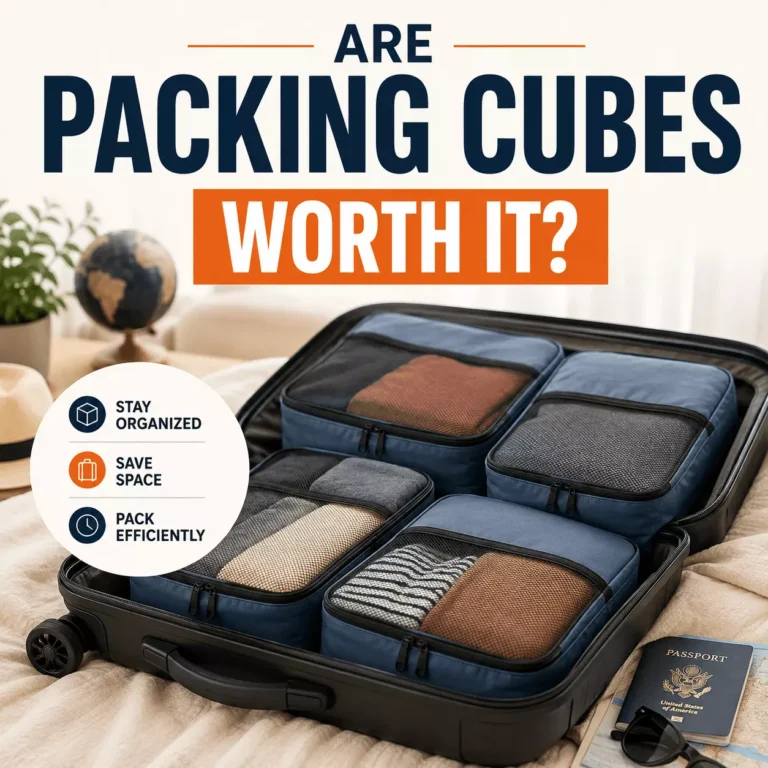
Are Packing Cubes Worth It
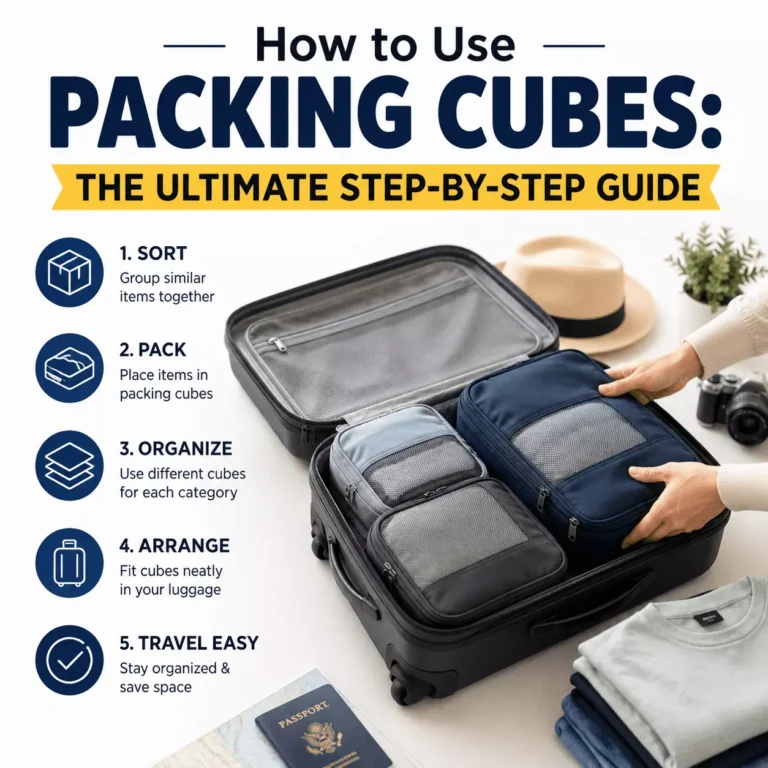
How to Use Packing Cubes: The Ultimate Step-by-Step Guide
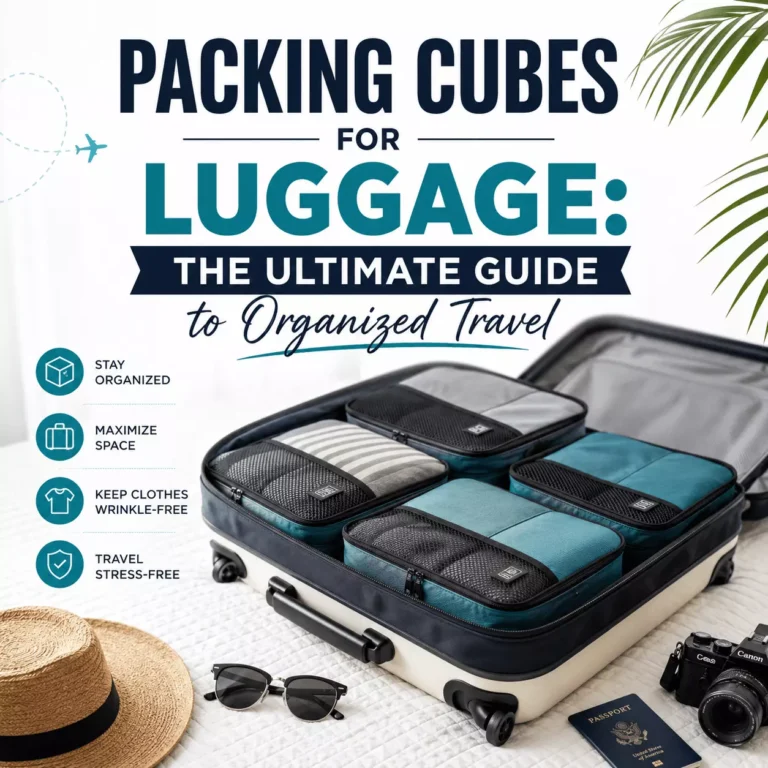
Vacuum Packing Cubes: The Ultimate Guide to Organized Travel
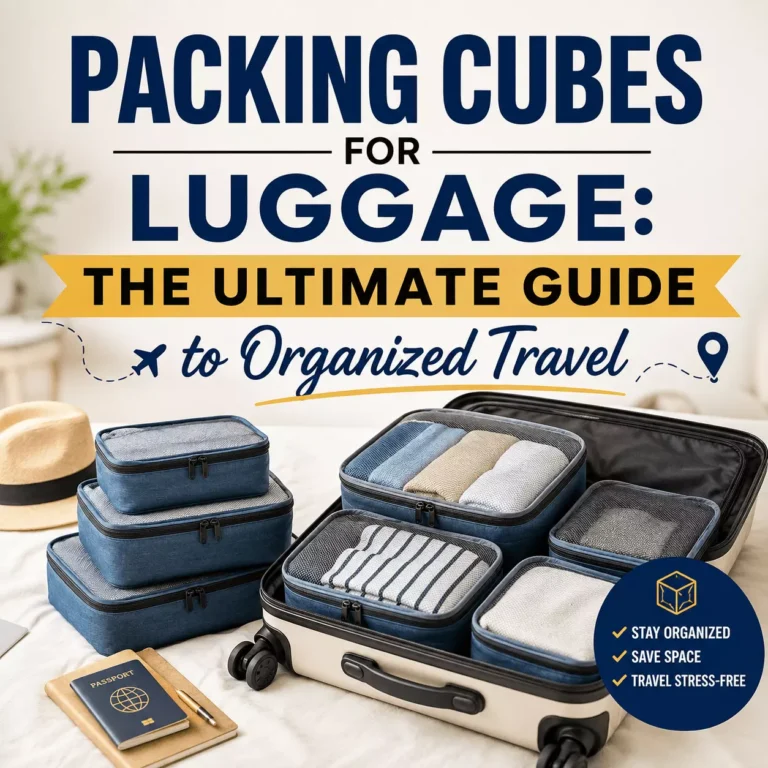
Packing Cubes for Luggage: The Ultimate Guide to Organized Travel
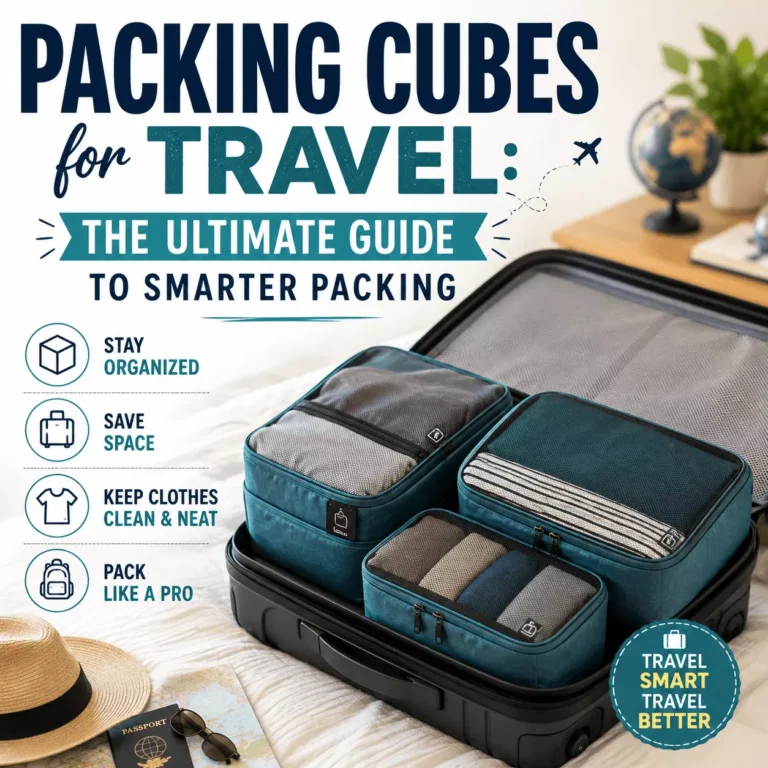
Packing Cubes for Travel: The Ultimate Guide to Smarter Packing
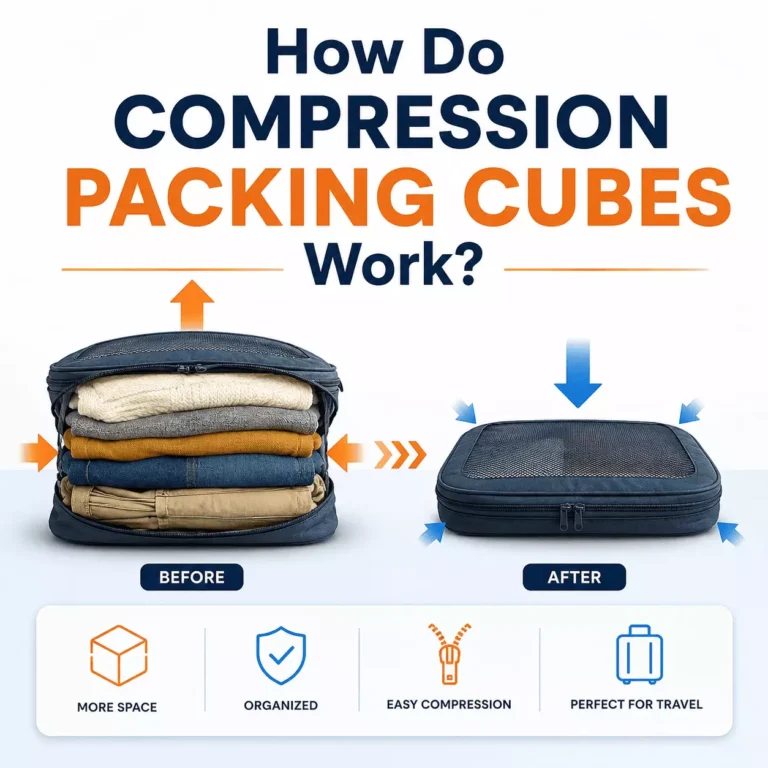
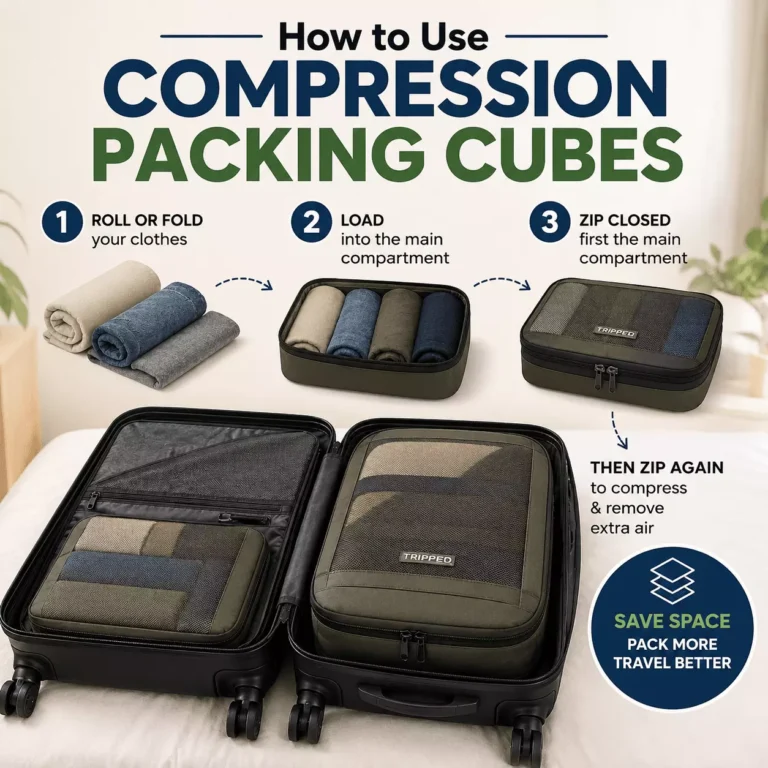
Do compression packing cubes save space more effectively? Yes, thanks to a second zipper that squeezes out trapped air. That extra step can flatten a bulky sweater down noticeably in just a few seconds.
The tradeoff is worth noting, too. Compressing the edges of a cube can push contents toward the center, creating a bulge. So a cube may look thinner from the side without actually taking up less total room.
How Much Space Can You Actually Expect
How much space do packing cubes save on an average trip? Expect a 20 to 50 percent volume reduction on soft items like t-shirts and sweaters. Stiff items barely compress no matter how firmly you pack them.
Fluffy sweaters, fleece jackets, and puffy coats compress the most dramatically. Structured items like blazers or jeans compress far less due to their stiffer fabric. Matching the right items to compression cubes makes the biggest practical difference.
When Cubes Add Bulk Instead of Saving It
Do packing cubes save space or add bulk in certain situations? Sometimes the fabric of the cube itself takes up more room than it saves. This matters most on short trips with only a few items packed.
Shoes, toiletry bags, and electronics already have a fixed shape. Placing them inside a cube usually adds material around them without saving meaningful space. Save cubes for soft, compressible clothing instead of rigid items.
How Do Compression Packing Cubes Work
How to Use Compression Packing Cubes
How to Pack with Packing Cubes for Maximum Luggage Space
How Do Packing Cubes Work? Benefits, Tips & Best Practices
What Are Packing Cubes? Everything You Need to Know
Are Packing Cubes Worth It
How to Use Packing Cubes: The Ultimate Step-by-Step Guide
Vacuum Packing Cubes: The Ultimate Guide to Organized Travel
Packing Cubes for Luggage: The Ultimate Guide to Organized Travel
Packing Cubes for Travel: The Ultimate Guide to Smarter Packing
Overfilling a cube backfires, too. A cube stuffed past its limit becomes lumpy and harder to fit neatly. Pack firmly but leave a small margin so the compression zipper can do its job properly.
Real Traveler Tests: Rolling vs Cubes vs Compression
Do packing cubes really save space compared to simply rolling clothes tightly? In hands-on tests, tightly rolled clothes packed loosely actually used the least total space. That method is efficient but time-consuming for most travelers.
Standard cubes came in behind rolling in several side-by-side tests. Organized but bulkier, they made the suitcase harder to close in one comparison. Compression cubes landed in the middle, offering a mix of structure and modest space savings.
The real winner depends on your priorities. Rolling wins on pure space efficiency. Cubes win on organization and speed, with compression styles closing much of the space gap.
Does Saving Space Mean Saving Weight
Do packing cubes save weight along with space? Not directly, since the fabric itself adds a small amount of extra weight to your bag. The real risk is different: extra space can tempt you to pack more items overall.
That temptation often cancels out any weight benefit from compression. Treating each cube as a fixed limit helps avoid this trap. Weigh your finished bag before heading to the airport, regardless of which method you use.
Packing Cubes for Flights and Carry-On Limits
Do packing cubes save space when flying with strict carry-on limits? Slim, flat compression cubes help the most in tight overhead compartments. Standard cubes still help by keeping items from shifting during a bumpy flight.
Airlines increasingly enforce stricter personal item and carry-on size rules. A well-compressed bag has a better chance of meeting those exact dimensions. That advantage matters more each year as size limits keep tightening.
How Do Compression Packing Cubes Work
How to Use Compression Packing Cubes
How to Pack with Packing Cubes for Maximum Luggage Space
How Do Packing Cubes Work? Benefits, Tips & Best Practices
What Are Packing Cubes? Everything You Need to Know
Are Packing Cubes Worth It
How to Use Packing Cubes: The Ultimate Step-by-Step Guide
Vacuum Packing Cubes: The Ultimate Guide to Organized Travel
Packing Cubes for Luggage: The Ultimate Guide to Organized Travel
Packing Cubes for Travel: The Ultimate Guide to Smarter Packing
Organisational Value Beyond Space Savings
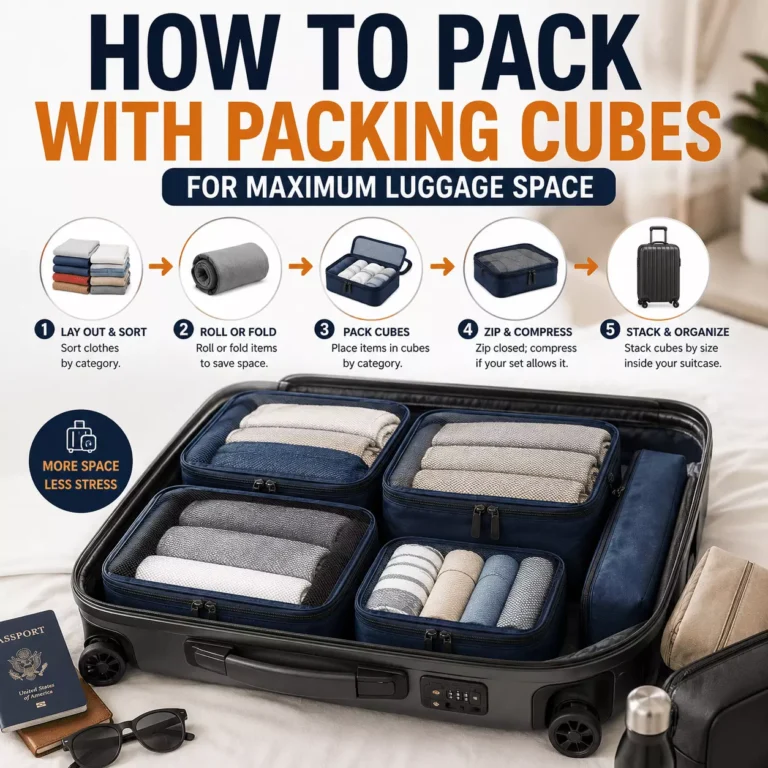
Do packing cubes work for organization even when space savings stay modest? Absolutely, and this benefit often matters more than the numbers suggest. Sorting clothes by category means faster packing and even faster unpacking.
Security checks move faster, too, since agents can open one cube instead of scattering an entire bag. Clean and dirty laundry stay separated throughout a trip. These organizational wins exist regardless of whether you choose regular or compression styles.
Vacuum Cubes: The Next Level of Compression
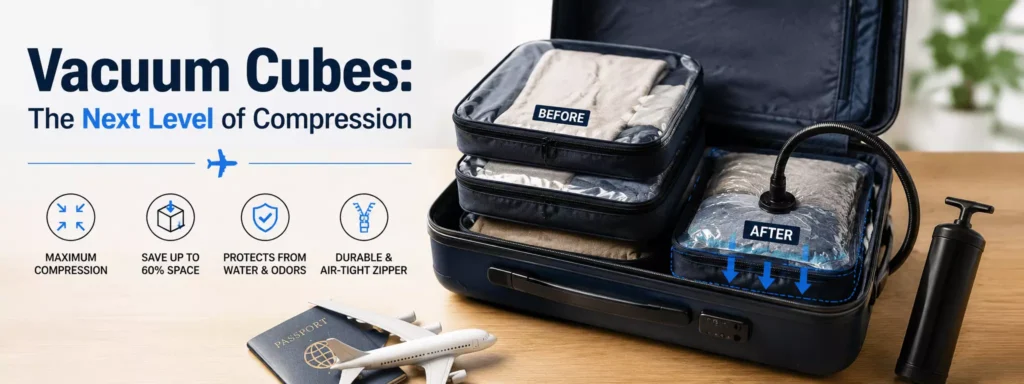
Do vacuum packing cubes save more space than standard compression styles? Yes, since a pump removes nearly all trapped air instead of relying on a hand-pulled zipper. Some sets report up to 60 percent volume reduction using this method.
The tradeoff is an extra gear and a rechargeable pump to manage. Do packing cubes save space in luggage without any electronics involved? Standard compression zippers still deliver solid results without needing a battery at all.
Why Trust This Guide
This guide draws on published testing data, traveler surveys, and hands-on side-by-side comparisons. Every figure reflects what shows up consistently across multiple independent sources, not guesswork. We cross check claims before publishing and update details as new tests emerge.
A useful guide should present the real numbers, not just marketing claims. That balance is why this article separates regular cubes from compression styles clearly. Readers deserve accurate expectations before spending money on a new set.
Frequently Asked Questions
Is rolling clothes better than using packing cubes?
Rolling alone saves more raw space in direct tests. Cubes add organization that rolling alone does not provide. Many travelers combine both methods for the best result.
Do packing cubes work for shoes and toiletries?
Not really for space savings, since those items keep their shape. Cubes still help keep them separated from clean clothes. Use a basic pouch instead if space is the main goal.
How Do Compression Packing Cubes Work
How to Use Compression Packing Cubes
How to Pack with Packing Cubes for Maximum Luggage Space
How Do Packing Cubes Work? Benefits, Tips & Best Practices
What Are Packing Cubes? Everything You Need to Know
Are Packing Cubes Worth It
How to Use Packing Cubes: The Ultimate Step-by-Step Guide
Vacuum Packing Cubes: The Ultimate Guide to Organized Travel
Packing Cubes for Luggage: The Ultimate Guide to Organized Travel
Packing Cubes for Travel: The Ultimate Guide to Smarter Packing
Can overfilling a cube reduce its compression benefit?
Yes, a cube stuffed too full becomes lumpy and hard to flatten. Leave a small margin so the zipper can close smoothly. Firm but not forced packing works best.
Are compression cubes worth it for a short trip?
Often not, since the extra step may not pay off. One or two standard cubes usually suffice for a weekend trip. Save compression for longer or bulkier packing needs.
Do packing cubes help avoid checked bag fees?
Sometimes, by helping everything fit into a carry-on limit. Compression styles offer the best chance of hitting exact size rules. Results vary based on how much you are trying to pack.
How do you know if a cube is overstuffed?
The zipper will feel tight or hard to close smoothly. Visible bulging at the seams is another clear sign. Remove one item if the compression zip resists closing.
Is there a downside to using too many cubes?
Yes, excess cubes add unnecessary weight to your bag. Unused cubes also take up space meant for clothing. Match your cube count to your actual trip length.
Common Mistakes to Avoid
Buying only compression cubes for an entire wardrobe wastes their real advantage. Save the second zipper for bulky items that actually benefit. Standard cubes work fine for shirts and everyday clothing.
Skipping a test pack before a big trip is another common error. Zippers can snag or resist closing on a full cube. Test the full set at home before departure day.
Ignoring fabric weight is a third mistake many buyers make. Heavy canvas cubes add ounces that defeat the purpose of packing light. Compare the empty set weight across a few options before deciding.
How Do Compression Packing Cubes Work
How to Use Compression Packing Cubes
How to Pack with Packing Cubes for Maximum Luggage Space
How Do Packing Cubes Work? Benefits, Tips & Best Practices
What Are Packing Cubes? Everything You Need to Know
Are Packing Cubes Worth It
How to Use Packing Cubes: The Ultimate Step-by-Step Guide
Vacuum Packing Cubes: The Ultimate Guide to Organized Travel
Packing Cubes for Luggage: The Ultimate Guide to Organized Travel
Packing Cubes for Travel: The Ultimate Guide to Smarter Packing
Getting the Most Out of Your Cubes
Group similar fabric types together for the best compression results. Mixing stiff jeans with soft sweaters in one cube limits how flat it gets. Separate categories compress far more evenly on their own.
Rolling clothes before loading them into a cube boosts results further. Rolled items fill gaps more efficiently than folded stacks. This small habit pairs well with either standard or compression styles.
Test compression on a practice pack before your actual trip. Seeing how much a cube shrinks with your real clothes sets accurate expectations. That trial run also reveals any zipper issues early.
Final Thoughts
Packing cubes do save space, but how much depends entirely on the style and the items you pack. Compression cubes deliver the clearest benefit for bulky, soft clothing. Match your expectations to real numbers, not marketing photos, and you will get the most out of any set you buy.
Explore All 14 Travel Essentials Categories
- Luggage & Bags
- Packing Organisation & Cubes
- Travel Tech & Electronics
- Toiletries & Travel-Size
- Travel Comfort
- Travel Safety & Security
- Packing Lists by Trip Type
- Packing Lists by Destination
- Travel Documents & Money
- Travel Clothing & Footwear
- Health, Hygiene & First-Aid
- Airport, Airline & Rules
- Essentials Guide
- Essentials for Women, Men & Family