

I have checked bags on flights across the US and abroad for years. That taught me how fast a fee sneaks up on you. Below, I explain the size rule, the airline charts, and the smart ways to pack. By the end, you will breeze through check-in without a surprise.
What Is the Standard Checked Bag Size?
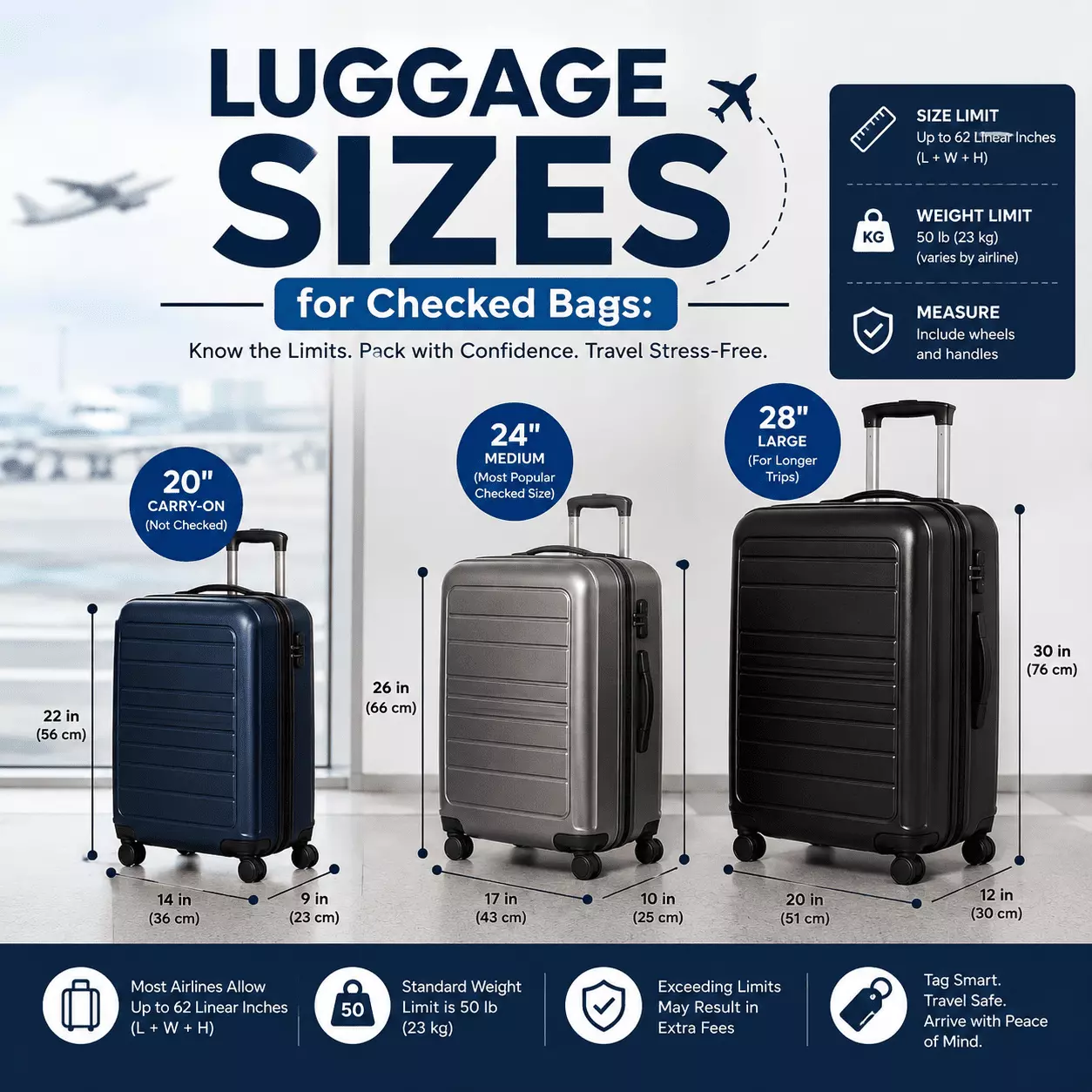
The magic number is 62 linear inches. You get it by adding the bag’s length, width, and height. This includes the wheels and handles, not just the shell. Most full-service airlines use this same cap.
Weight matters just as much as size. The standard limit is 50 pounds, or about 23 kilograms. Some international carriers set a lower bar near 44 pounds. Knowing both numbers keeps you clear of extra charges.
Quick Facts
| Topic | Key Takeaway |
|---|---|
| Standard Size | Most airlines allow checked luggage up to 62 linear inches (length + width + height), including wheels and handles. |
| Standard Weight | The typical checked baggage weight limit is 50 lb (23 kg) for economy class. |
| How to Measure | Add the length + width + height of the suitcase, including wheels, handles, and other fixed protrusions. |
| Frontier Weight Limit | Frontier Airlines has a lower standard checked baggage limit of 40 lb (18 kg). |
| Allegiant Size Limit | Allegiant Air permits checked bags up to 80 linear inches, though additional fees may apply based on size and weight. |
| Oversize Fees | Many airlines begin charging oversize baggage fees once a bag exceeds approximately 62–65 linear inches. |
| Best All-Round Size | A 24-inch suitcase offers a practical balance of packing space, portability, and compliance with most airline baggage rules. |
| Vacuum Bags | Vacuum storage bags are generally allowed in checked luggage. They save packing space but do not reduce baggage weight. |
| Duffel Bags | Soft-sided duffel bags are acceptable as checked baggage if they remain within the airline’s size and weight limits. |
| Luggage Tag Safety | Remove or shred old baggage tags, use a Bluetooth or GPS luggage tracker, and avoid displaying your home address on the luggage tag. |
How to Measure Linear Inches
Measuring is easy once you know the trick. Grab a tape and measure the packed bag at its widest points. Add the three sides together for your total. For example, a 28 by 18 by 16 inch bag equals 62 linear inches.
Best Leather Luggage Bags: A Traveler’s Buying Guide
Samsonite Luggage Bags: A Complete Buyer’s Guide
Luggage Duffel Bags: The Complete Guide for Travelers
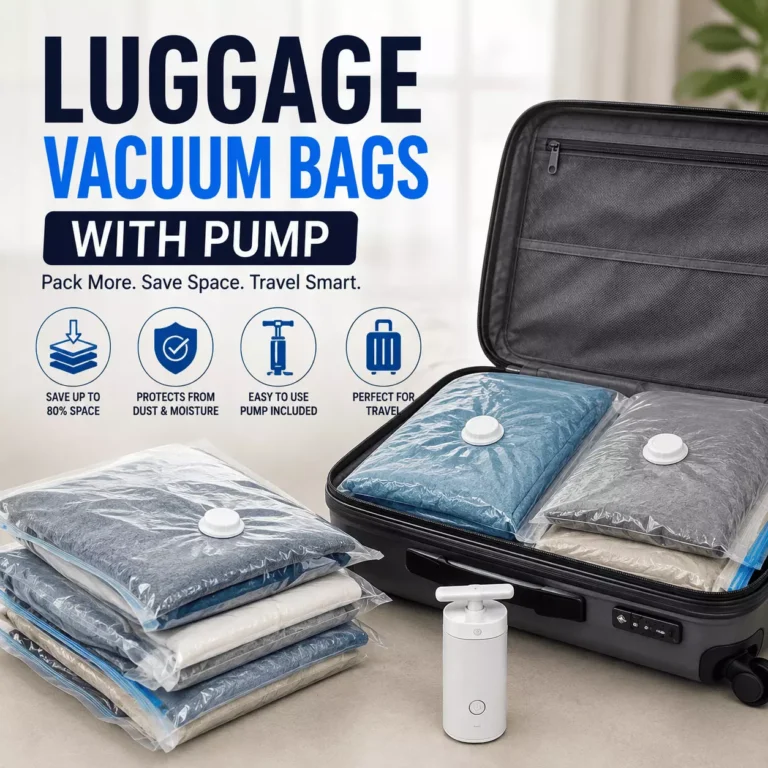
Luggage Vacuum Bags With Pump: Pack Smarter and Save Space
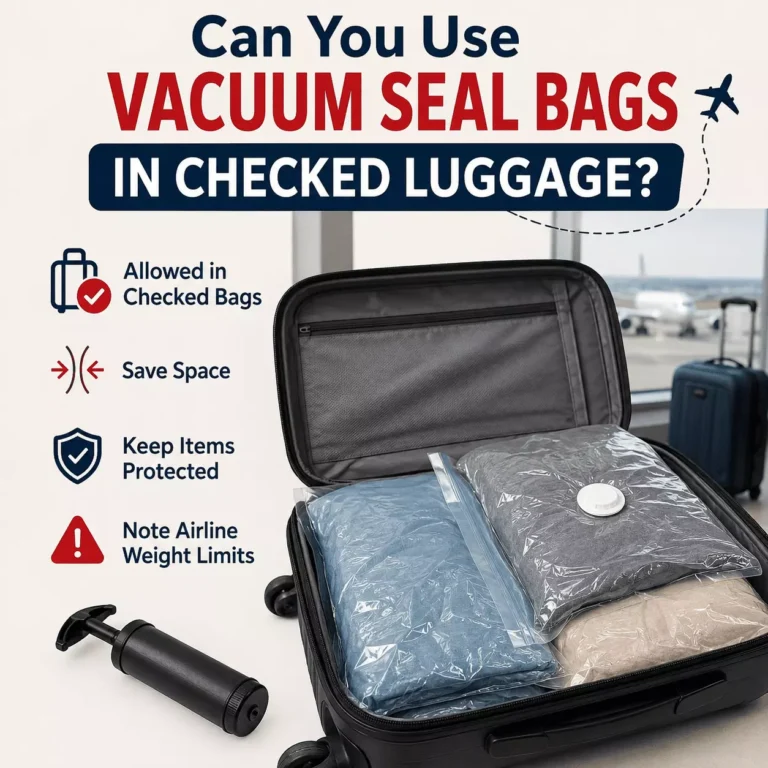
Can You Use Vacuum-Seal Bags in Checked Luggage? A Full Guide
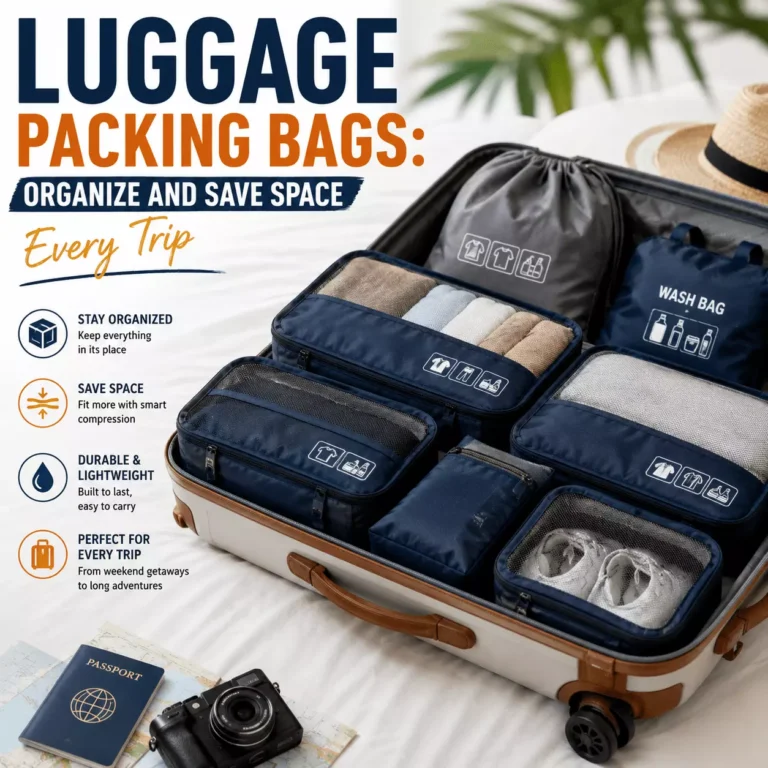
Luggage Packing Bags: Organize and Save Space Every Trip
Waterproof Motorcycle Luggage Rack Bags: A Rider’s Guide
T-Bags Motorcycle Luggage: The Rider’s Complete Guide
Types of Luggage Bags: Which One Is Right for You?
Large Luggage Bags: The Complete Guide to Big Travel Bags
Always measure after you pack, since a full bag bulges. Include the wheels, handles, and any side pockets. Most checked luggage bags list their linear size on the label, but you should still verify. A tall but narrow case can still pass the limit, while a short but deep case with big wheels can fail it.
Size Limits by Airline
Rules stay close across carriers, but the details differ. Most major US airlines allow 62 inches and 50 pounds. Budget and international airlines can be stricter on weight. The luggage size limits for checked bags depend on your airline and route.
Best Leather Luggage Bags: A Traveler’s Buying Guide
Samsonite Luggage Bags: A Complete Buyer’s Guide
Luggage Duffel Bags: The Complete Guide for Travelers
Luggage Vacuum Bags With Pump: Pack Smarter and Save Space
Can You Use Vacuum-Seal Bags in Checked Luggage? A Full Guide
Luggage Packing Bags: Organize and Save Space Every Trip
Waterproof Motorcycle Luggage Rack Bags: A Rider’s Guide
T-Bags Motorcycle Luggage: The Rider’s Complete Guide
Types of Luggage Bags: Which One Is Right for You?
Large Luggage Bags: The Complete Guide to Big Travel Bags
| Airline | Size Limit | Weight Limit |
|---|---|---|
| Delta, United & American Airlines | Up to 62 linear inches (length + width + height, including wheels and handles) | 50 lb (23 kg) |
| Southwest Airlines | Up to 62 linear inches | 50 lb (23 kg) |
| Frontier Airlines | Up to 62 linear inches | 40 lb (18 kg) |
| Allegiant Air | Up to 80 linear inches | 50 lb (23 kg) |
| Most International Airlines | Typically 62 linear inches | 23 kg (50 lb) |
Fare class changes things, too. First and business often allow up to 70 pounds. Always confirm the luggage size for checked bags on your exact ticket. The same bag can be free on one fare and charged on another.
Oversize and Overweight Fees
Fees add up fast when you go over. Bags from 63 to 65 inches often trigger a 30 to 100 dollar charge. Overweight bags from 51 to 70 pounds cost extra as well. Very large or heavy bags past 100 pounds may be refused outright.
You can dodge most of these with a little planning. Prepay your bags online, since airport counter prices run higher. Move dense items to your carry-on if the bag is close. The size of luggage for checked bags you buy should leave a safe buffer.
Best Checked Suitcase Sizes to Buy
Picking the right size saves you money and hassle. A 24-inch bag is the safest all-rounder for week-long trips. It keeps you under both size and weight limits with ease. The best checked luggage bags in this range balance space and weight well.
Best Leather Luggage Bags: A Traveler’s Buying Guide
Samsonite Luggage Bags: A Complete Buyer’s Guide
Luggage Duffel Bags: The Complete Guide for Travelers
Luggage Vacuum Bags With Pump: Pack Smarter and Save Space
Can You Use Vacuum-Seal Bags in Checked Luggage? A Full Guide
Luggage Packing Bags: Organize and Save Space Every Trip
Waterproof Motorcycle Luggage Rack Bags: A Rider’s Guide
T-Bags Motorcycle Luggage: The Rider’s Complete Guide
Types of Luggage Bags: Which One Is Right for You?
Large Luggage Bags: The Complete Guide to Big Travel Bags
Bigger sizes suit longer or colder trips. A 26-inch case handles bulky winter gear. A 28 or 29-inch case fits long hauls but overpacks easily. The best luggage for checked bags leaves a kilo or two of room for shopping on the way home.
Can You Use Vacuum and Compression Bags?
Compression gear helps you fit more into a checked bag. It squeezes air out of bulky clothes so they lie flat. This is great for coats, sweaters, and long trips. It also seals dirty laundry away from clean clothes.
A common question is, can you use vacuum seal bags in checked luggage? Yes, the TSA allows them in checked bags. Just know that agents may open a bag for inspection. So can you use vacuum bags in checked luggage and still save room? Yes, but they cut volume, not weight, so watch the scale.
Are Duffels Allowed as Checked Bags?
Duffels make great checked bags for casual trips. They are soft and light and flex to hold odd gear. Many travellers wonder, are duffel bags allowed as checked luggage on a flight? Yes, as long as they stay within the 62-inch and 50-pound limits.
Soft bags have a small edge here. They squish to fit and often weigh less empty. That gives you a bit more packing room before the scale complains. Just avoid overstuffing, since a bulging duffel can still go oversize.
Luggage Tags and the New Baggage Scam
A clear tag is your bag’s lifeline if it goes missing. Add your name and phone number, but skip your home address. Many people ask, do you need a luggage tag for checked bags at all? Airlines print their own tag, but a personal one adds a backup.
Best Leather Luggage Bags: A Traveler’s Buying Guide
Samsonite Luggage Bags: A Complete Buyer’s Guide
Luggage Duffel Bags: The Complete Guide for Travelers
Luggage Vacuum Bags With Pump: Pack Smarter and Save Space
Can You Use Vacuum-Seal Bags in Checked Luggage? A Full Guide
Luggage Packing Bags: Organize and Save Space Every Trip
Waterproof Motorcycle Luggage Rack Bags: A Rider’s Guide
T-Bags Motorcycle Luggage: The Rider’s Complete Guide
Types of Luggage Bags: Which One Is Right for You?
Large Luggage Bags: The Complete Guide to Big Travel Bags
Now, for a warning that hit the news lately. A new luggage scam targeting checked bags uses your printed airline tag against you. Thieves grab discarded tags to file fake lost-bag claims with your details. This luggage scam targeting checked bags works because the barcode holds your name and itinerary.
There is a second, scarier version to know about. In it, handlers swap a real tag onto a bag holding contraband. Protect yourself with a few quick habits at check-in. Photograph your bag and tag, keep the receipt, and shred old tags at home.
Tracking adds another layer of safety. Slip an AirTag or Tile inside the bag, not on the outside. The best luggage tags for checked bags stay locked on through rough handling. A bright strap also helps you spot your bag fast on the belt.
Lost Luggage: What to Do
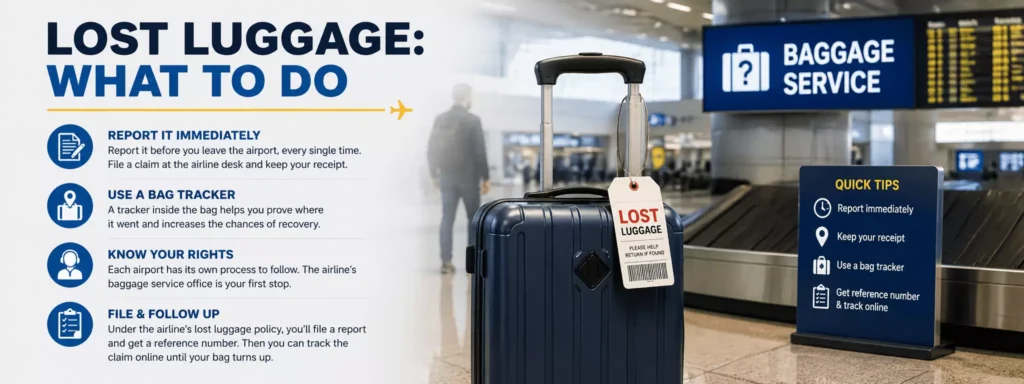
Even careful travellers hit a lost-bag day sometimes. Report it before you leave the airport, every single time. File a claim at the airline desk and keep your receipt. A tracker inside the bag helps you prove where it went.
Big airports each have their own process to follow. For example, the mia airport checked bags lost luggage policy sends you to the airline’s baggage service office first. Under the Mia airport checked bags lost luggage steps, you file a report and get a reference number. Then you track the claim online until the bag turns up.
Packing and Fee-Saving Tips
Smart packing keeps you under the limits with less stress. Weigh the packed bag at home with a luggage scale. Keep a one to two kilo buffer for return-trip finds. Wear your heaviest items on the plane to save weight.
Best Leather Luggage Bags: A Traveler’s Buying Guide
Samsonite Luggage Bags: A Complete Buyer’s Guide
Luggage Duffel Bags: The Complete Guide for Travelers
Luggage Vacuum Bags With Pump: Pack Smarter and Save Space
Can You Use Vacuum-Seal Bags in Checked Luggage? A Full Guide
Luggage Packing Bags: Organize and Save Space Every Trip
Waterproof Motorcycle Luggage Rack Bags: A Rider’s Guide
T-Bags Motorcycle Luggage: The Rider’s Complete Guide
Types of Luggage Bags: Which One Is Right for You?
Large Luggage Bags: The Complete Guide to Big Travel Bags
Planning ahead also helps with big loads. Some movers ask, will 5 checked luggage bags fit into 38 cubic ft when packing a small truck or trunk? The rough answer is yes, since five standard cases average near 30 cubic feet. Still, measure each bag first, since sizes and shapes vary.
Frequently Asked Questions
What size is a standard checked bag?
Most airlines allow up to 62 linear inches total, which is length plus width plus height. The common weight cap is 50 pounds. Always check your airline before you fly.
What happens if my checked bag is too big?
You pay an oversize fee, often 30 to 100 dollars. Very large bags past 80 inches may be refused. Prepay online to keep the cost lower.
How do I measure my checked luggage?
Pack the bag first, then measure length, width, and height at the widest points. Add the three numbers for your linear inches. Include wheels and handles in the count.
Can I check a duffel bag on a flight?
Yes, duffels work fine as checked bags. They just need to stay within the 62-inch and 50-pound limits. Soft bags often weigh less when empty, giving extra room.
Are vacuum bags allowed in checked luggage?
Yes, the TSA allows them in checked bags. Agents may open the bag for a manual check. Keep a pump handy so you can reseal after.
How do I protect my checked bag from the tag scam?
Photograph your bag and its printed tag at check-in. Keep your baggage receipt and never leave tags at the airport. Shred old tags once you get home.
Do I really need a luggage tag?
The airline prints its own tag, but a personal one adds a backup. Use just your name and phone number, not your address. A tracker inside adds extra safety.
Explore All 14 Travel Essentials Categories
- Luggage & Bags
- Packing Organisation & Cubes
- Travel Tech & Electronics
- Toiletries & Travel-Size
- Travel Comfort
- Travel Safety & Security
- Packing Lists by Trip Type
- Packing Lists by Destination
- Travel Documents & Money
- Travel Clothing & Footwear
- Health, Hygiene & First-Aid
- Airport, Airline & Rules
- Essentials Guide
- Essentials for Women, Men & Family