

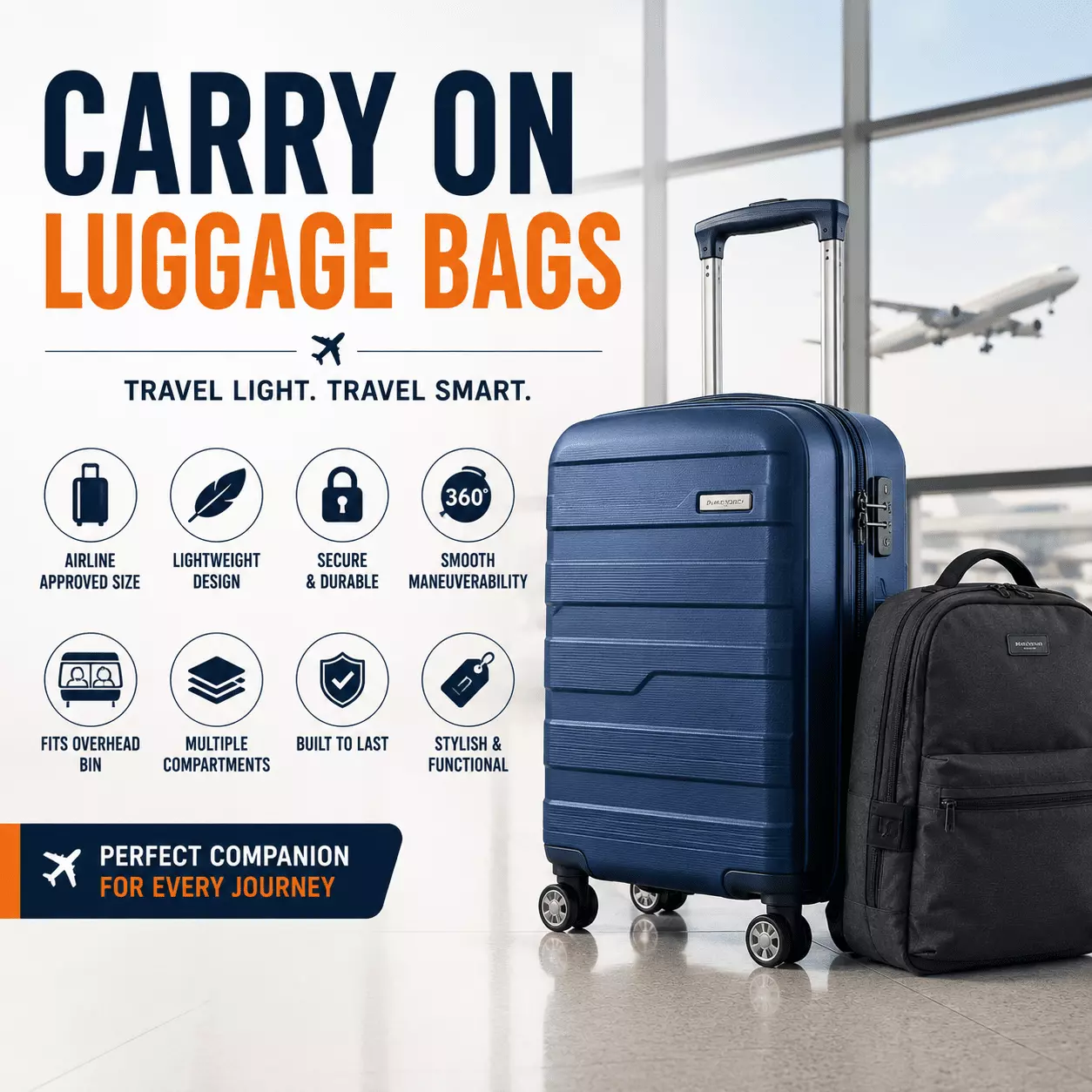
I have flown carry-on only for years, across budget and full-service airlines. That habit taught me what passes the gate and what gets flagged. Below, I cover sizes, types, features, and packing tricks. By the end, you will know exactly what to grab for your next trip.
What Counts as a Carry-On?
A carry-on is the bag you bring into the cabin. It rides in the overhead bin or under the seat in front of you. Airlines also call it cabin baggage or hand luggage. It stays with you the whole flight, unlike a checked bag.
There is a second, smaller bag too, the personal item. Think a tote, backpack, or laptop bag that fits under the seat. Most fares include both a carry-on and a personal item. Knowing the split saves you from surprise fees.
| Topic | Key Takeaway |
|---|---|
| Core rule | A carry-on must fit your airline’s cabin size restrictions. |
| US standard | 22 × 14 × 9 inches, including wheels and handles. |
| Budget airlines | Often allow only about 18 × 14 × 8 inches as a free personal item. |
| International | Many airlines enforce carry-on weight limits of 7–10 kg. |
| Main types | Hardshell, softside, backpack, duffel, and underseat luggage. |
| Key features | Spinner wheels, TSA-approved lock, lightweight design, and a reliable warranty. |
| Attachable bags | Use a trolley sleeve or luggage strap to securely stack a personal item on your suitcase. |
| Vacuum bags | Allowed by TSA, but pack them so they can be opened easily if inspected. |
| Packing | Follow the 3-1-1 liquids rule, roll clothes, and use packing cubes to maximize space. |
| Top brands | Away, Briggs & Riley, Samsonite, Tumi, and Rimowa. |
Carry-On Size Rules by Airline
Size is where most travellers get tripped up. Most US carriers allow 22 x 14 x 9 inches, measured with wheels and handles. Budget airlines like Spirit and Frontier run stricter, often near 18 x 14 x 8 inches for free bags. Go over, and the fee can top 60 dollars at the gate.
Best Leather Luggage Bags: A Traveler’s Buying Guide
Samsonite Luggage Bags: A Complete Buyer’s Guide
Luggage Duffel Bags: The Complete Guide for Travelers
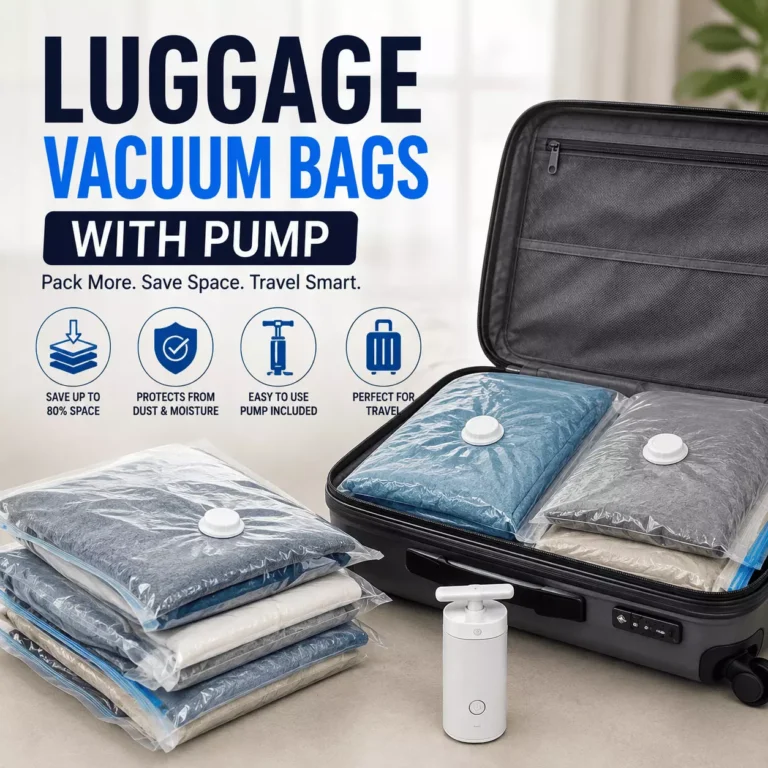
Luggage Vacuum Bags With Pump: Pack Smarter and Save Space
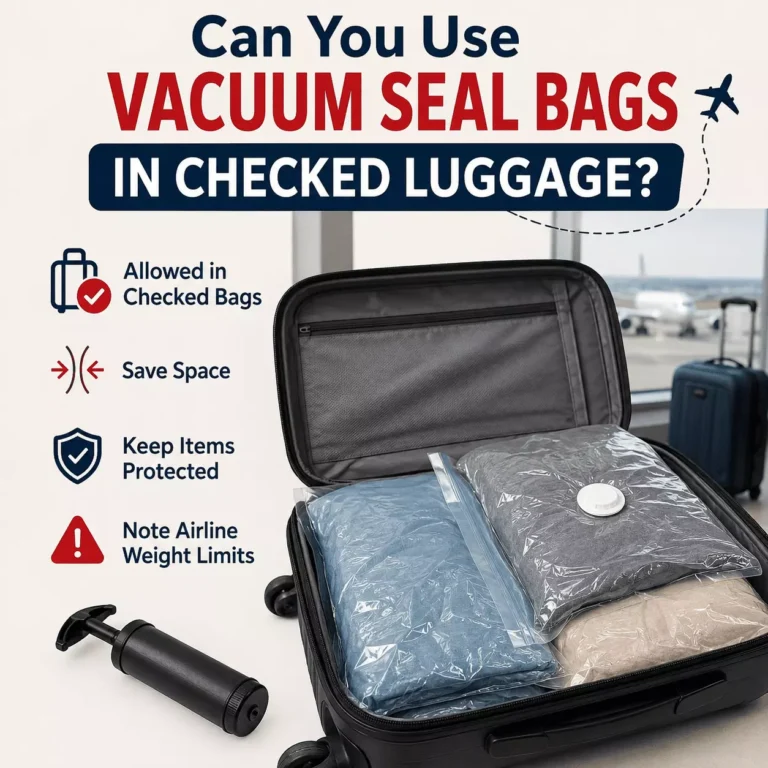
Can You Use Vacuum-Seal Bags in Checked Luggage? A Full Guide
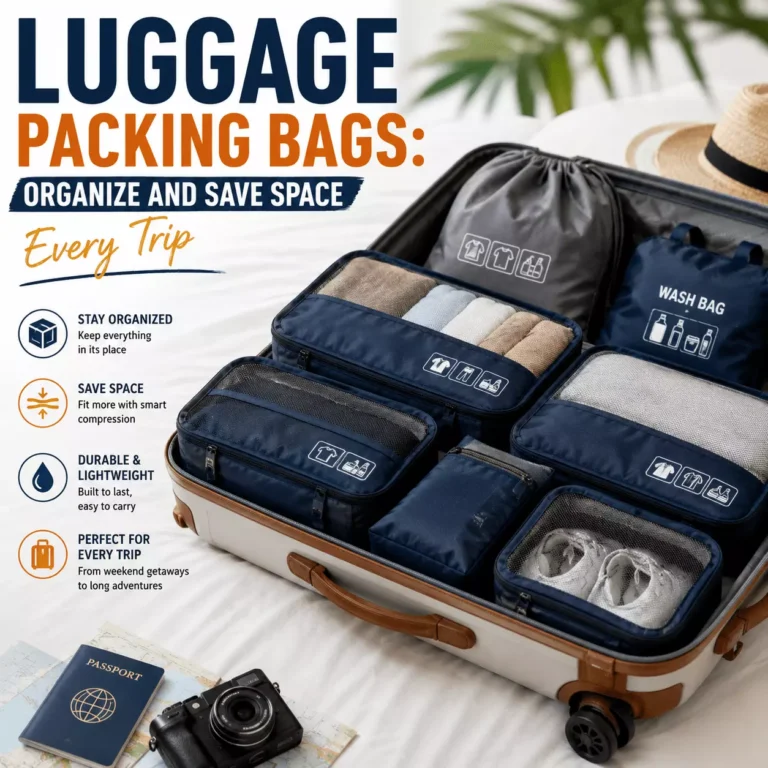
Luggage Packing Bags: Organize and Save Space Every Trip
Waterproof Motorcycle Luggage Rack Bags: A Rider’s Guide
T-Bags Motorcycle Luggage: The Rider’s Complete Guide
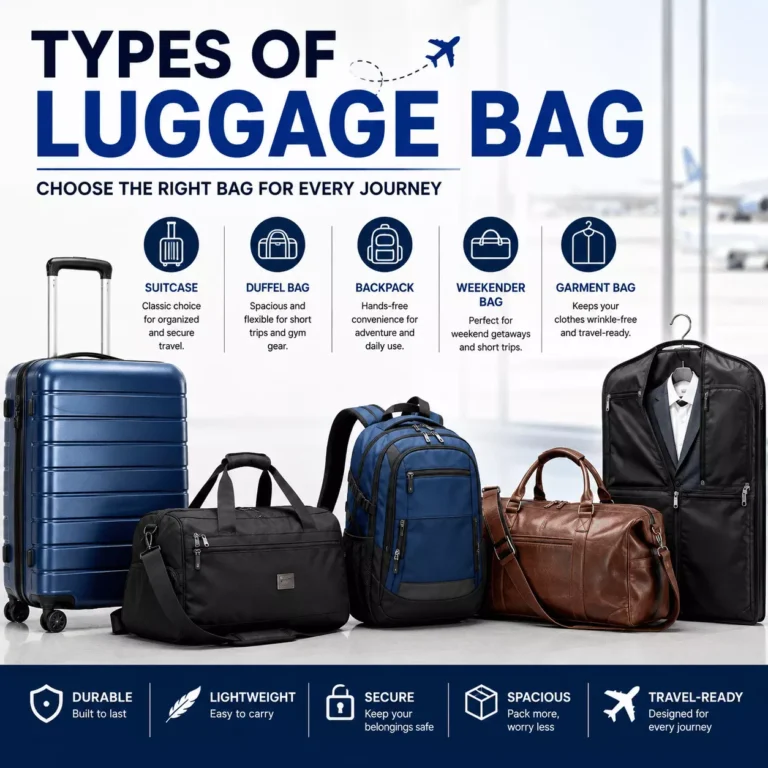
Types of Luggage Bags: Which One Is Right for You?
Large Luggage Bags: The Complete Guide to Big Travel Bags
International rules add weight limits that US flights often skip. Many carriers cap cabin bags at 7 to 10 kilograms. Enforcement also got tighter in 2026, with automated sizers at more gates. Always measure and weigh at home, then check your airline’s page.
| Airline Type | Typical Size Limit |
|---|---|
| Major US carriers | 22 × 14 × 9 inches |
| Southwest Airlines | 24 × 16 × 10 inches |
| Budget Airlines (Spirit, Frontier) | 18 × 14 × 8 inches (Free personal item) |
| European Budget Airlines | 55 × 40 × 20 cm, up to 10 kg |
Types of Carry-On Bags
You can bring many bag styles into the cabin. Each suits a different traveler. I walk through the main types below so you can match one to your trips.
Best Leather Luggage Bags: A Traveler’s Buying Guide
Samsonite Luggage Bags: A Complete Buyer’s Guide
Luggage Duffel Bags: The Complete Guide for Travelers
Luggage Vacuum Bags With Pump: Pack Smarter and Save Space
Can You Use Vacuum-Seal Bags in Checked Luggage? A Full Guide
Luggage Packing Bags: Organize and Save Space Every Trip
Waterproof Motorcycle Luggage Rack Bags: A Rider’s Guide
T-Bags Motorcycle Luggage: The Rider’s Complete Guide
Types of Luggage Bags: Which One Is Right for You?
Large Luggage Bags: The Complete Guide to Big Travel Bags
Hardshell Spinners
Hardshell cases use polycarbonate or ABS for a tough, sleek shell. They protect fragile gear and resist rain. Four spinner wheels glide upright through the airport. These hard cases stack neatly and rarely bulge past the sizer.
Softside Suitcases
Soft cases use nylon or polyester and flex into tight bins. They add outside pockets for quick access to a phone or charger. They also weigh less, which helps on weight-limited flights. Many carry-on luggage bags in this style expand for a little extra room.
Carry-On Backpacks
Travel backpacks free your hands and clear stairs with ease. They open flat like a suitcase and hold a few days’ worth of clothes. Most count as a personal item on budget airlines. Good bags for carry-on luggage here add a padded laptop sleeve.
Duffels and Weekenders
Duffels are soft, light, and great for short trips. A leather weekender brings style to a business getaway. Both squish into overhead bins better than a rigid case. They shine when you pack loose or odd-shaped gear.
Underseat and Specialty Bags
Some bags are built to slide under the seat. These work as your personal item on strict fares. Brands even offer carry on luggage bags for women with organized pockets and lighter frames. Companies also order custom promotional carry-on luggage bags for events and gifts.
Best Leather Luggage Bags: A Traveler’s Buying Guide
Samsonite Luggage Bags: A Complete Buyer’s Guide
Luggage Duffel Bags: The Complete Guide for Travelers
Luggage Vacuum Bags With Pump: Pack Smarter and Save Space
Can You Use Vacuum-Seal Bags in Checked Luggage? A Full Guide
Luggage Packing Bags: Organize and Save Space Every Trip
Waterproof Motorcycle Luggage Rack Bags: A Rider’s Guide
T-Bags Motorcycle Luggage: The Rider’s Complete Guide
Types of Luggage Bags: Which One Is Right for You?
Large Luggage Bags: The Complete Guide to Big Travel Bags
Key Features to Look For
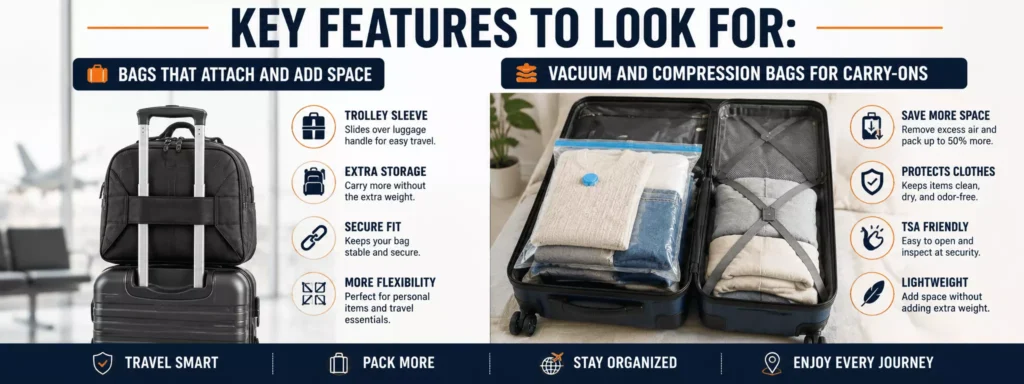
The shell is only half the choice. Small parts decide how a bag feels each trip. Check these before you buy.
Wheels come first, and four spinners beat two for easy turns. Then check the handle, since a telescopic one should lock at a comfy height. A TSA-approved lock adds security without cutting your access. A bright color or tag helps you spot your bag fast.
Build quality seals the deal. Look for strong zippers, reinforced corners, and a solid warranty. Weigh the empty bag, since a heavy shell eats your allowance. The best carry on luggage bags balance space, weight, and durability.
Bags That Attach and Add Space
Space runs out fast on a carry-on trip. Attachable pieces help you carry more with one hand. Many suitcases include a trolley strap on the back. A smaller bag then slides onto the handle and rides along.
This trick keeps your hands free in a busy terminal. Look for bags that attach to carry on luggage through a back sleeve or clip. A personal item that stacks on top counts as your under-seat bag. Together they stretch your packing without a checked fee.
Vacuum and Compression Bags for Carry-Ons
Sometimes the bag is fine and the packing is the problem. Compression gear squeezes air out so you fit more. This helps a lot with bulky coats and sweaters. It also seals dirty laundry away from clean clothes.
A common question is, can you use vacuum seal bags in carry on luggage? The TSA allows them, though it discourages very tight packing. Officers must be able to screen the contents on the scanner. So can you use vacuum bags in carry on luggage without trouble? Yes, if you keep them easy to open and inspect.
Best Leather Luggage Bags: A Traveler’s Buying Guide
Samsonite Luggage Bags: A Complete Buyer’s Guide
Luggage Duffel Bags: The Complete Guide for Travelers
Luggage Vacuum Bags With Pump: Pack Smarter and Save Space
Can You Use Vacuum-Seal Bags in Checked Luggage? A Full Guide
Luggage Packing Bags: Organize and Save Space Every Trip
Waterproof Motorcycle Luggage Rack Bags: A Rider’s Guide
T-Bags Motorcycle Luggage: The Rider’s Complete Guide
Types of Luggage Bags: Which One Is Right for You?
Large Luggage Bags: The Complete Guide to Big Travel Bags
There are two main styles to pick from. Roll bags let you push air out by hand or knee. Valve bags use a small pump for a firmer squeeze. The best vacuum bags for carry on luggage stay flat for days when the seal holds.
Keep a few smart habits in mind here. Pack vacuum bags for carry on luggage in thin, flat layers so scanners read them fast. Choose clear vacuum seal bags for carry on luggage so agents can see inside. Always keep the pump for your carry on luggage vacuum bags in the cabin, since battery pumps must ride with you.
More options suit different trips. Small compression sacks fit a cabin case, while large ones suit checked bags. Reach for compression bags for carry on luggage when you pack puffy gear. Just remember that vacuum bags carry on luggage save space, not weight, so watch the scale.
Smart Packing Tips
Good packing makes any carry-on go further. Follow the TSA 3-1-1 liquid rule, with containers under 3.4 ounces in one clear quart bag. Roll soft clothes to save room and cut wrinkles. Packing cubes keep the inside neat and quick to inspect.
A few habits save you stress at the gate. Measure your bag at home, wheels and handles included. Weigh it packed with a luggage scale. Leave a little room for souvenirs on the way back.
Top Carry-On Brands
A few names stand out in real testing and reviews. Away and Briggs & Riley earn top marks for durable, smooth rollers. Samsonite covers budget to mid-range with reliable all-rounders. Tumi and Rimowa bring premium builds for frequent flyers.
Warranties matter as much as looks. Briggs & Riley backs its bags for life, which frequent flyers love. Test the wheels and handle before you commit, since those wear first. Trusted luggage bags carry on smoothly and last many trips, so quality luggage carry on bags pay off over time.
Best Leather Luggage Bags: A Traveler’s Buying Guide
Samsonite Luggage Bags: A Complete Buyer’s Guide
Luggage Duffel Bags: The Complete Guide for Travelers
Luggage Vacuum Bags With Pump: Pack Smarter and Save Space
Can You Use Vacuum-Seal Bags in Checked Luggage? A Full Guide
Luggage Packing Bags: Organize and Save Space Every Trip
Waterproof Motorcycle Luggage Rack Bags: A Rider’s Guide
T-Bags Motorcycle Luggage: The Rider’s Complete Guide
Types of Luggage Bags: Which One Is Right for You?
Large Luggage Bags: The Complete Guide to Big Travel Bags
Frequently Asked Questions
What size is a standard carry-on bag?
Most US airlines allow 22 x 14 x 9 inches, wheels and handles included. Budget and international carriers can be stricter. Always check your airline before you fly.
What is the difference between a carry-on and a personal item?
A carry-on goes in the overhead bin and holds more. A personal item fits under the seat, like a tote or backpack. Most fares let you bring both.
Are vacuum-sealed bags allowed in carry-on luggage?
Yes, the TSA allows them but discourages very tight packing. Officers must still be able to screen the contents. Keep a pump handy so you can reseal after inspection.
Do vacuum bags reduce luggage weight?
No, they save space but not weight. Your clothes weigh the same once air is removed. They just help bulky items fit a smaller bag.
Can any bag be used as a carry-on?
Almost any bag works if it fits the size limit. Suitcases, backpacks, and duffels all qualify. The key is meeting the strictest airline you will fly.
Should I get a hardshell or softside carry-on?
Hardshell protects fragile gear and looks sleek. Softside flexes into tight bins and adds pockets. Pick based on how you travel and pack.
How do I keep my carry-on under the weight limit?
Weigh it packed at home with a luggage scale. Choose a light bag and skip heavy shoes. Wear your bulkiest items on the plane instead.
Explore All 14 Travel Essentials Categories
- Luggage & Bags
- Packing Organisation & Cubes
- Travel Tech & Electronics
- Toiletries & Travel-Size
- Travel Comfort
- Travel Safety & Security
- Packing Lists by Trip Type
- Packing Lists by Destination
- Travel Documents & Money
- Travel Clothing & Footwear
- Health, Hygiene & First-Aid
- Airport, Airline & Rules
- Essentials Guide
- Essentials for Women, Men & Family