

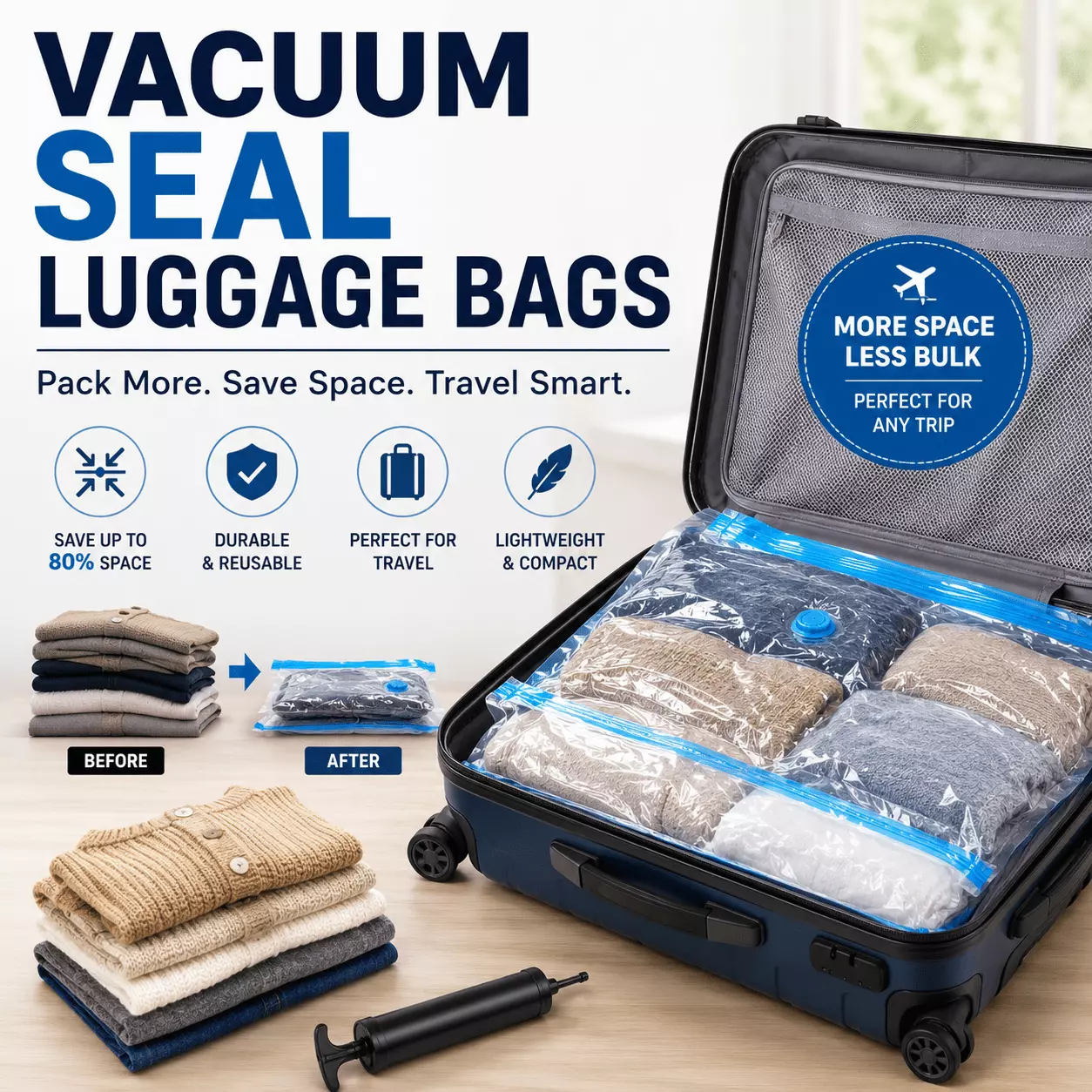
I started using them after a winter trip that nearly burst my suitcase zipper. Two coats had eaten most of the bag. Below, I cover how they work, the TSA rules, and the honest downsides. By the end, you will know how to use them without airport stress.
How Do Vacuum Seal Bags Work?
The idea is simple once you see it. You pack clothes into an airtight pouch and remove the air. As the air leaves through a valve, the clothes flatten and shrink. You then slide the flat bag into your suitcase.
Two parts make it work well. A one-way valve lets air out but never back in. A double zipper seals the top so nothing leaks. Good vacuum seal bags for luggage use thick, anti-rip material to hold the seal for days.
Quick Facts
| Topic | Key Takeaway |
|---|---|
| What They Do | Vacuum storage bags remove trapped air, allowing clothes and soft items to lie flat and occupy much less space in your luggage. |
| Space Saved | Can reduce the volume of bulky clothing by up to 80%, depending on the fabric and compression level. |
| Two Types | Available as roll-up compression bags that require no pump and vacuum-seal bags that use a hand pump or vacuum. |
| TSA Rule | Vacuum bags are permitted in both carry-on and checked baggage, but security officers may open them for inspection. |
| Carry-On Risk | If a bag is opened during screening, it may not be resealed. Carry a portable hand pump if using vacuum bags in your cabin luggage. |
| Best Items to Pack | Ideal for sweaters, jackets, coats, towels, blankets, bedding, and other bulky but compressible fabrics. |
| Items to Avoid | Do not pack leather, suede, electronics, liquids, or fragile items in vacuum bags, as compression may cause damage. |
| Weight | Compression saves space—not weight. Always check your luggage with a scale to avoid overweight baggage fees. |
| Best Material | Choose bags made from anti-rip nylon or TPU for better durability than thin plastic alternatives. |
| Care Tips | After your trip, remove clothing from the bags, ensure everything is completely dry, and let fabrics breathe before long-term storage. |
The Two Main Types
Not every bag works the same way. Some use your body weight, others use a pump. Pick the type that suits your trip and your patience.
Best Leather Luggage Bags: A Traveler’s Buying Guide
Samsonite Luggage Bags: A Complete Buyer’s Guide
Luggage Duffel Bags: The Complete Guide for Travelers
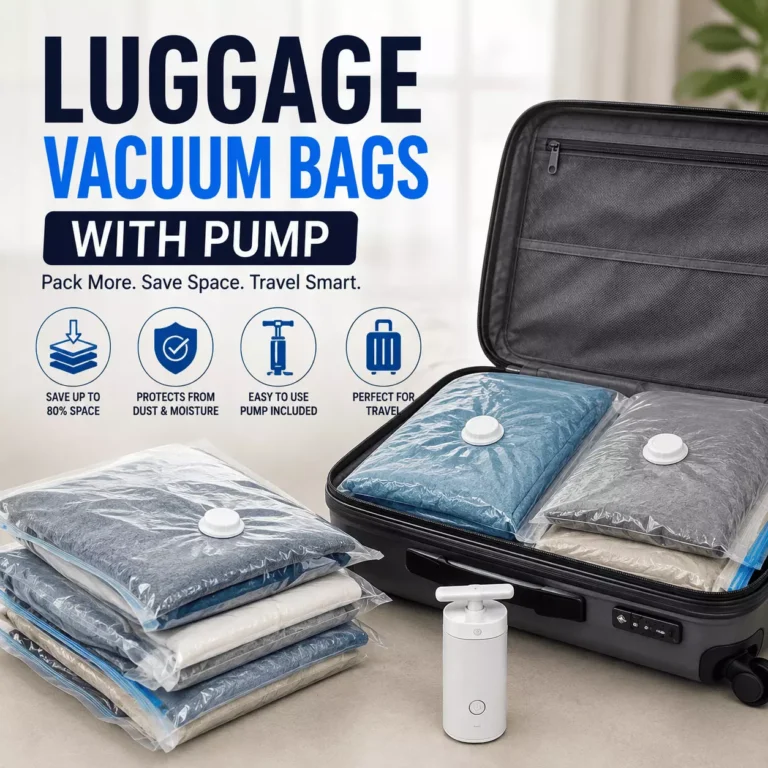
Luggage Vacuum Bags With Pump: Pack Smarter and Save Space
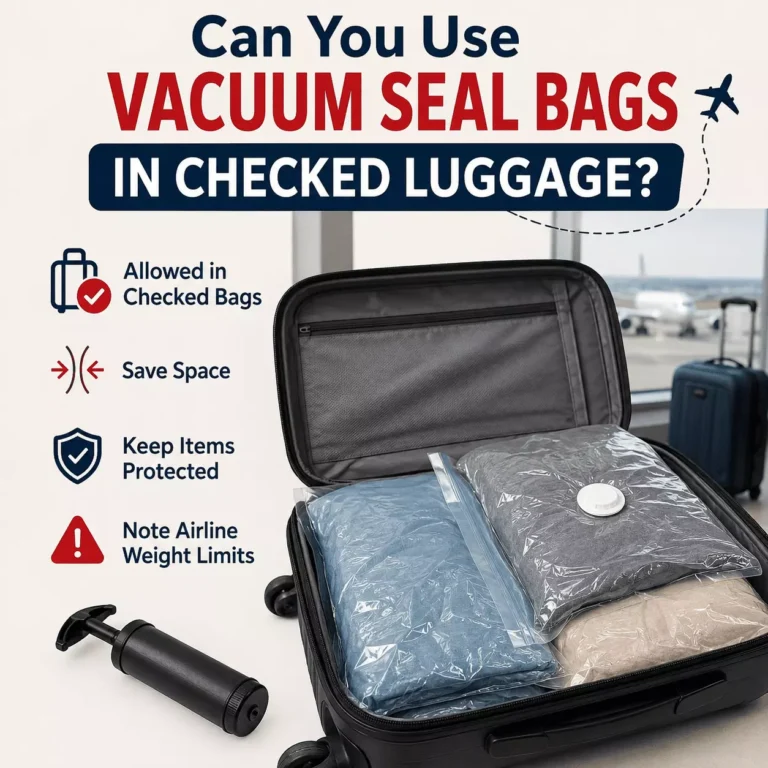
Can You Use Vacuum-Seal Bags in Checked Luggage? A Full Guide
Luggage Packing Bags: Organize and Save Space Every Trip
Waterproof Motorcycle Luggage Rack Bags: A Rider’s Guide
T-Bags Motorcycle Luggage: The Rider’s Complete Guide
Types of Luggage Bags: Which One Is Right for You?
Large Luggage Bags: The Complete Guide to Big Travel Bags
Roll-Up Bags Without a Pump
These use a zip seal and a one-way valve. You fold your clothes, seal the top, then roll the bag firmly. Air escapes through the valve as you roll and cannot return. Kneeling on the bag pushes the last of it out.
The upside is total simplicity. You carry no pump, no cords, and nothing to charge. They give solid compression and pack light for any trip. Minimalists and weekend travelers love this style.
Best Leather Luggage Bags: A Traveler’s Buying Guide
Samsonite Luggage Bags: A Complete Buyer’s Guide
Luggage Duffel Bags: The Complete Guide for Travelers
Luggage Vacuum Bags With Pump: Pack Smarter and Save Space
Can You Use Vacuum-Seal Bags in Checked Luggage? A Full Guide
Luggage Packing Bags: Organize and Save Space Every Trip
Waterproof Motorcycle Luggage Rack Bags: A Rider’s Guide
T-Bags Motorcycle Luggage: The Rider’s Complete Guide
Types of Luggage Bags: Which One Is Right for You?
Large Luggage Bags: The Complete Guide to Big Travel Bags
Pump and Electric Vacuum Bags
Valve bags compress harder and skip the rolling work. You seal the bag, attach a pump, and suck the air out fast. A compact USB pump can flatten a full bag in 10 to 15 seconds. It also lets you re-compress clothes before the return trip.
The trade-off is the extra gadget to pack and charge. These reach the tightest compression, up to 80 percent on bulky gear. Luggage vacuum seal bags of this kind work great for coats and thick knitwear. Just charge the pump and pack a power bank as backup.
TSA Rules: Are They Allowed?
This is the big question before you fly. The TSA allows vacuum bags in both carry-on and checked bags. They are permitted but not encouraged, since a sealed bag can be hard to screen. If it alarms, an officer may open it for inspection.
Travelers often ask, can you use vacuum seal bags in checked luggage without trouble? Yes, and checked bags rarely cause issues at the belt. Others wonder, can you use vacuum seal bags in carry on luggage too? Yes, but be ready to open and reseal them at the checkpoint.
A few habits keep security smooth. Removing air makes clothes look dense on the scanner, which can prompt a closer look. Use clear bags so officers can see inside fast. Keep only soft clothing sealed, and leave liquids and electronics out.
Carry-On vs Checked: Which Is Better?
Each option has a clear trade-off. Sealed bags in checked luggage almost never get flagged. The risk there is small, so most travelers pack freely. If an agent does open one, the bag simply expands inside.
Carry-on use is where the catch shows up. It helps you skip a checked-bag fee, which is a real saving. Vacuum seal bags for carry on luggage let you fit a few extra outfits into the cabin. But if TSA opens the bag, they will not reseal it for you, so without your pump, the clothes puff back up and may not fit.
Best Leather Luggage Bags: A Traveler’s Buying Guide
Samsonite Luggage Bags: A Complete Buyer’s Guide
Luggage Duffel Bags: The Complete Guide for Travelers
Luggage Vacuum Bags With Pump: Pack Smarter and Save Space
Can You Use Vacuum-Seal Bags in Checked Luggage? A Full Guide
Luggage Packing Bags: Organize and Save Space Every Trip
Waterproof Motorcycle Luggage Rack Bags: A Rider’s Guide
T-Bags Motorcycle Luggage: The Rider’s Complete Guide
Types of Luggage Bags: Which One Is Right for You?
Large Luggage Bags: The Complete Guide to Big Travel Bags
What to Pack and What to Skip
Compression only helps with soft, squishy items. Bulky clothes give the biggest win. A puffy coat that fills half a suitcase can shrink to a fraction of its size. That is where these bags earn their keep.
Here is what packs well and what does not:
| Pack These | Skip These |
|---|---|
| Sweaters and Hoodies | Leather (creases easily and traps moisture) |
| Jackets and Puffy Coats | Suede, Velvet, and Beaded Items |
| Towels and Bedding | Structured Blazers and Dress Shirts |
| Socks and Activewear | Dense Electronics and Liquids |
Wool is fine for short trips with light compression only. Leather and delicate fabrics should stay out, since they crease and cannot breathe. And never leave compressed for weeks, since the feathers lose their loft.
How to Use Them Step by Step
Good technique makes a big difference. Rushing leaves air inside and wastes space. Follow these steps for a flat result every time.
Best Leather Luggage Bags: A Traveler’s Buying Guide
Samsonite Luggage Bags: A Complete Buyer’s Guide
Luggage Duffel Bags: The Complete Guide for Travelers
Luggage Vacuum Bags With Pump: Pack Smarter and Save Space
Can You Use Vacuum-Seal Bags in Checked Luggage? A Full Guide
Luggage Packing Bags: Organize and Save Space Every Trip
Waterproof Motorcycle Luggage Rack Bags: A Rider’s Guide
T-Bags Motorcycle Luggage: The Rider’s Complete Guide
Types of Luggage Bags: Which One Is Right for You?
Large Luggage Bags: The Complete Guide to Big Travel Bags
First, fold each piece flat and stack them in even layers. Do not overfill, since a stuffed bag will not seal well. Leave a little room near the zipper for a clean lock. Run your fingers along the double zipper end to end.
Next, roll the bag or attach the pump to remove the air. Use the sealing clip if your bag includes one. Lay the flat bags in your suitcase like thin panels. Clear bags help officers screen your gear without unpacking.
The Altitude and Pressure Factor
Air pressure changes a lot during a flight. When the plane climbs, outside pressure drops, and trapped air wants to expand. When it descends, the pressure rises and squeezes the contents more. A good seal handles these swings without popping.
This is another reason quality matters. A cheap bag may leak mid-flight as pressure shifts. Your clothes then puff up and strain the suitcase’s zippers. A strong valve and thick material keep everything flat and stable.
Pros and Cons (Honest Look)
These bags are handy, but they are not magic. I have seen both sides on real trips. Here is the fair picture before you buy.
On the plus side, you gain serious space. The airtight seal also blocks water and odor, so clothes stay clean and fresh. You can seal worn clothes away from fresh ones, which helps on long trips. That protection is a real bonus in wet or messy conditions.
Now the downsides. They save space, not weight, which tempts you to overpack past airline limits. Clothes also come out wrinkled, so plan to iron or steam. The TSA may open one and leave it unsealed, and sniffer dogs can still smell through the plastic.
Best Leather Luggage Bags: A Traveler’s Buying Guide
Samsonite Luggage Bags: A Complete Buyer’s Guide
Luggage Duffel Bags: The Complete Guide for Travelers
Luggage Vacuum Bags With Pump: Pack Smarter and Save Space
Can You Use Vacuum-Seal Bags in Checked Luggage? A Full Guide
Luggage Packing Bags: Organize and Save Space Every Trip
Waterproof Motorcycle Luggage Rack Bags: A Rider’s Guide
T-Bags Motorcycle Luggage: The Rider’s Complete Guide
Types of Luggage Bags: Which One Is Right for You?
Large Luggage Bags: The Complete Guide to Big Travel Bags
How to Choose a Good Set
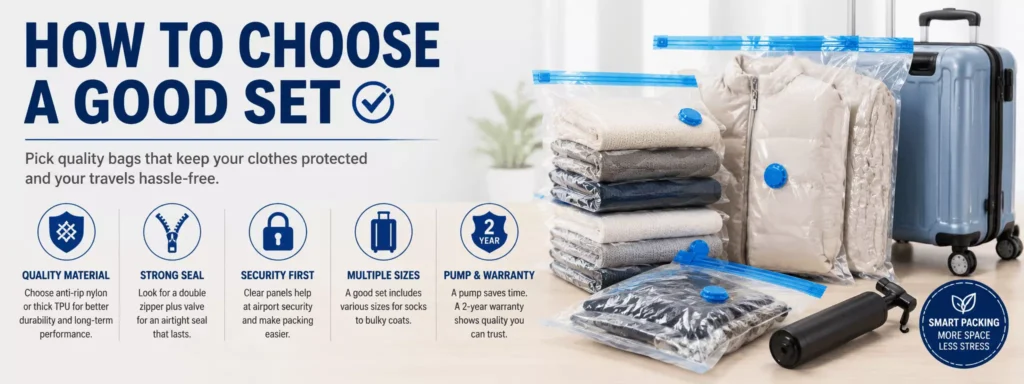
Quality decides whether these bags help or frustrate you. Cheap ones leak and split under pressure. A weak seal lets air creep back overnight. Spend a bit more, and a set lasts many trips.
Watch the material and design first. Anti-rip nylon or thick TPU holds air far better than thin plastic. Clear panels help at security, and a double zipper plus valve keeps the seal tight. A good set of vacuum seal bags luggage travelers trust comes in several sizes.
A pump option is worth it for frequent flyers. A USB-rechargeable pump gives the flattest, fastest squeeze. Look for a two-year warranty as a sign of a durable build. Match the bag size to the item, from socks to bulky coats.
Smart Packing and Care Tips
A few habits keep these bags working for you. Do not overfill them, and leave space near the seal. Always use a luggage scale, since these bags cut volume, not weight. Keep the pump charged and pack a power bank just in case.
Care keeps a set lasting for years. Wipe the valve clean so the gasket seats well. Let bags dry fully before you fold them away. For long-term home storage, let clothes breathe every few weeks to protect the fabric.
Frequently Asked Questions
Are vacuum bags allowed by the TSA?
Yes, they are allowed in both carry-on and checked bags. They are permitted but not encouraged, since sealed bags can be hard to screen. An officer may open one if it alarms.
Do vacuum bags reduce luggage weight?
No, they save space but not weight. Your clothes weigh the same once the air is gone. It is easy to overpack, so use a luggage scale.
Should I use them in my carry-on or checked bag?
Checked bags rarely get flagged, so they are the safer bet. Carry-on works too, but bring a pump in case TSA opens one. Otherwise, your clothes may not fit back in.
Do vacuum bags wrinkle clothes?
Yes, compression usually leaves soft clothes wrinkled. Plan to iron or steam on arrival. Folding flat and neatly helps keep creases down.
Can I vacuum-seal leather or wool?
Skip leather, since it creases and traps moisture. Wool is fine for short trips with light compression only. Delicate fabrics like silk need airflow, so leave them out.
Do vacuum bags work without a pump?
Yes, roll-up bags push air out by hand or knee. Valve types use a small USB pump instead. Both work well without a household vacuum.
How long can clothes stay vacuum-sealed?
For a trip, it is completely fine. For long-term storage, let clothes breathe every few weeks. This protects natural fibers from lasting damage.
Explore All 14 Travel Essentials Categories
- Luggage & Bags
- Packing Organisation & Cubes
- Travel Tech & Electronics
- Toiletries & Travel-Size
- Travel Comfort
- Travel Safety & Security
- Packing Lists by Trip Type
- Packing Lists by Destination
- Travel Documents & Money
- Travel Clothing & Footwear
- Health, Hygiene & First-Aid
- Airport, Airline & Rules
- Essentials Guide
- Essentials for Women, Men & Family