

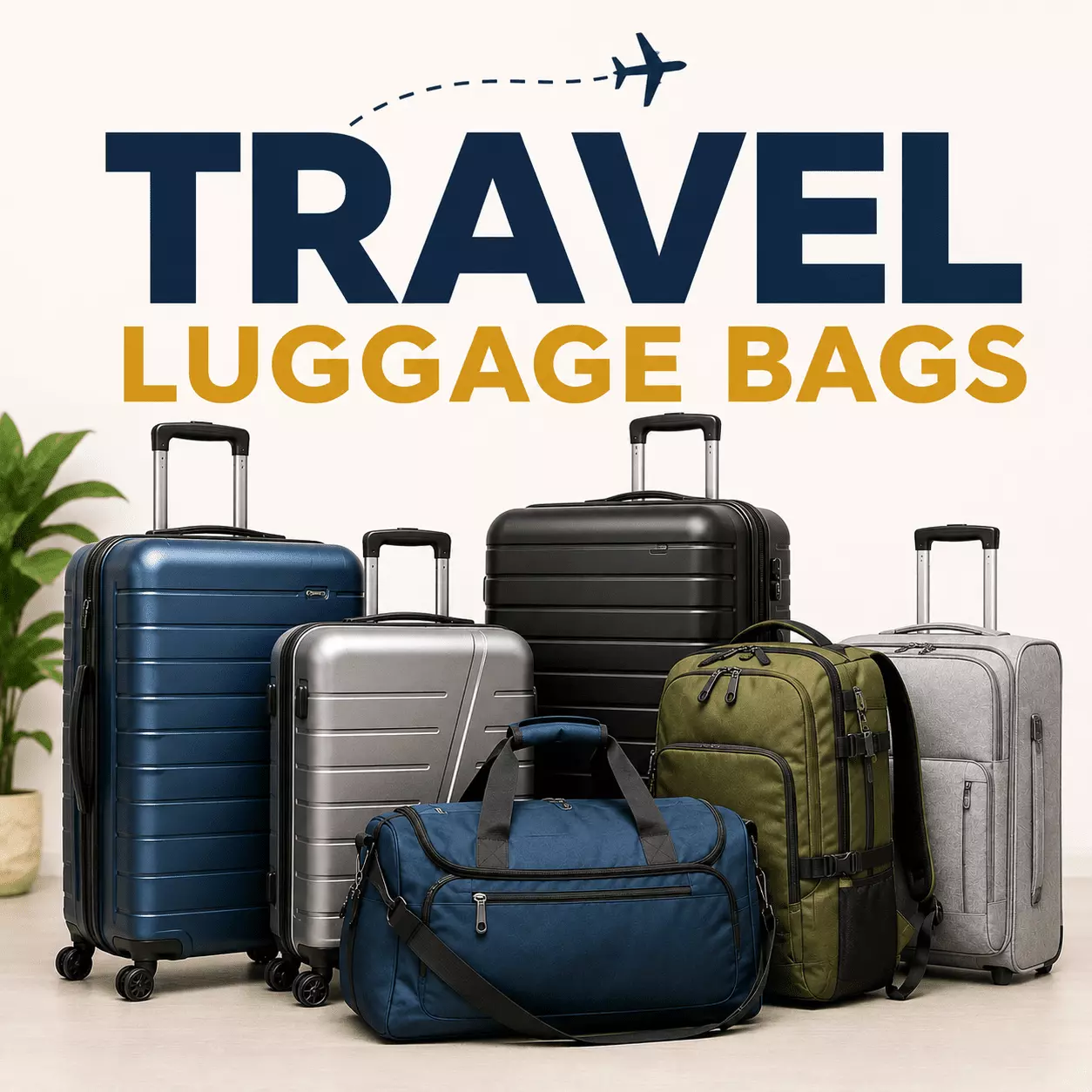
I have flown with rollers, duffels, and backpacks over the years. Each one shines in a different spot. Below, I break down every main type, size, and feature of travel bags and luggage that shoppers care about. By the end, you will know exactly which bag fits your next trip.
| Topic | Key Takeaway |
|---|---|
| Core rule | Match the bag to trip length, style, and airline rules. |
| Main types | Carry-on, checked, duffel, backpack, garment. |
| Carry-on size | About 22 × 14 × 9 inches, or 45 linear inches. |
| Checked size | Up to 62 linear inches (158 cm). |
| Weight limit | Around 50 lb (23 kg) per checked bag. |
| Shell choice | Hard-shell for maximum protection; soft-shell for greater flexibility and easier packing. |
| Wheels | 4-wheel spinner luggage glides smoothly, while 2-wheel bags perform better on rough terrain. |
| Size by trip | Weekend: 30–50L, One Week: 50–75L, Long Trips: 75–100L+. |
| Top brands | Travelpro, Away, Samsonite, Bric’s, Calpak. |
| Smart tip | Choose lightweight luggage, avoid oversizing, and use packing cubes to maximize space. |
What Counts as a Travel Bag?
‘Luggage’ is the broad word for all the bags you travel with. A suitcase is one type. A duffel is another. A backpack counts too. So every suitcase is luggage, but not every bag is a suitcase.
Best Leather Luggage Bags: A Traveler’s Buying Guide
Samsonite Luggage Bags: A Complete Buyer’s Guide
Luggage Duffel Bags: The Complete Guide for Travelers
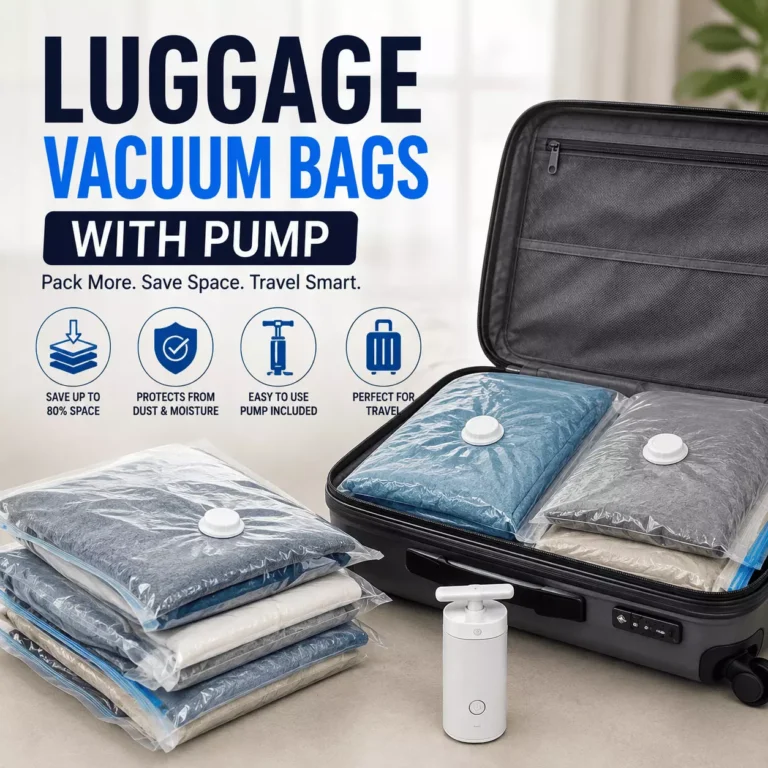
Luggage Vacuum Bags With Pump: Pack Smarter and Save Space
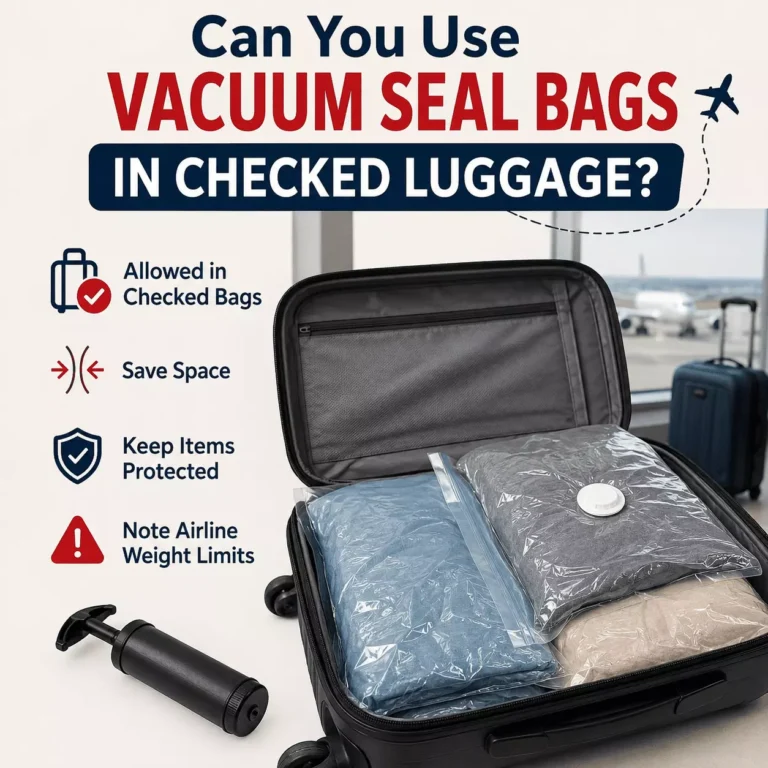
Can You Use Vacuum-Seal Bags in Checked Luggage? A Full Guide
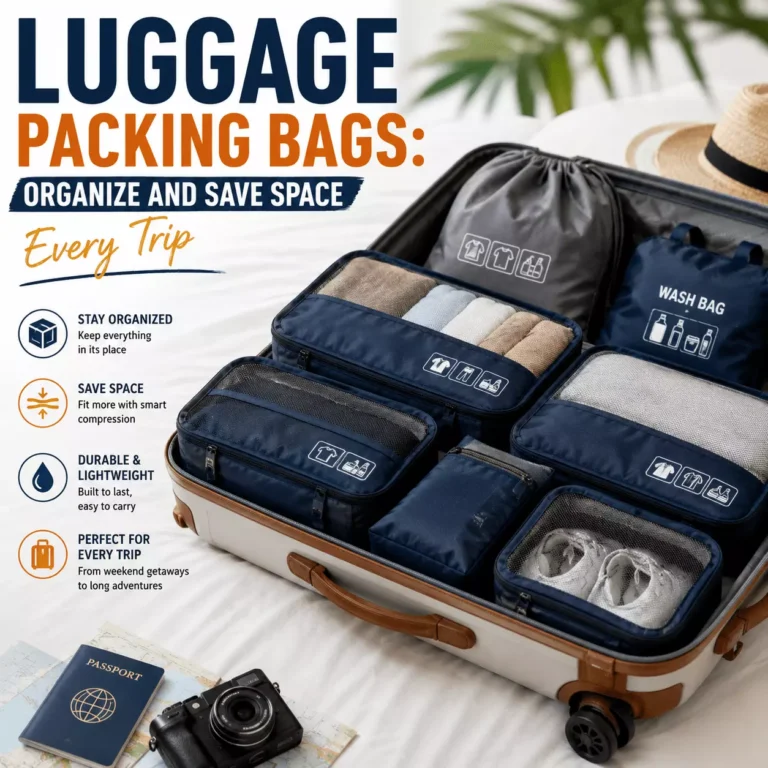
Luggage Packing Bags: Organize and Save Space Every Trip
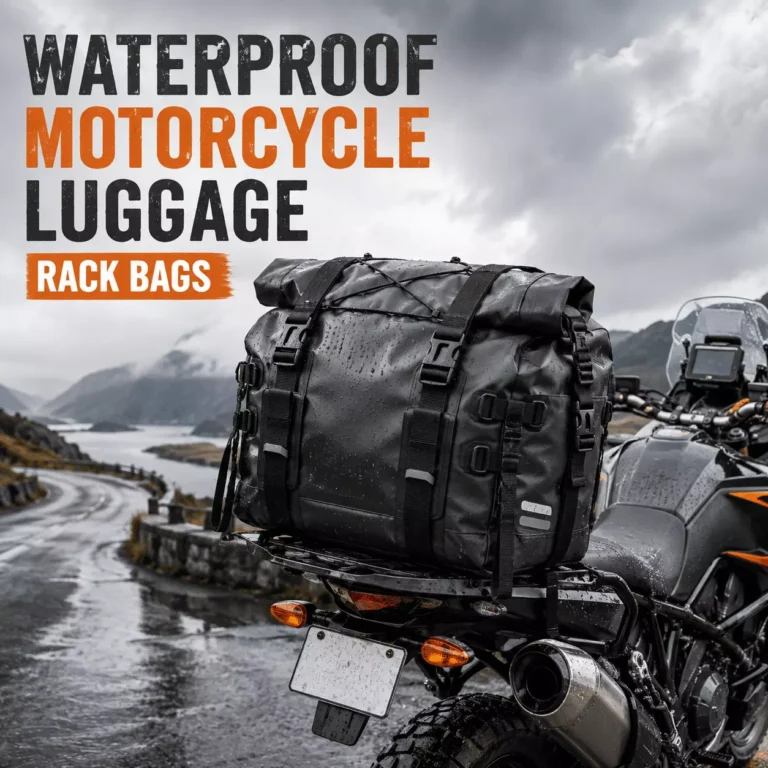
Waterproof Motorcycle Luggage Rack Bags: A Rider’s Guide
T-Bags Motorcycle Luggage: The Rider’s Complete Guide
Types of Luggage Bags: Which One Is Right for You?
Large Luggage Bags: The Complete Guide to Big Travel Bags
People also say ‘luggage’, mostly at airports and in the US. It means the same thing in daily use. Knowing the words helps when you read airline rules. It keeps you from mixing up a personal item with a checked bag.
The Main Types of Travel Bags
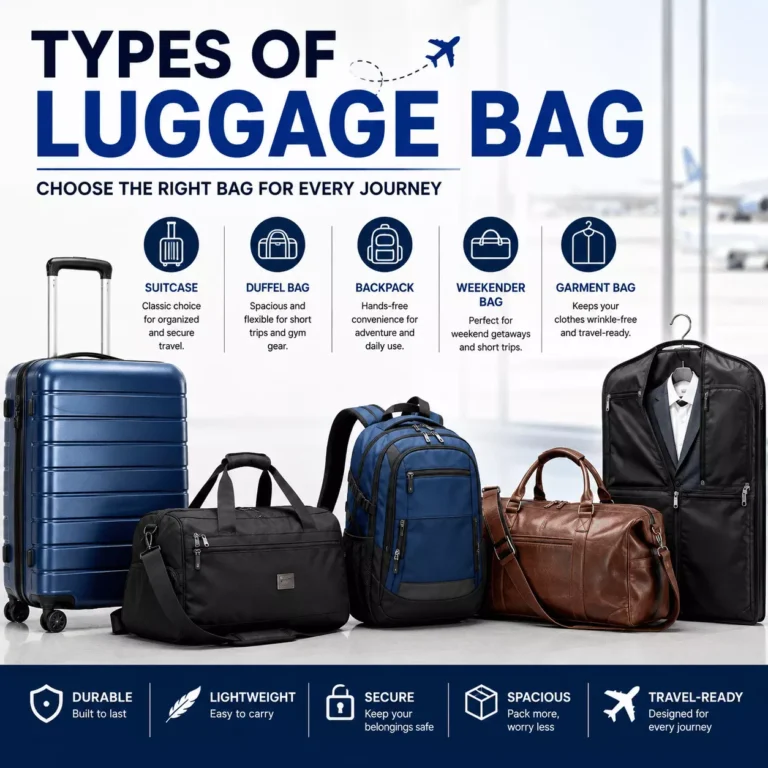
Most trips come down to a few core bag types. I cover each one here. Travel luggage bags fall into a handful of clear groups, so pick the one that matches how you move and how much you pack.
Carry-On Luggage
Carry-on bags stay with you in the cabin. They fit in the overhead bin or under the seat. Most run around 22 x 14 x 9 inches and hold a few days ‘ worth of clothes. They save you time since you skip the baggage carousel.
You will find carry-ons as rolling cases, backpacks, and small duffels. Soft and hard versions both exist. Good luggage bags for travel in this size often have a padded laptop pocket. Look for compression straps to squeeze in more.
Checked Luggage
Checked bags go in the plane’s cargo hold. They are bigger, usually 24 to 30 inches tall. These suit longer trips where you pack a full wardrobe. You hand them over at the counter and grab them at the other end.
The trade-off is time and fees. You wait at the carousel and often pay per bag. Still, the extra space is worth it for families or long stays. Many pieces come with expandable zippers for even more room.
Best Leather Luggage Bags: A Traveler’s Buying Guide
Samsonite Luggage Bags: A Complete Buyer’s Guide
Luggage Duffel Bags: The Complete Guide for Travelers
Luggage Vacuum Bags With Pump: Pack Smarter and Save Space
Can You Use Vacuum-Seal Bags in Checked Luggage? A Full Guide
Luggage Packing Bags: Organize and Save Space Every Trip
Waterproof Motorcycle Luggage Rack Bags: A Rider’s Guide
T-Bags Motorcycle Luggage: The Rider’s Complete Guide
Types of Luggage Bags: Which One Is Right for You?
Large Luggage Bags: The Complete Guide to Big Travel Bags
Duffel Bags and Weekenders
Duffels are soft, roomy, and light. You carry them by hand or over a shoulder. They are perfect for short trips, the gym, and road travel. A classic duffel is just one big space you throw your gear into.
Weekenders are the stylish version for a night or two away. Wheeled duffels add rolling wheels and a handle. That gives you suitcase-style mobility with a softer shell. These travel bags for luggage flex to fit odd-shaped gear.
Travel Backpacks and Wheeled Backpacks
Travel backpacks now sell fast, especially with younger travellers. They open flat like a suitcase but ride on your back. That makes them great for stairs, cobblestones, and busy cities. Look for a clamshell zip, a hip belt, and a laptop sleeve.
Wheeled backpacks blend a pack with roller wheels. You pull them like a case or wear them when the ground gets rough. Frameless packs stay light for minimal trips. These are the best travel luggage bags when you move a lot between transport.
Garment Bags and Specialty Pieces
Garment bags keep suits and dresses wrinkle-free. They use internal hangers and fold panels. Business travellers and wedding guests love them. Some suitcases even have a suiter built in, so you skip a separate bag.
Speciality pieces cover camera bags, totes, and slings. A tote works as a smart personal item on a flight. Camera bags add padded dividers for gear. Pick these when your trip has a special need.
Hard-Side vs Soft-Side
The shell debate splits most shoppers. Hard-side cases use polycarbonate or ABS. They protect fragile items and resist water. The downside is that they cannot squish into a tight bin.
Soft-side bags use nylon or polyester over a light frame. They flex, weigh less, and add outside pockets. They forgive overpacking better than a rigid shell. Choose hard for electronics and gifts, and soft for flexible everyday travel.
Best Leather Luggage Bags: A Traveler’s Buying Guide
Samsonite Luggage Bags: A Complete Buyer’s Guide
Luggage Duffel Bags: The Complete Guide for Travelers
Luggage Vacuum Bags With Pump: Pack Smarter and Save Space
Can You Use Vacuum-Seal Bags in Checked Luggage? A Full Guide
Luggage Packing Bags: Organize and Save Space Every Trip
Waterproof Motorcycle Luggage Rack Bags: A Rider’s Guide
T-Bags Motorcycle Luggage: The Rider’s Complete Guide
Types of Luggage Bags: Which One Is Right for You?
Large Luggage Bags: The Complete Guide to Big Travel Bags
Wheels, Handles, and Key Features to Check
Small features change how a bag feels day to day. Two-wheel bags tilt and roll behind you. Four-wheel spinners glide upright in any direction. Spinners cut wrist strain in tight airport aisles.
Handles matter just as much. A telescopic handle should lock at a comfortable height. Soft-grip and retractable designs last longer. Watch the zippers too, since chain zippers resist break-ins better than coil ones.
Other features earn their keep on the road. A padded laptop pocket saves you a second bag. A TSA-approved lock adds peace of mind. Packing cubes keep the inside neat and easy to dig through.
How to Choose the Right Size
Size comes down to trip length and packing habits. Do not buy bigger than you need. Extra space just tempts you to overpack. Bag capacity is measured in litres, which makes matching easy.
Here is a simple size guide for trips:
| Trip Length | Capacity | Best Bag Type |
| Day trip | 10 to 25L | Daypack or tote |
| Weekend (2 to 3 days) | 30 to 50L | Carry-on or duffel |
| Week-long trip | 50 to 75L | Medium checked bag |
| Long or family trip | 75 to 100L+ | Large checked bag or set |
A carry-on around 40 L covers most short trips. Save the big checked bags for real hauls. When in doubt, size down and pack smarter.
Airline Size and Weight Rules
Airlines are strict, and fees add up fast. A carry-on usually must clear 45 linear inches, or about 22 x 14 x 9 inches. Checked bags cap at 62 linear inches, which is 158 cm. Go over, and you pay extra at the gate.
Weight rules bite, too. Most checked bags top out at 50 lb, or 23 kg. Carry-on weight limits swing wildly between airlines. International and domestic rules also differ, so always check before you fly.
Best Leather Luggage Bags: A Traveler’s Buying Guide
Samsonite Luggage Bags: A Complete Buyer’s Guide
Luggage Duffel Bags: The Complete Guide for Travelers
Luggage Vacuum Bags With Pump: Pack Smarter and Save Space
Can You Use Vacuum-Seal Bags in Checked Luggage? A Full Guide
Luggage Packing Bags: Organize and Save Space Every Trip
Waterproof Motorcycle Luggage Rack Bags: A Rider’s Guide
T-Bags Motorcycle Luggage: The Rider’s Complete Guide
Types of Luggage Bags: Which One Is Right for You?
Large Luggage Bags: The Complete Guide to Big Travel Bags
Best Travel Bag Brands to Know
Shoppers often ask, What are the best travel bags and luggage brands? A few names come up again and again. Travelpro is a favorite for durable rollers with smooth spinner wheels. Away built a following with clean, feature-packed suitcases at a fair price.
Samsonite and Bric’s bring long histories and premium builds. Bric’s handcrafts leather cases in Italy. Calpak and Eume offer stylish sets for families and frequent flyers. Test grab handles and wheels before you commit, since those parts fail first.
Quick Tips for Buying Smart

A few habits save you money and stress. Weigh the empty bag first, since a heavy shell eats your allowance. Aim for a wheeled bag under 7 lb when empty. A non-wheeled bag should sit between 2 and 4 lb.
Think about storage at home, too. Hard cases will not squish into a small closet. Soft duffels fold down flat. Add packing cubes to any bag to stay organised and fit more.
Frequently Asked Questions
What is the best type of travel bag?
It depends on your trip and style. A carry-on suits short flights; a duffel fits gym and road trips. A travel backpack wins when you face stairs and uneven streets.
How many luggage bags are allowed on international flights?
Most airlines let you bring one carry-on plus one personal item in the cabin. Economy usually includes one or two checked bags, though budget fares may include none. Always confirm with your airline, since rules and fees change often.
What size bag can I carry on a plane?
A common carry-on limit is 22 x 14 x 9 inches, or 45 linear inches. This includes wheels and handles. Some airlines run smaller, so measure before you pack.
Are hard-shell or soft-shell bags better?
Hard-shell cases protect fragile items and resist water. Soft-shell bags flex, weigh less, and add outside pockets. Pick based on what you pack and how you travel.
Best Leather Luggage Bags: A Traveler’s Buying Guide
Samsonite Luggage Bags: A Complete Buyer’s Guide
Luggage Duffel Bags: The Complete Guide for Travelers
Luggage Vacuum Bags With Pump: Pack Smarter and Save Space
Can You Use Vacuum-Seal Bags in Checked Luggage? A Full Guide
Luggage Packing Bags: Organize and Save Space Every Trip
Waterproof Motorcycle Luggage Rack Bags: A Rider’s Guide
T-Bags Motorcycle Luggage: The Rider’s Complete Guide
Types of Luggage Bags: Which One Is Right for You?
Large Luggage Bags: The Complete Guide to Big Travel Bags
How heavy should an empty suitcase be?
Aim for a wheeled bag under 7 lb when empty. A non-wheeled bag should weigh 2 to 4 lb. A lighter shell leaves more of your allowance for actual stuff.
Is a duffel or a suitcase better for travel?
A suitcase gives structure, wheels, and organized packing. A duffel is lighter and squishes into tight spaces. Frequent packers often own both and switch by trip.
Which luggage brands last the longest?
Travelpro, Away, Samsonite, Bric’s, and Calpak all earn strong marks. The right pick depends on budget, style, and how often you fly. Check the wheels and handles first, since those wear out soonest.
Explore All 14 Travel Essentials Categories
- Luggage & Bags
- Packing Organisation & Cubes
- Travel Tech & Electronics
- Toiletries & Travel-Size
- Travel Comfort
- Travel Safety & Security
- Packing Lists by Trip Type
- Packing Lists by Destination
- Travel Documents & Money
- Travel Clothing & Footwear
- Health, Hygiene & First-Aid
- Airport, Airline & Rules
- Essentials Guide
- Essentials for Women, Men & Family