

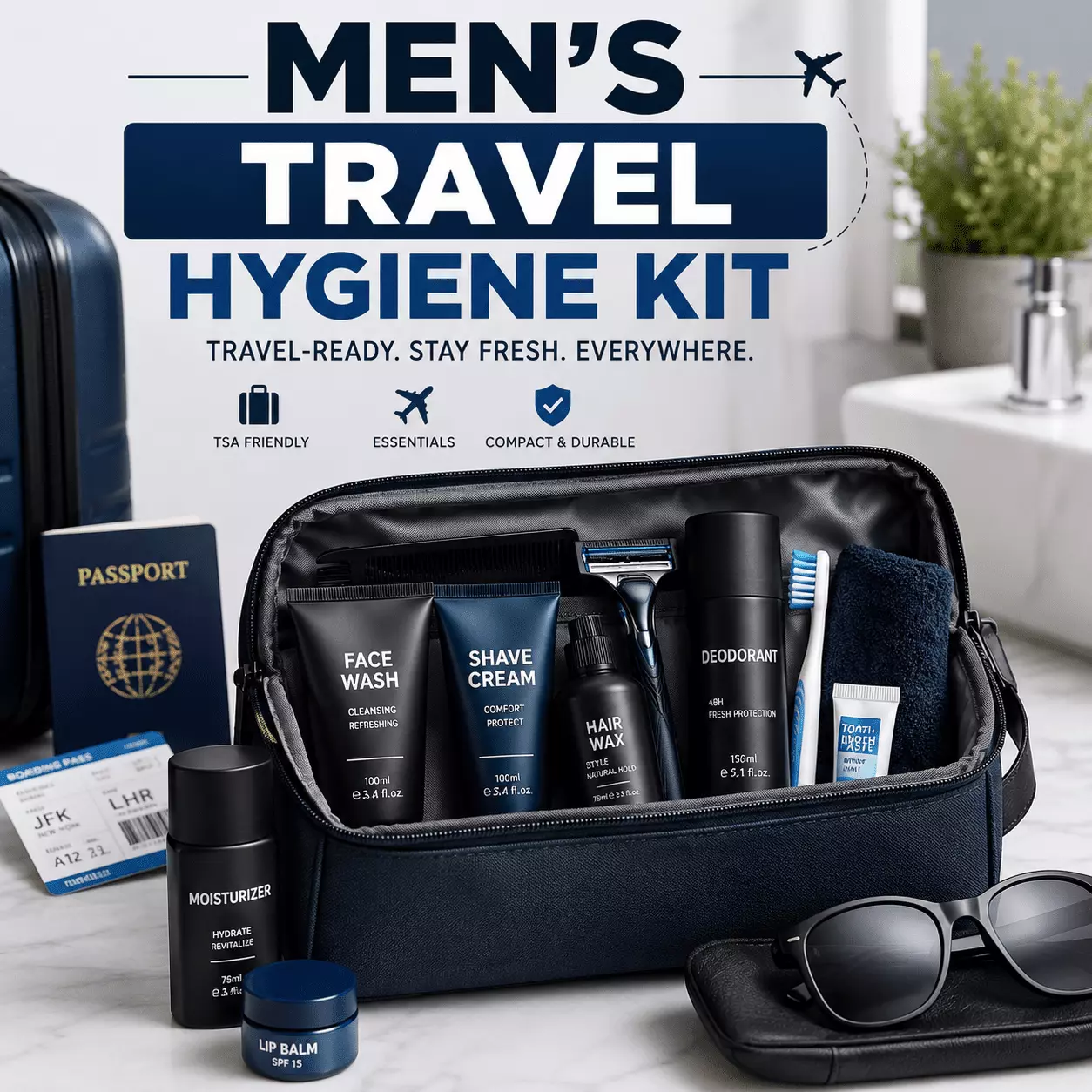
What a Dopp Kit Actually Is
Many travelers use the terms ‘dopp kit’ and ‘toiletry bag’ interchangeably, though they have a specific origin. The name traces back to Charles Doppelt, who patented the compact, rectangular grooming case back in 1926. His design became the standard shape most men’s kits still follow today.
Traditional dopp kits favored leather or heavy canvas construction. Modern versions have expanded into synthetic and water-resistant fabrics too. The core idea stayed the same across a century: a compact, structured case built specifically for men’s grooming supplies.
Quick Facts
| Feature | What to Know |
|---|---|
| Origin | The classic Dopp kit traces its roots to a 1926 patent by Charles Doppelt, becoming a popular men’s travel toiletry bag. |
| Core Categories | A complete travel hygiene kit typically includes shaving supplies, oral care products, deodorant, skin care essentials, and hair care items. |
| TSA Rule | Carry-on liquids, gels, and aerosols must be in containers of 3.4 oz (100 ml) or less and fit inside one clear quart-size bag. |
| Bag Styles | Choose a hanging toiletry bag for easy access in hotels or a standing Dopp kit for compact packing and countertop use. |
| Best Materials | Popular options include waxed canvas for durability, full-grain leather for a premium look, and coated nylon for lightweight water resistance. |
| Compact Kits | Typically contain 5 to 8 essential items, making them ideal for weekend getaways, business trips, and carry-on travel. |
| Full-Size Kits | Offer additional compartments and storage space for longer vacations, international travel, or travelers carrying full grooming routines. |
| Price Range | Budget travel hygiene kits start around $20, while premium leather Dopp kits and luxury brands can cost $150 or more. |
Hanging vs. Standing Bags
Standing kits sit upright on a bathroom counter, offering a classic, structured look. A men’s hanging travel hygiene kit instead clips onto a hook or shower rod, keeping items elevated off wet or dirty surfaces. This style works especially well in cramped hotel bathrooms with little counter space.

Hanging bags also tend to include more visible compartments and mesh pockets. That extra organisation helps travelers see everything at a glance instead of digging through a closed case. Standing kits still appeal to travelers who prefer a more classic, structured aesthetic.
What Goes Inside: The Core Checklist
A dependable men’s travel hygiene kit checklist starts with shaving gear, oral care, and deodorant. A men’s travel hygiene kit with a razor typically pairs a travel-size shaving cream with either a disposable or safety razor. Toothbrush, toothpaste, and floss round out the oral care basics that almost every kit includes.
Skin care has grown into a bigger category over the past few years. Moisturiser, sunscreen, and a basic cleanser now show up in most well-rounded kits. Hair care essentials like a travel-size shampoo or styling product fill out the remaining space.
TSA Rules and Carry-On Packing
Every liquid or gel item needs to follow the standard 3-1-1 rule for carry-on travel. A men’s travel hygiene kit for carry-on use should keep each container under 3.4 ounces, fitting inside one quart-size bag. This rule applies regardless of how nice or expensive your toiletry bag itself is.
Solid items like bar soap or solid deodorant skip this restriction entirely. Packing a few solid alternatives can free up space within your liquid allowance for other products. Checking current TSA guidelines before a trip avoids any last-minute repacking at security.
Compact vs. Full-Size Kits
A compact men’s travel hygiene kit suits short weekend trips or minimalist packers who travel frequently. These smaller kits typically hold five to eight travel-size items in a slim, low-profile shape. They slide easily into a carry-on side pocket without adding bulk.
Full-size kits suit longer trips or travelers who want backup supplies without repurchasing mid-trip. These larger bags often include more compartments and a sturdier structure overall. Matching kit size to actual trip length prevents both underpacking and unnecessary bulk.
Materials: Canvas, Leather, and Synthetic
Waxed canvas has become a popular middle-ground material, balancing durability with a more casual look. A leather men’s travel hygiene kit offers a more polished, premium feel and tends to age well with regular use. Full-grain leather in particular holds up better than bonded or synthetic leather over the years of travel.
Coated nylon and other synthetic fabrics remain the most water-resistant and budget-friendly option. These materials handle spills and humidity better than untreated canvas or leather. Choosing a material often comes down to balancing style preference against practical durability needs.
Best Kits by Use Case
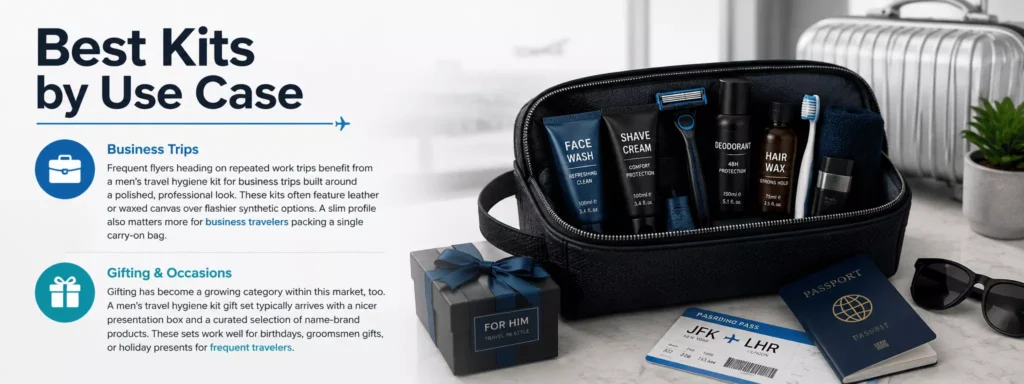
Frequent flyers heading on repeated work trips benefit from a men’s travel hygiene kit for business trips built around a polished, professional look. These kits often favor leather or waxed canvas over flashier synthetic options. A slim profile also matters more for business travelers packing a single carry-on bag.
Gifting has become a growing category within this market, too. A men’s travel hygiene kit gift set typically arrives with a nicer presentation box and a curated selection of name-brand products. These sets work well for birthdays, groomsmen gifts, or holiday presents for frequent travelers.
Top Picks and Brands to Know
Several brands consistently top expert roundups for build quality and thoughtful design. WaterField Designs earns praise for its waxed canvas and full-grain leather construction with multiple visible compartments. BAGSMART offers a more budget-friendly, water-resistant option favored by daily commuters and casual travelers alike.
Shoppers searching for the best men’s travel hygiene kit often compare these established names against newer entrants like Tooletries and Bayfield Bags. A men’s travel toiletry kit from any of these brands typically includes similar core features: multiple compartments, a sturdy zipper, and water-resistant lining. Reading recent reviews helps narrow the choice between similarly priced options.
Wet and Dry Separation Tips
Keeping wet items separate from dry ones prevents damage to the rest of your luggage. A dedicated waterproof pouch or drawstring bag works well for a damp washcloth, razor, or swim gear. This separation matters most on multi-day trips where items get reused before laundry access.
Mesh pockets built into many kits speed up drying time for damp items too. Look for sealed seams and a water-resistant lining on any pocket meant to hold wet gear. This small feature prevents leaks from spreading into your clean clothing or electronics.
Why Trust This Guide
This guide draws on hands-on product testing, expert roundups, and verified brand details confirmed across multiple current sources. Every material and sizing claim reflects information published directly by manufacturers and cross-checked against independent reviews. We update this guide as new brands and materials enter the market.
A useful guide should balance practical packing advice with real product comparisons. That balance is why this article covers Dopp kit history alongside current TSA rules and brand recommendations. Readers deserve a complete picture before choosing a new travel kit.
Frequently Asked Questions
What is the difference between a Dopp kit and a toiletry bag?
A Dopp kit specifically refers to the compact, structured design patented in 1926. ‘Toiletry bag’ is a broader, more general term. Most people use both terms interchangeably today.
Can I bring a razor in a carry-on hygiene kit?
Yes, both disposable and safety razors are allowed in carry-on bags. Straight razors face more restrictions and should go in checked luggage. Check current TSA guidance before packing anything unusual.
What size toiletry bag fits the carry-on rules?
Most experts recommend staying under 12 by 8 by 4 inches. This size fits comfortably in most carry-on bags. Liquid contents still must follow the separate 3.4-ounce rule.
Are hanging toiletry bags better than standing ones?
Hanging bags work better in bathrooms with limited counter space. Standing bags offer a more classic, structured look. The better choice depends on personal preference and travel style.
How do I keep wet items separate from dry ones?
Use a dedicated waterproof pouch for damp items like razors or washcloths. Mesh pockets also help speed up drying time. This prevents moisture from spreading to clean clothing.
What is the best material for a man’s travel kit?
Full-grain leather offers the most durable, premium option. Waxed canvas balances durability with a more casual look. Coated nylon remains the most water-resistant and budget-friendly choice.
How often should I replace travel-size toiletries?
Replace liquid products every few months to avoid expired or degraded formulas. Check expiration dates on sunscreen and skin care items specifically. Solid items like soap generally last much longer.
Common Mistakes to Avoid
Overpacking liquids is the most frequent carry-on mistake. Every container still counts toward the 3.4-ounce limit, no matter how nice the bag looks. Swap a few liquid products for solid alternatives to save space within that allowance.
Ignoring zipper quality causes problems on longer trips, too. A cheap zipper can fail after repeated compression from a full bag. Testing the zipper at the store or checking reviews closely helps avoid this issue.
Skipping a test pack before a big trip is a subtle but common error. Items that fit fine on a store shelf sometimes do not fit together inside a specific bag. A quick trial run at home catches this before departure day.
Packing for Different Climates
Hot, humid destinations call for lighter, oil-free skin care products. Heavier creams and balms tend to feel uncomfortable and can clog pores in high humidity. A lightweight sunscreen becomes a bigger priority than a heavy moisturiser in this climate.
Cold, dry destinations shift priorities toward heavier moisturizers and lip balm. Skin tends to dry out faster in low humidity and cold weather. Swapping a few products seasonally keeps the same core kit useful year-round.
Final Thoughts
Building the right kit comes down to matching size, material, and contents to your actual travel habits. A frequent business traveler needs something different than someone packing for one annual vacation. Once you find a bag and a checklist that fit your routine, packing becomes a fast, repeatable habit instead of a last-minute scramble.
Explore All 14 Travel Essentials Categories
- Luggage & Bags
- Packing Organisation & Cubes
- Travel Tech & Electronics
- Toiletries & Travel-Size
- Travel Comfort
- Travel Safety & Security
- Packing Lists by Trip Type
- Packing Lists by Destination
- Travel Documents & Money
- Travel Clothing & Footwear
- Health, Hygiene & First-Aid
- Airport, Airline & Rules
- Essentials Guide
- Essentials for Women, Men & Family