

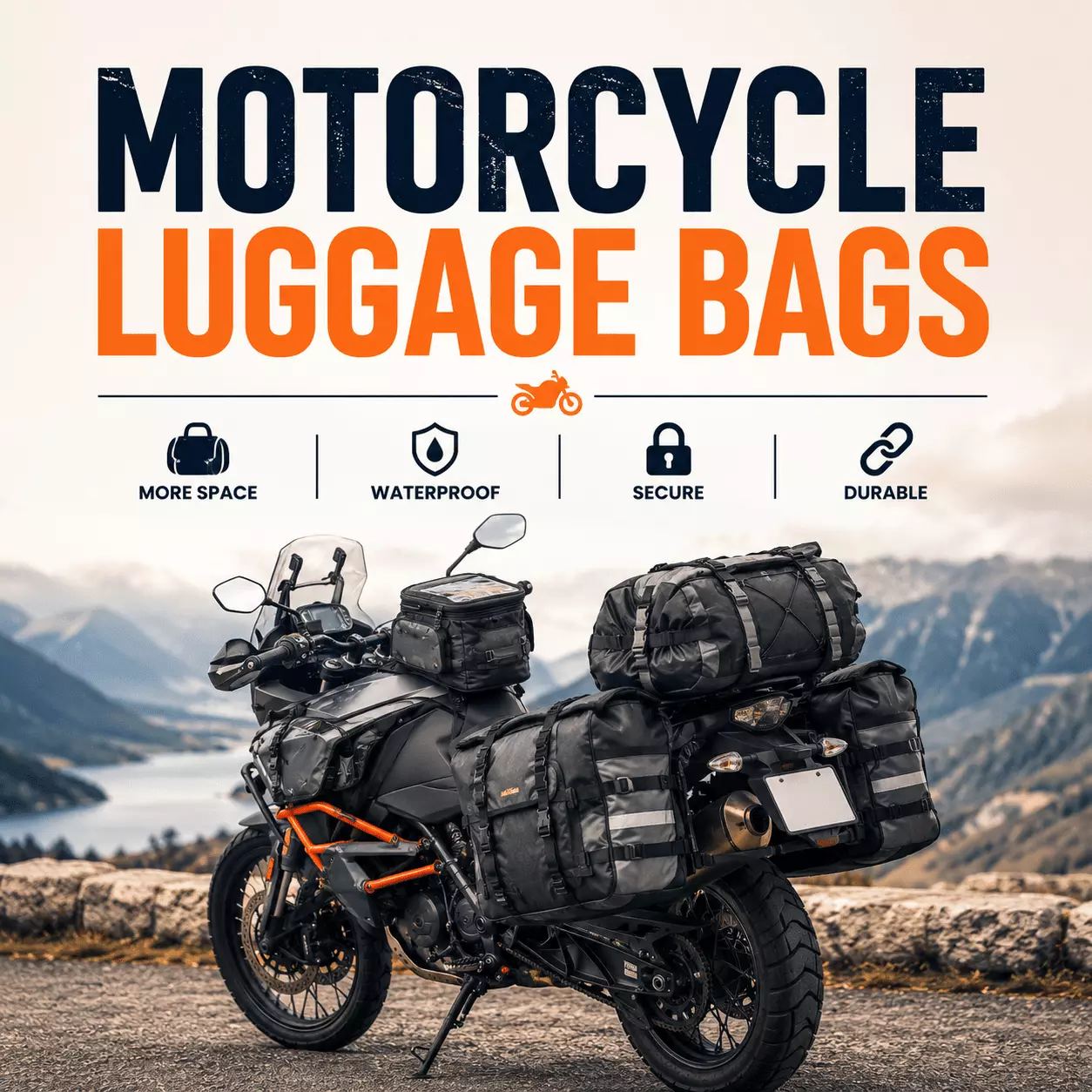
I have strapped gear to bikes for years, from weekend runs to long hauls. Every setup taught me something. Below, I break down each bag type, the materials, mounting, and packing. By the end, you will know exactly what fits your ride.
What Is Motorcycle Bike Luggage?
These are bags built to mount on your bike and carry your gear. They sit on the tank, seat, rack, or sides. Unlike a backpack, they put the weight on the bike, not on you. That keeps you comfortable and balanced on long rides.
The whole world of motorcycle bags and luggage splits into two camps. One is soft, the other is hard. Each suits a different rider and terrain. I cover that split next.
| Topic | Key Takeaway |
|---|---|
| Core rule | Match the bag to your bike, riding style, and trip length. |
| Soft luggage | Lightweight, flexible, safer in falls, and ideal for off-road riding. |
| Hard luggage | Lockable, weatherproof, highly secure, and best suited for long-distance touring. |
| Main types | Saddlebags, panniers, tank bags, tail bags, top boxes, and roll bags. |
| Capacity | Crash bar bags: 10–15L; panniers: 25–50L+. |
| Mounting | Available in strap-on, magnetic, bolt-on, or rackless mounting systems. |
| Waterproofing | TPU materials and dry bags provide the best waterproof protection; always check for rain covers. |
| Weight rule | Keep heavy items low and close to the motorcycle’s center of gravity. |
| T-Bags status | The company filed for bankruptcy in 2017, but the T-Bags brand continues to be sold. |
| Smart tip | Pack light and always stay within your motorcycle rack’s maximum weight limit. |
Soft vs Hard Luggage
Soft bags are light, flexible, and often cheaper. They flex in a crash, so they are less likely to hurt your leg or damage the bike. Riders love them for off-road and dirt. Most use waterproof fabric, though you must care for it.
Best Leather Luggage Bags: A Traveler’s Buying Guide
Samsonite Luggage Bags: A Complete Buyer’s Guide
Luggage Duffel Bags: The Complete Guide for Travelers
Luggage Vacuum Bags With Pump: Pack Smarter and Save Space
Can You Use Vacuum-Seal Bags in Checked Luggage? A Full Guide
Luggage Packing Bags: Organize and Save Space Every Trip
Waterproof Motorcycle Luggage Rack Bags: A Rider’s Guide
T-Bags Motorcycle Luggage: The Rider’s Complete Guide
Types of Luggage Bags: Which One Is Right for You?
Large Luggage Bags: The Complete Guide to Big Travel Bags
Hard cases are lockable, weatherproof, and secure. They protect delicate gear and shrug off rain. The downside is weight, so off-road riders often skip them. Semi-rigid bags sit in the middle, giving structure while still flexing on impact.
The Main Types of Motorcycle Bags
Riders can choose from many bag styles. Each one has a job. I walk through the main ones below so you can match them to your trips.
Saddlebags
Saddlebags come in pairs and hang on each side of the rear wheel. They drape over the seat, fender, or rack. Since they sit behind you, they do not change your riding position. Classic leather and modern vinyl versions both exist.
Panniers and Side Cases
Panniers are the touring rider’s favourite for big loads. They come in hard and soft types, holding 25 to 50 litres each. Hard ones lock and stay waterproof, while soft ones weigh less and flex. Long trips lean on them for secure, roomy storage.
Best Leather Luggage Bags: A Traveler’s Buying Guide
Samsonite Luggage Bags: A Complete Buyer’s Guide
Luggage Duffel Bags: The Complete Guide for Travelers
Luggage Vacuum Bags With Pump: Pack Smarter and Save Space
Can You Use Vacuum-Seal Bags in Checked Luggage? A Full Guide
Luggage Packing Bags: Organize and Save Space Every Trip
Waterproof Motorcycle Luggage Rack Bags: A Rider’s Guide
T-Bags Motorcycle Luggage: The Rider’s Complete Guide
Types of Luggage Bags: Which One Is Right for You?
Large Luggage Bags: The Complete Guide to Big Travel Bags
Tank Bags
Tank bags mount on the fuel tank with straps or magnets. They keep small items like your phone, keys, and wallet within reach. Many add a clear map window on top. Touring and adventure riders use them for quick access without stopping.
Tail Bags and Sissy Bar Bags
Tail bags strap to the pillion seat or rack behind you. They carry a good load without side mounts. Sissy bar bags attach around the sissy bar and sit upright. Both work well when a tank bag feels cramped.
Top Boxes and Top Cases
A top box mounts on a rear rack and locks shut. It holds a helmet, valuables, or daily gear. Some even add a backrest for your passenger. This is a favourite for commuters who want fast, secure storage.
Handlebar and Crash Bar Bags
Handlebar bags sit up front for small, grab-fast items. Think sunglasses, gloves, or documents. Crash bar bags mount low near the engine and use wasted space. They shine for redistributing weight forward, which keeps the bike balanced.
Roll Bags and Dry Bags
Roll bags let you stuff gear fast and go. Most are fully waterproof, so they suit camping and wet rides. Top-opening ones let you see everything inside. They mount easily and come off in seconds.
Backpacks and Wearable Bags
Some riders keep essentials on their body. Motorcycle backpacks and leg pouches strap to you, not the bike. They work for commuters and delivery riders who need mobility. For long rides, though, bike-mounted bags feel far less tiring.
Waterproofing and Materials
Weather protection can make or break a trip. Soft bags often use coated nylon or TPU with welded seams. These block water and resist tearing. Leather and vinyl bring style but need more care in the sun and rain.
Best Leather Luggage Bags: A Traveler’s Buying Guide
Samsonite Luggage Bags: A Complete Buyer’s Guide
Luggage Duffel Bags: The Complete Guide for Travelers
Luggage Vacuum Bags With Pump: Pack Smarter and Save Space
Can You Use Vacuum-Seal Bags in Checked Luggage? A Full Guide
Luggage Packing Bags: Organize and Save Space Every Trip
Waterproof Motorcycle Luggage Rack Bags: A Rider’s Guide
T-Bags Motorcycle Luggage: The Rider’s Complete Guide
Types of Luggage Bags: Which One Is Right for You?
Large Luggage Bags: The Complete Guide to Big Travel Bags
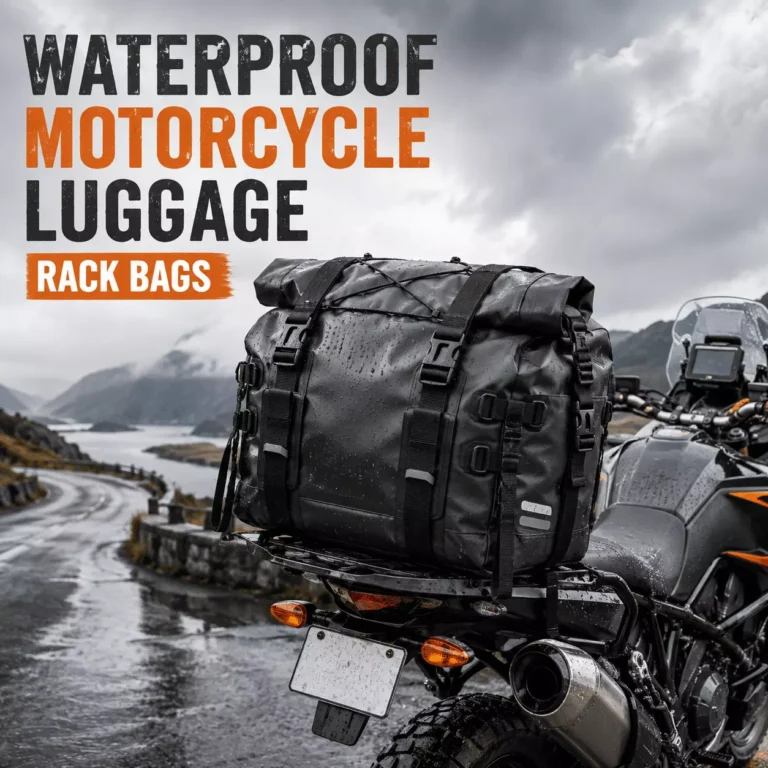
Not every bag is fully sealed, so check before you buy. Some come with removable rain covers instead. Waterproof motorcycle luggage rack bags are a smart pick for riders who face storms. Dry bags stay the safest bet when you must keep gear bone dry.
Mounting Systems Explained
How a bag attaches matters as much as its size. Strap-on systems use quick-release buckles for fast removal. Magnetic tank bags stick to steel tanks and sit low. Bolt-on mounts lock into the frame for the most stability.
Some setups need a rack, some do not. Hard panniers and top boxes usually need a bike-specific frame. Motorcycle bags for luggage rack setups give you a solid, stable base. Rackless soft systems skip the hardware for a cleaner, minimal look.
How to Choose the Right Setup
The best choice depends on how and where you ride. A cross-country tour needs soft panniers or aluminium cases. A short commute needs only a tank bag or small saddlebag. Match the gear to the trip, not the other way around.
Think about capacity in liters before you spend. Crash bar bags run small at 10 to 15 litres. Panniers hold much more. Motorcycle luggage rack bags add flexible space when you need to carry extra items for a few days.
Budget and security also shape the pick. Simple soft bags start cheap, while custom hard panniers cost far more. Look for lockable zippers and tough construction if theft worries you. The best motorcycle luggage bags balance space, security, and your bike’s style.
Packing and Weight Distribution Tips
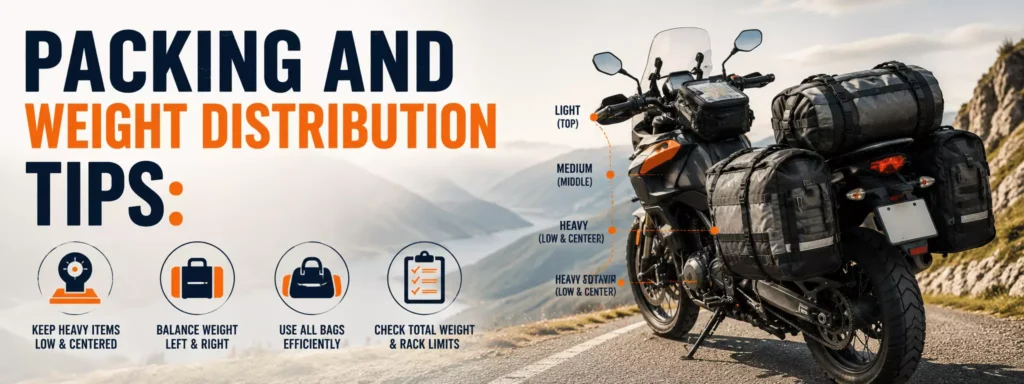
How you pack changes how the bike handles. Keep the heaviest items low and near the center. Do not overload the rear, or the bike gets wobbly at speed. Rear racks have strict weight limits, so respect them.
Best Leather Luggage Bags: A Traveler’s Buying Guide
Samsonite Luggage Bags: A Complete Buyer’s Guide
Luggage Duffel Bags: The Complete Guide for Travelers
Luggage Vacuum Bags With Pump: Pack Smarter and Save Space
Can You Use Vacuum-Seal Bags in Checked Luggage? A Full Guide
Luggage Packing Bags: Organize and Save Space Every Trip
Waterproof Motorcycle Luggage Rack Bags: A Rider’s Guide
T-Bags Motorcycle Luggage: The Rider’s Complete Guide
Types of Luggage Bags: Which One Is Right for You?
Large Luggage Bags: The Complete Guide to Big Travel Bags
Watch for a few common mistakes too. Overpacked soft bags can touch the hot exhaust and melt. Loose straps can catch moving parts or fly off. Fill small gaps with socks and chargers to keep loads stable.
A big, roomy option helps on camping trips. The Kemimoto 60L motorcycle travel luggage bags are one example riders use for bulky gear. Just remember that more space tempts you to overpack. Pack light, and your bike will thank you.
Popular Brands and the T-Bags Story
Plenty of trusted names make solid gear. Nelson Rigg, Givi, Kriega, and Oxford all earn strong reviews. They cover everything from tank bags to full pannier systems. Testing the straps and zippers first is always smart, since those wear out soonest.
One name sparks a lot of questions. Riders often ask about t-bags motorcycle luggage out of business rumours from years back. The original company hit bankruptcy around 2017 under its parent group. The t-bags motorcycle luggage brand did not vanish, though.
Here is the short history for clarity. T-Bags started in the early 90s and was later sold to a larger group. It moved under Kuryakyn after a merger. Today, you can still find t bags motorcycle luggage through retailers like ChapMoto and others.
If you want to buy, check current sellers online. The old T-bags motorcycle luggage website changed hands during the bankruptcy. Some shoppers still search for the T-bags motorcycle luggage website out of habit. Trusted dealers now carry the range, so buy from a seller you know.
Frequently Asked Questions
What are the best motorcycle bags for touring?
Panniers, top boxes, and saddlebags give the most space and security. Add a tank bag for quick-access items. A mix tailored to your bike works best on long trips.
Do I need a rack for motorcycle luggage?
Often yes, especially for hard panniers and top boxes. These usually need a bike-specific frame to mount. Some soft, rackless systems skip the hardware for a simpler setup.
Best Leather Luggage Bags: A Traveler’s Buying Guide
Samsonite Luggage Bags: A Complete Buyer’s Guide
Luggage Duffel Bags: The Complete Guide for Travelers
Luggage Vacuum Bags With Pump: Pack Smarter and Save Space
Can You Use Vacuum-Seal Bags in Checked Luggage? A Full Guide
Luggage Packing Bags: Organize and Save Space Every Trip
Waterproof Motorcycle Luggage Rack Bags: A Rider’s Guide
T-Bags Motorcycle Luggage: The Rider’s Complete Guide
Types of Luggage Bags: Which One Is Right for You?
Large Luggage Bags: The Complete Guide to Big Travel Bags
Is soft or hard motorcycle luggage better?
Soft luggage is lighter, more flexible, and safer off-road. Hard luggage locks, stays waterproof, and suits touring. Your terrain and riding style decide the winner.
Are motorcycle bike bags water-proof?
Not all of them, so always check first. Many use water-resistant fabric or come with rain covers. Dry bags and TPU-sealed models are the most reliable in heavy rain.
Is the T-Bags brand still around?
The original company filed for bankruptcy around 2017 under its parent group. The brand continued under Kuryakyn afterwards. You can still buy the bags through trusted online dealers.
How should I distribute weight on my bike?
Keep the heaviest items low and close to the centre. Avoid overloading the rear, which causes wobble at speed. Always stay within your rack’s weight limit.
Can I use a backpack instead of motorcycle bags?
You can do short rides, but it gets tiring fast. Bike-mounted motorcycle luggage and bags keep weight off your body. That means a more comfortable, balanced ride overall.
Explore All 14 Travel Essentials Categories
- Luggage & Bags
- Packing Organisation & Cubes
- Travel Tech & Electronics
- Toiletries & Travel-Size
- Travel Comfort
- Travel Safety & Security
- Packing Lists by Trip Type
- Packing Lists by Destination
- Travel Documents & Money
- Travel Clothing & Footwear
- Health, Hygiene & First-Aid
- Airport, Airline & Rules
- Essentials Guide
- Essentials for Women, Men & Family