

Passport Book vs. Passport Card
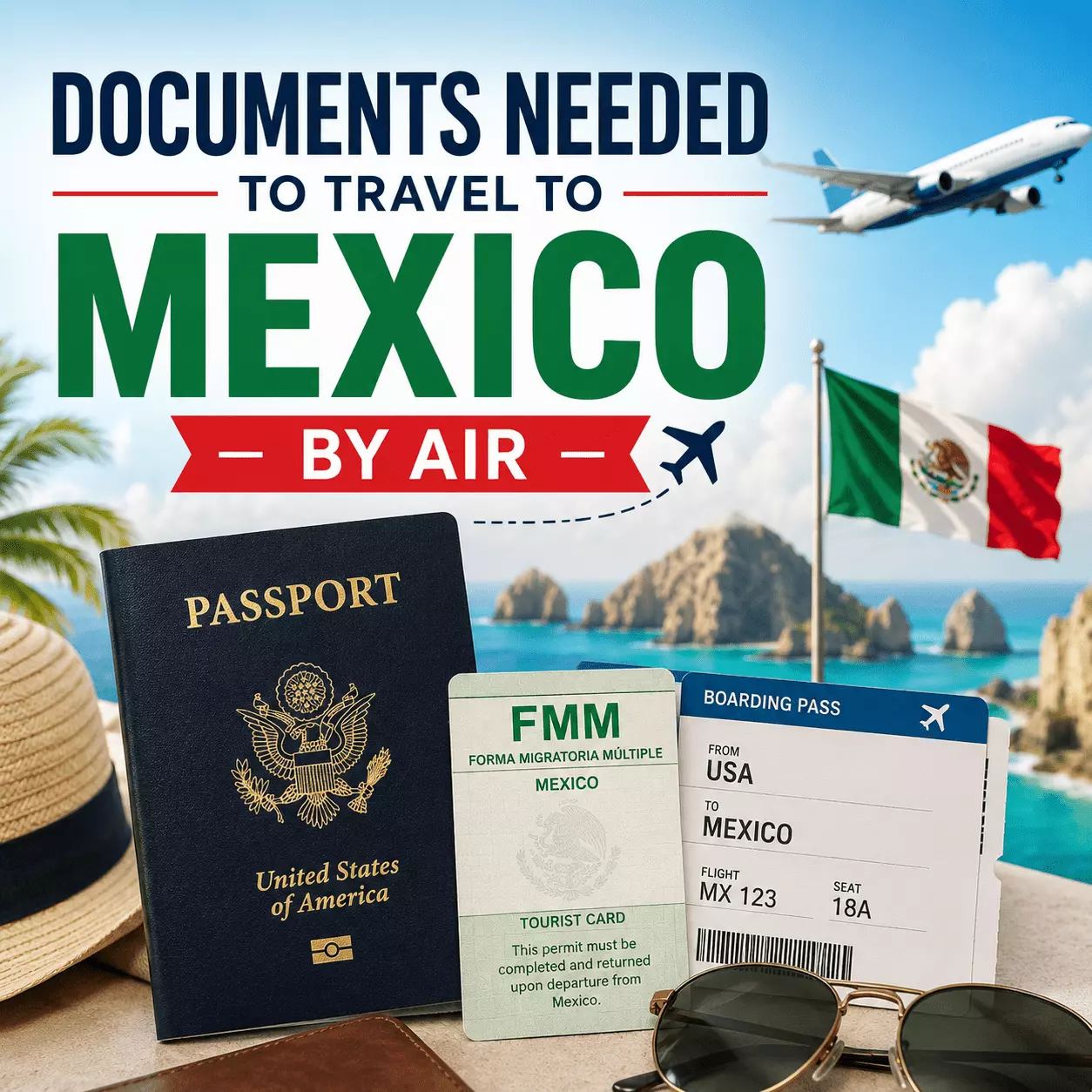
Many travellers mistakenly assume the passport card works the same as the full passport book. Documents needed to travel to Mexico by air specifically exclude the card, since it only covers land and sea crossings between the US, Mexico, Canada, and parts of the Caribbean. Documents needed to travel to Mexico by any other method still favour the book for its flexibility.
CBP and the State Department have kept this distinction consistent for years. What documents are needed to travel to Mexico if your trip includes any flight segments? The passport book remains the only reliable answer, even for a return flight home after a land or sea arrival.
Mexico does not require six months of extra passport validity beyond your stay, unlike many other countries. Your passport simply needs to remain valid for the length of your visit. Renewing early is still smart if your passport is close to expiring, since a worn or damaged document can cause delays at check-in.
Quick Facts
| Destination | Document Needed for Air Travel |
|---|---|
| Mexico | A valid U.S. passport book is required. Eligible travelers may also receive or complete an FMM (Forma Migratoria Múltiple) where applicable. |
| Canada | A valid U.S. passport book is generally required for air travel. |
| Europe (Schengen) | A valid passport is required. ETIAS authorization is expected to become mandatory starting Q4 2026 for eligible visa-exempt travelers. |
| Egypt | Carry a passport with at least six months’ validity beyond arrival and obtain a valid visa or e-Visa before or upon entry, depending on eligibility. |
| Puerto Rico | As a U.S. territory, travelers on domestic flights can use a REAL ID-compliant driver’s license or a valid passport. |
| Domestic U.S. Flights | Use a REAL ID-compliant driver’s license or another TSA-approved identification document, such as a passport. |
| Passport Card | The U.S. Passport Card is valid for land and sea border crossings only. It cannot be used for international air travel. |
| Mexico Passport Validity | Your passport should remain valid for the entire duration of your stay. Mexico does not generally require a six-month passport validity period for entry. |
The FMM Tourist Permit Explained
Beyond your passport, every visitor receives a Forma Migratoria Múltiple, commonly called the FMM or tourist card. Airlines typically hand this form out during the flight, or you can complete it online before departure. An immigration officer stamps it on arrival and records your authorised stay, up to 180 days for most US citizens.
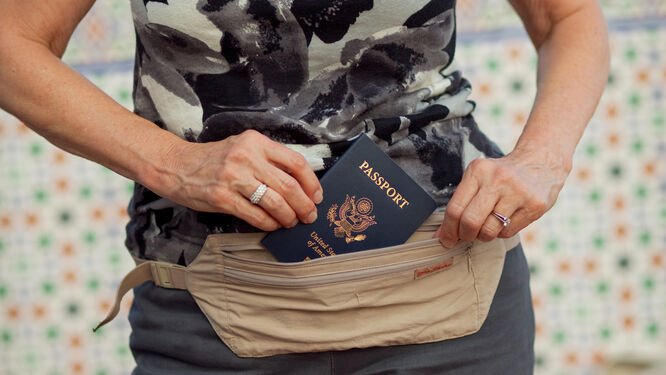

Keep your copy of the FMM safe throughout your trip. You must surrender it when you leave Mexico, and losing it can complicate your departure. A photo of the form on your phone serves as a helpful backup in case the paper copy gets misplaced.
REAL ID and Domestic Flights
REAL ID rules apply specifically to domestic air travel within the United States, not international trips like Mexico. Documents needed for travel ID compliance became mandatory on May 7, 2025, for anyone boarding a domestic flight without a passport. A standard driver’s licence no longer works at TSA checkpoints unless it carries the REAL ID star marking.
State-specific rollout details still matter for some travellers. Documents needed for travel ID AZ residents should check with their local DMV, since Arizona issues both standard and REAL ID-compliant licences. A valid US passport always works as an alternative to REAL ID for domestic flights too.
What You Do Not Need Anymore
Mexico dropped all COVID-related entry requirements back in April 2022. No test, vaccine record, or health declaration is required for entry as of 2026. This applies equally to air travel and land border crossings.
The old six-month passport validity rule, common for many other countries, simply does not apply to Mexico specifically. Some outdated guides still repeat this broader rule out of habit. Checking current guidance directly from the State Department avoids confusion caused by these older, recycled articles.
Documents for Other Popular Destinations
Requirements shift significantly once you look beyond Mexico. Documents needed to travel to Canada by air also require a valid US passport, following the same Western Hemisphere Travel Initiative rules. What documents are needed to travel to Canada essentially mirror the Mexico requirements, since both fall under the same regional framework.
Europe introduces a new layer of documentation starting later in 2026. Documents needed to travel to Europe currently require just a valid passport for stays under ninety days. Travel documents needed for Europe will soon include an ETIAS authorisation, a low-cost online travel permit set to launch in the fourth quarter of 2026 for citizens of visa-exempt countries, including the United States.
Egypt requires more preparation than most Western Hemisphere destinations. Documents needed to travel to Egypt typically include a passport valid for at least six months and either a visa or an approved e-visa arranged before departure. Checking Egypt’s specific visa portal well ahead of your trip avoids last-minute complications.
Puerto Rico differs entirely from every other destination on this list. Documents needed to travel to Puerto Rico match domestic US travel rules exactly, since Puerto Rico is a US territory. A REAL ID-compliant licence or a valid passport both work fine, and no passport is legally required at all.
General International Travel Checklist
Beyond passports and permits, a few universal documents apply almost everywhere. Documents needed for international travel typically include proof of onward or return travel, since many countries deny entry without it. Documents needed for international travel 2026 planning should also account for any destination-specific health or customs forms that change from year to year.
Broader guidance applies no matter your destination. Travel documents needed abroad generally include your passport, any required visa, travel insurance details, and a copy of your itinerary. What are the necessary documents needed to travel abroad often comes down to these same four categories, adjusted slightly per country.
Search phrasing varies, but the underlying advice stays consistent. What documents are needed for travel? Results across many search engines point back to the same core checklist of passport, visa, and proof of onwards travel. Keeping digital copies of every document in cloud storage adds a helpful backup layer for any trip.
Bus Travel vs. Air Travel Documents
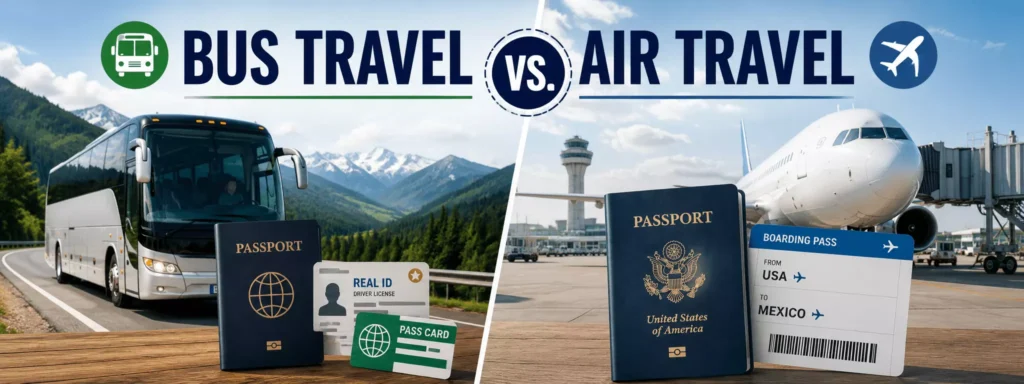
Document rules shift depending on how you actually cross a border. Bus travel documents needed for a domestic route within the US typically require just a REAL ID or standard photo identification. Cross-border bus trips into Mexico or Canada still require the same passport book or passport card rules that apply to any other entry method.
Air travel remains the strictest category overall, since airlines and CBP enforce passport requirements consistently at every gate. Bus and land crossings occasionally allow more flexibility, particularly for US citizens using a passport card. Flying always removes that flexibility entirely.
Why Trust This Guide
This guide draws on current State Department, CBP, and Mexican immigration guidance, cross-checked against multiple independent travel sources. Every rule described here reflects policy confirmed as of 2026, not outdated advice recycled from older articles. We verify passport, visa, and permit details before publishing and updating this guide as rules change.
Travel requirements shift often, sometimes with little advance notice. A useful guide should point travellers toward official sources for final confirmation, not just repeat secondhand claims. Always verify specific requirements directly with your airline, the State Department, or the relevant embassy before departure.
Frequently Asked Questions
Can I fly to Mexico with just a passport card?
No, the passport card only works for land and sea travel. Air travel to Mexico requires a full passport book. This rule has been applied since 2009 under WHTI.
Do I need a visa to enter Mexico as a US citizen?
No, US citizens do not need a visa for tourist stays. You will receive an FMM permit instead upon arrival. This covers stays up to 180 days.
What is the FMM, and do I need to keep it?
The FMM is a tourist permit issued on arrival in Mexico. You must keep it safe and surrender it when you leave. Losing it can complicate your departure process.
Does REAL ID replace a passport for international flights?
No, REAL ID only satisfies domestic US flight requirements. International trips, including Mexico, still require a valid passport. REAL ID cannot substitute for a passport at any border crossing.
Do I need a passport to fly to Puerto Rico?
No, Puerto Rico is a US territory, so domestic travel rules apply. A REAL ID or standard photo ID works fine. No passport is legally required for this trip.
What is ETIAS, and when does it start?
ETIAS is a new online travel authorization for Europe. It is scheduled to launch in the fourth quarter of 2026. US citizens will need it alongside a valid passport.
How long must my passport be valid for a Mexico trip?
Your passport must remain valid through your entire stay in Mexico. Mexico does not require six months of extra validity. Renewing early is still wise if your passport is close to expiring.
Final Thoughts
Flying to Mexico comes down to one simple rule: bring your passport book, not the card. Pair that with your FMM permit on arrival, and you have satisfied Mexico’s core entry requirements. Rules shift for other destinations, so always double-check current guidance before booking any international trip, since policies can change with little warning.
Explore All 14 Travel Essentials Categories
- Luggage & Bags
- Packing Organisation & Cubes
- Travel Tech & Electronics
- Toiletries & Travel-Size
- Travel Comfort
- Travel Safety & Security
- Packing Lists by Trip Type
- Packing Lists by Destination
- Travel Documents & Money
- Travel Clothing & Footwear
- Health, Hygiene & First-Aid
- Airport, Airline & Rules
- Essentials Guide
- Essentials for Women, Men & Family