

The Brand’s Origin Story
Banana Republic began in 1978 in Mill Valley, California. Mel Ziegler and Patricia Ziegler started the company as an army surplus import business. Their early stock came from military surplus stores before they began designing original pieces.
The founders built stores and catalogues around a vintage travel theme. Catalogues read like travelogues, complete with jungle sounds playing inside the shops. That immersive branding became the heart of the company’s early identity.
Quick Facts Table
| Feature | What to Know |
|---|---|
| Founded | Established in 1978 in Mill Valley, California. |
| Founders | Created by Mel Ziegler and Patricia Ziegler. |
| Original Tag Era | The iconic “Coat of Bananas” label was used from 1978–1988. |
| Ownership Change | The brand was acquired by Gap Inc. in 1983. |
| Founders Departed | Mel and Patricia Ziegler left the company in 1988. |
| New Label Era | The “Safari & Travel” label began appearing around 1989. |
| Concept Fully Ended | The original Safari & Travel concept was largely phased out by 1990. |
| Common Price Range | Basic shirts from this collection typically sell for around $25–$50, depending on condition and retailer. |
The Original “Coat of Bananas” Tag (1978-1988)
The earliest tags feature an oval logo nicknamed the Coat of Bananas or the Star and Bananas design. Patricia Ziegler designed this logo herself, giving it a light, funky typography style. Banana Republic travel and safari clothing company pieces from this era carry this exact tag.



Three known variations exist within this label style: early, mid-early, and mid-late versions. Banana Republic travel and safari clothing pieces with this tag date from roughly 1982 through 1988 or 1989. This tag appears both before and after the company changed ownership in 1983.
The 1983 Gap Acquisition and What Changed
The Gap purchased Banana Republic in 1983, though the Zieglers stayed on to run daily operations. The safari and travel branding continued largely unchanged for several more years. The founders eventually left the company in 1988.
Once the Zieglers departed, the catalogue era wound down quickly. The safari and travel concept was fully phased out by around 1990. Corporate ownership shifted the brand toward a more mainstream retail identity after this point.
The “Safari & Travel” Label (1989 Onward)
After the founders left, a new label appeared around 1989. Banana Republic Safari & Travel Clothing Co. tags reversed the original word order from Travel & Safari to Safari & Travel. This small wording flip helps collectors date a piece accurately.
A transitional tag known as the “One Harrison” label followed shortly after. It kept the Travel and Safari subheading but reflected the company’s move to new San Francisco offices. Banana Republic safari and travel clothing company tags from this window mark a clear shift in design philosophy.
Some pieces from this transitional period pair a new tag with an older printed price ticket. Banana Republic safari & travel clothing co. vest. Items are a good example of this crossover era. Collectors use these mismatched details to pin down an exact production year.
How to Tell the Different Eras Apart
Font style offers the clearest clue when trying to tag safari travel clothing vintage pieces correctly. Earlier tags use looser, hand-drawn-feeling typography. Later tags shifted toward cleaner, more corporate lettering as Gap’s influence grew.
Placement of country-of-origin text also shifts over time. Early tags rarely mention manufacturing location at all. Later tags consistently print “Made in USA” or an overseas country beneath the main label.
Checking both the tag and the price sticker together gives the most reliable read. Tag safari travel clothing listings that only show one detail, leaving more room for guesswork. Photos of both sides of a garment tag help buyers confirm authenticity before purchasing.
Common Garment Types You’ll Find
Shirts remain the most commonly listed item from this era. Banana republic travel and safari clothing men often searched for include button-up cotton shirts in tan or khaki tones. Striped cotton shirts marked Made in USA also appear frequently in resale listings.
T-shirts and casual tops show up too, though less often than button-ups. Banana Republic travel safari clothing t-shirts typically command lower prices than structured shirts or jackets. Condition and print clarity affect value more than garment type alone.
Beyond clothing, printed materials carry their own collector value. Banana Republic travel and safari clothing book listings, referring to old mail-order catalogues, attract buyers interested in the brand’s design history. These catalogues featured hand-drawn illustrations and travel-themed vignettes throughout.
What the Safari Travel Style Actually Looked Like
The clothing itself leaned heavily into an expedition-inspired look. Safari-style travel clothing typically featured khaki and olive tones with visible utility pockets. Canvas and midweight cotton twill were common fabric choices across the line.
Men’s pieces often included epaulettes, button flaps, and a relaxed, worn-in fit. Safari travel clothing men from this era favoured function over polish. Vintage safari travel clothing, men v-neck sweaters, and layered pieces also appeared throughout various seasonal catalogs.
General Terms Buyers Search For
Resale platforms show a wide range of search phrasing for these pieces. Travel & safari clothing remains one of the most common general search terms among collectors. Travel safari clothing without the ampersand also pulls up similar listings across different marketplaces.
Broader phrasing appears often, too. Clothing for safari travel and simple safari travel clothing searches both return a mix of original and reproduction pieces. Sellers listing under ‘Safari Travel Clothing Company’ or ‘Banana Republic Travel & Safari Clothing Company’ wording tend to specifically reference the original brand name.
Spotting Reproductions and Overpriced Listings
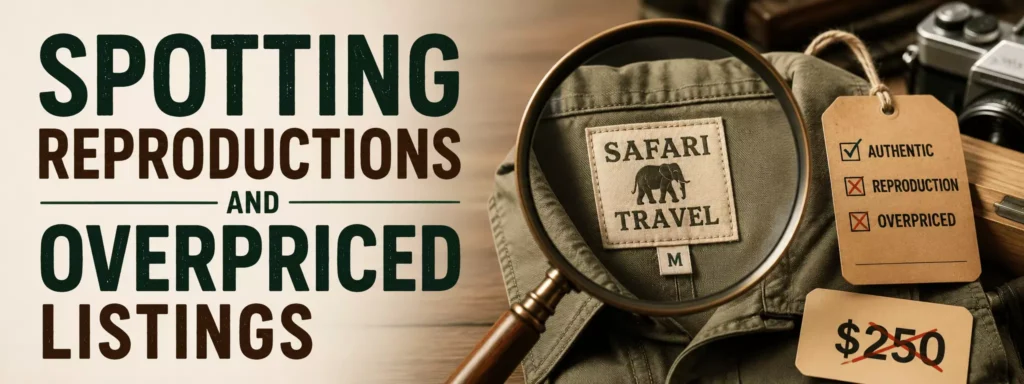
Reproduction tags do exist, though they remain relatively rare compared to genuine vintage pieces. Stitching quality and fabric weight often give away a reproduction faster than the tag itself. Genuine pieces from this era show natural fading and soft, broken-in fabric texture.
Pricing varies widely across resale platforms. Basic shirts often sell in the twenty-five to fifty dollar range, depending on condition. Rare catalogue pieces or well-documented early tags can command significantly higher prices among serious collectors.
Why Trust This Guide
This guide draws on documented brand history, archived catalogue records, and vintage clothing identification resources. Every tag description reflects details confirmed across multiple independent collector sources, not guesswork. We cross-check dates and label variations before publishing.
A useful guide should help buyers make informed decisions, not just describe old clothes. That balance is why this article separates verified history from general resale search terms. Readers deserve accurate dating information before spending money on a vintage piece.
Frequently Asked Questions
What years did Banana Republic use the safari and travel branding?
The original catalogue era ran from 1978 to about 1988. A transitional label continued into 1989 and 1990. After that, the safari theme was fully retired.
Who founded Banana Republic originally?
Mel Ziegler and Patricia Ziegler founded the company in 1978. They started as an army surplus import business. Original designs followed once surplus stock ran low.
How do you tell an early tag from a later one?
Check the typography style and word order on the label. Earlier tags say Travel & Safari, later ones flip to Safari & Travel. Country-of-origin text also appears more often on later tags.
Is vintage Banana Republic safari clothing valuable?
Basic shirts typically sell for twenty-five to fifty dollars. Rare catalogue pieces or documented early tags can sell for more. Condition and tag clarity strongly affect the final value.
Why did the safari and travel concept end?
The founders left the company in 1988 after Gap’s 1983 acquisition. New ownership shifted the brand toward mainstream retail. The catalogue and safari-store theme disappeared around 1990.
Where can you find archived catalogues from this era?
Independent fan sites host scanned pages from the original catalogues. These archives cover clothing, accessories, and store history in detail. They serve as a useful reference for dating individual pieces.
Are reproductions of these tags common?
Reproductions exist but remain fairly uncommon compared to genuine finds. Stitching and fabric quality usually reveal a reproduction quickly. Comparing suspicious tags against verified examples helps confirm authenticity.
Caring for a Vintage Find
Vintage cotton and twill pieces need gentler handling than modern fabric. Wash on a cold, delicate cycle to protect old stitching and fading. Air drying preserves the fit better than a hot dryer cycle.
Storing pieces away from direct sunlight prevents further fading over time. A breathable garment bag protects fabric better than sealed plastic. Small repairs, like reinforcing a loose button, extend the life of a decades-old piece significantly.
Styling the Look Today
The safari-inspired silhouette has aged surprisingly well for modern wardrobes. Pairing an original shirt with simple denim keeps the look current without feeling costume-like. Rolled sleeves and minimal accessories let the vintage fabric and cut speak for themselves.
Layering a vintage vest over a plain t-shirt works well for cooler weather. The utility pocket details add visual interest without needing extra accessories. This understated approach respects the original design while fitting easily into a modern rotation.
Final Thoughts
Dating a piece correctly comes down to reading the tag’s wording, font, and country-of-origin details together. The shift from Travel & Safari to Safari & Travel marks one of the clearest turning points in the brand’s history. Careful comparison against documented examples remains the most reliable way to confirm which era a piece truly belongs to.
Explore All 14 Travel Essentials Categories
- Luggage & Bags
- Packing Organisation & Cubes
- Travel Tech & Electronics
- Toiletries & Travel-Size
- Travel Comfort
- Travel Safety & Security
- Packing Lists by Trip Type
- Packing Lists by Destination
- Travel Documents & Money
- Travel Clothing & Footwear
- Health, Hygiene & First-Aid
- Airport, Airline & Rules
- Essentials Guide
- Essentials for Women, Men & Family