

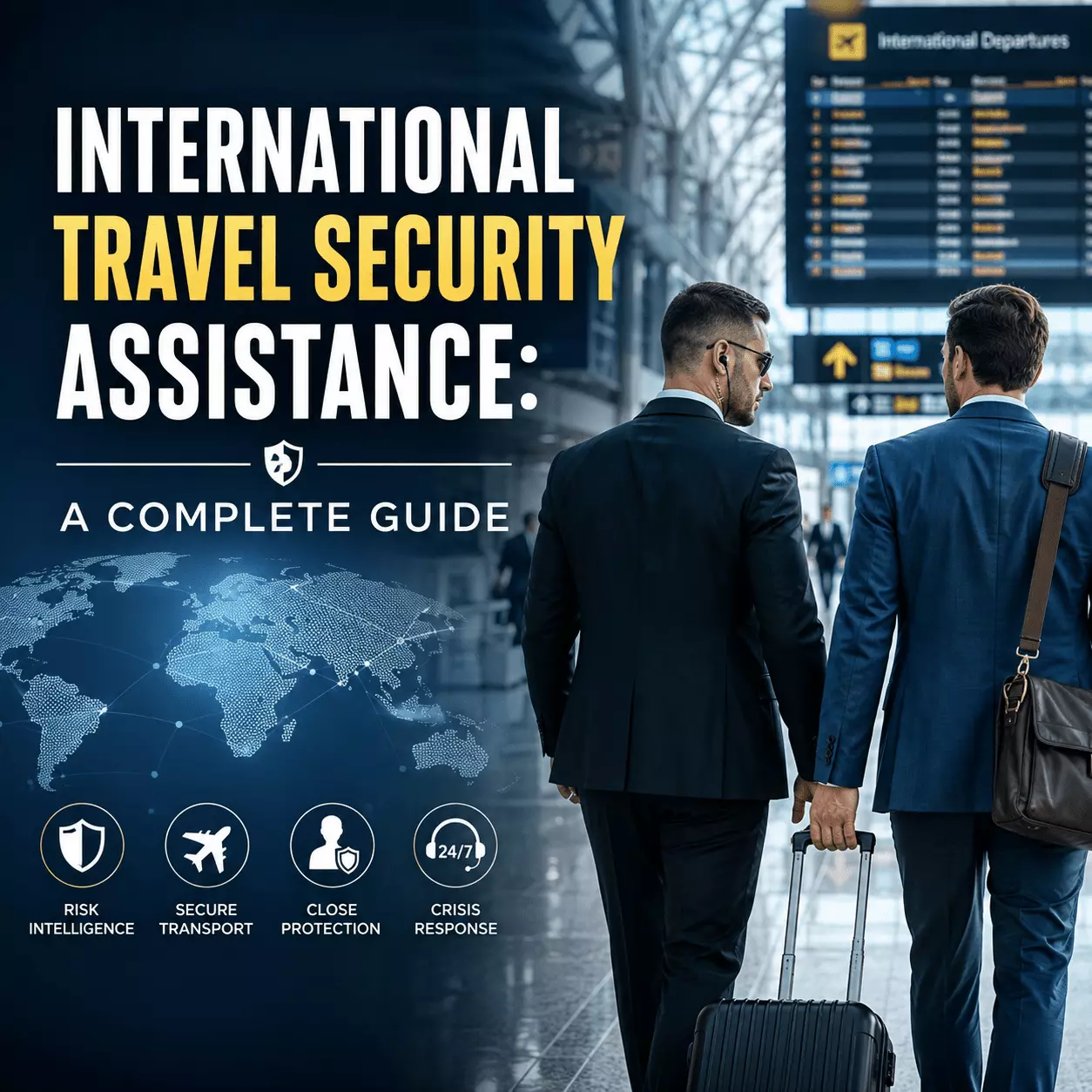
I have pulled this together from current 2026 industry and provider sources. That taught me how fast the risk landscape has changed. Below, I cover what these services include and who needs them. By the end, you will know how to choose the right partner.
What Does It Include?
These services bundle several protections into one plan. The core is a detailed risk assessment for each destination. Trained intelligence teams track threats before and during a trip. That turns guesswork into a clear, informed plan.
The support extends far beyond a bodyguard. It covers secure transport, close protection, and travel risk management. Many providers add medical assistance and evacuation support. A 24/7 operations center ties every piece together.
Crisis response is the safety net underneath it all. Teams stand ready to act if a situation turns bad. They handle evacuations, medical events, and security incidents. That constant readiness is the real value here.
Quick Facts
| Topic | Key Takeaway |
|---|---|
| What It Is | Professional travel security services provide protection, planning, and emergency support to help travelers stay safe while abroad. |
| Core Services | Typical services include intelligence reports, secure transportation, personal protection, emergency response, and crisis management. |
| 2026 Risks | Major travel threats include express kidnappings, cyber-physical attacks, and new border procedures such as the EU Entry/Exit System (EES). |
| Who Needs It | Most commonly used by executives, VIPs, journalists, diplomats, aid workers, and travelers visiting high-risk destinations. |
| Executive Protection | Provides discreet close-protection officers, advance route planning, venue assessments, and secure transportation. |
| Digital Security | Protects sensitive data through cybersecurity measures, encrypted communications, and TSCM (Technical Surveillance Counter-Measures) sweeps. |
| Duty of Care | Organizations have a legal and ethical responsibility to take reasonable steps to protect employees traveling for work. |
| Top Providers | Leading global travel security companies include Sicuro, GardaWorld, Control Risks, and Prosegur. |
| Choosing a Provider | Look for ISO certifications, a 24/7 operations center, strong local networks, and seamless integration with your organization’s travel policies. |
| How It Works | The process typically begins with a consultation, followed by a risk assessment, customized security planning, and real-time monitoring throughout the trip. |
Why It Matters More in 2026
The risk picture has grown sharply this year. The U.S. State Department issued a worldwide caution in February 2026. It urged travelers to raise their vigilance across nearly every region. Rising threats and instability drove that update.
New kinds of threats have emerged, too. Express kidnappings target travelers for quick digital transfers. Cyber and physical risks now overlap in dangerous ways. Your digital footprint can lead an attacker to your location.
The numbers show the concern is widespread. A winter 2026 survey found 82 percent of travelers worried about kidnapping and extortion. The EU’s new entry/exit system adds biometric scans at borders. Strong international travel security has become a real necessity.
Who Needs This Support?
Not every traveler needs a full security detail. But several groups gain real protection from it. Executives and high-net-worth individuals top the list. Their profile makes them targets for financial and data crime.
Others face heightened risk too. Journalists and NGO staff often work in volatile regions. Business travelers to high-risk destinations need extra care. Families of high-profile clients may also require protection.
Businesses have a legal reason to act. Duty of care requires them to protect traveling staff. Private security for international travel helps meet that obligation. It shields both the person and the company from liability.
Types of Services and Providers
Providers come in a few main forms. Full-service firms handle everything under one roof. They combine protection, transport, intelligence, and crisis response. This suits clients who want a single, seamless plan.
Consulting-led firms take a different angle. They focus on intelligence, risk assessment, and advisory work. Their programmes often plug into a company’s wider risk strategy. This suits organisations that want strategic depth.
Local teams fill a third role. They provide vehicles, drivers, and on-the-ground knowledge. The best plans coordinate these teams under one standard. That consistency avoids the gaps of fragmented local hires.
Executive Protection Explained
Executive protection is the visible core of these services. A trained officer maintains a discreet but vigilant presence. The goal is to deter threats without disrupting business. Low-profile, respectful protection is the modern standard.
Advance work does much of the real job. Teams scout venues, routes, and hotels before you arrive. They plan secure transport and safe backup options. Good international executive travel security prevents problems before they start.
The officer’s role is broader than muscle. They act as a logistician, a guide, and a guardian. They respect local laws and weapon rules. That balance keeps you safe and compliant.
Digital and Data Security
Your devices can be a bigger target than your body. An executive’s laptop often holds a company’s secrets. Attackers aim to intercept data during international transit. Protecting that data is now a core service.
Providers use several tools to guard information. Technical surveillance counter-measures sweep rooms for hidden devices. They secure your communications and network access abroad. That blocks corporate espionage and eavesdropping.
The physical and digital sides now connect. A public social profile can reveal your movements. Teams help lower your digital footprint before a trip. That closes the gap that attackers try to exploit.
Duty of Care for Businesses
Companies carry a real responsibility for traveling staff. Duty of care is both a legal and a moral mandate. It requires firms to prepare, monitor, and protect their people. That covers both physical and digital harm.
Poor planning is a common weak spot. Research shows many firms lack good risk assessments for foreign trips. A strong programme fixes that gap with real intelligence. It keeps leaders informed and staff protected.
A 24/7 operations center anchors the whole effort. It monitors threats and tracks travelers in real time. It coordinates a fast response when something goes wrong. That constant oversight is the heart of duty of care.
Top Providers to Know
Several firms lead this field in 2026. Sicuro Group operates across more than 140 countries. It combines protection, transport, intelligence, and crisis response in one framework. It also holds major ISO security certifications.
Other names carry deep experience too. GardaWorld, Control Risks, Prosegur, and Constellis are established international travel security companies. Control Risks is known for protective intelligence and advisory work. Prosegur is among the largest private security providers in the world.
Specialist firms round out the choices. ETS Risk Management serves Fortune 500 clients and family offices. Global Risk Solutions integrates travel security into a client’s existing team. Compare each provider’s strengths against your needs.
How to Choose the Right Partner
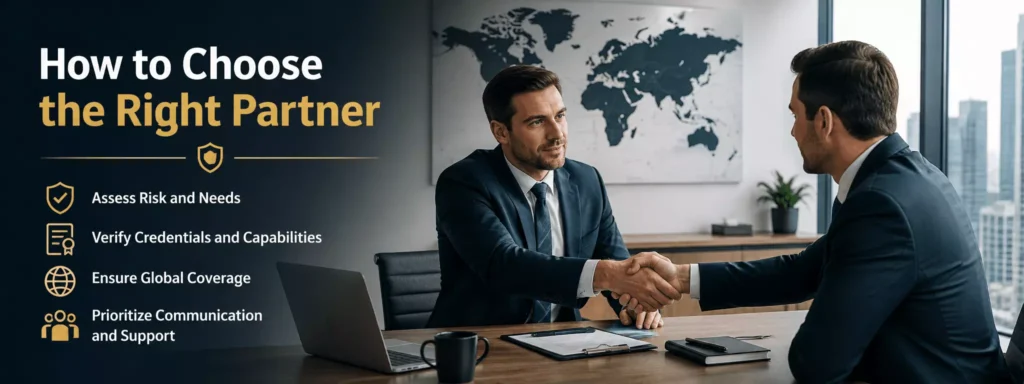
The right partner depends on your risk and goals. Start with the countries and regions you visit. Confirm the firm has strong local coverage there. Broad reach matters for consistent quality.
Check the firm’s credentials and capabilities. Look for ISO certifications and a 24/7 operations center. In-house intelligence beats fragmented local hires. A single, seamless plan is safer than scattered vendors.
Integration with your team is the final test. The best firms coordinate with your assistants and travel managers. They set clear communication protocols before departure. A true one-stop security international travel model keeps everyone aligned.
What It Costs and How It Works
Cost varies with the risk and scope of the trip. A single executive trip differs from a long, high-risk deployment. Most firms start with a confidential consultation. They then build a plan around your itinerary.
The process usually follows clear phases. First comes a risk assessment and intelligence review. Next, teams plan transport, protection, and backup options. They coordinate with your existing staff before you travel.
Ongoing support continues throughout the trip. The operations center monitors threats in real time. Teams adjust plans as conditions change on the ground. That flexibility is what you pay for.
Personal vs Corporate Assistance
The service adapts to who is traveling. Personal plans protect an individual and their family. They focus on discreet, one-on-one support. High-net-worth travelers often use this model.
Corporate plans cover whole teams and programs. They tie into a company’s wider risk strategy. A central team tracks every traveler at once. That scale suits large organizations with global staff.
Your needs decide the right fit. A solo executive may want a single officer. A multinational may need a full programme. Many firms offer both under one roof.
Common Mistakes to Avoid
A few missteps weaken any security plan. Relying on scattered local hires causes uneven quality. Skipping a real risk assessment leaves blind spots. Both raise your exposure abroad.
Timing errors hurt, too. Booking protection at the last minute limits advance work. Ignoring digital risks leaves your data exposed. Early, integrated planning solves these problems.
Frequently Asked Questions
What does travel security assistance include?
It covers risk assessments, secure transport, and close protection. Many plans add medical support, intelligence, and 24/7 crisis response. The goal is a seamless safety net for the whole trip.
Who needs international security services?
Executives, high-net-worth individuals, journalists, and NGO staff benefit most. Business travelers to high-risk regions also need it. Companies use it to meet their duty of care.
What is executive protection?
It is discreet close protection for high-profile travelers. A trained officer deters threats without disrupting business. Advance work on routes and venues prevents most problems.
Why is travel security a bigger concern in 2026?
The State Department issued a worldwide caution in February 2026. Express kidnappings and cyber-physical threats are rising. A survey found 82 percent of travelers worried about their safety.
What is the duty of care?
It is a company’s legal and moral duty to protect traveling staff. That covers both physical and digital harm. Good programmes prepare, monitor, and support employees abroad.
How do I choose a security provider?
Check local coverage, ISO certifications, and a 24/7 operations center. Favor in-house intelligence over fragmented local teams. Confirm they integrate with your existing staff.
How much does travel security cost?
It varies with the trip’s risk and scope. A single executive trip costs less than a high-risk deployment. Most firms quote after a confidential consultation.
Explore All 14 Travel Essentials Categories
- Luggage & Bags
- Packing Organisation & Cubes
- Travel Tech & Electronics
- Toiletries & Travel-Size
- Travel Comfort
- Travel Safety & Security
- Packing Lists by Trip Type
- Packing Lists by Destination
- Travel Documents & Money
- Travel Clothing & Footwear
- Health, Hygiene & First-Aid
- Airport, Airline & Rules
- Essentials Guide
- Essentials for Women, Men & Family